
Xinhua News Agency, Beijing, June 17 (Reporters Gao Zhu and Luo Qi) From the capital Beijing, you can reach 54 cities within half a day by high-speed rail. This is a microcosm of the transformation and upgrading of China’s transportation infrastructure in the past ten years.
Data from the Ministry of Transport shows that from 2012 to the end of 2021, the mileage of China’s railways and highways will increase by about 1.1 million kilometers, which is equivalent to circumnavigating the earth’s equator 27 and a half times. %. Over the past ten years, China has continuously built a dense infrastructure network, not only accelerating the construction of traditional infrastructure such as transportation, but also making new breakthroughs in the construction of new types of infrastructure, rapidly advancing towards an infrastructure powerhouse.
“It can be said that this decade has witnessed the greatest progress in engineering science and technology and the fastest increase in strength in my country,” said Li Xiaohong, president of the Chinese Academy of Engineering.
The “Technology Code” Behind the Infrastructure Power
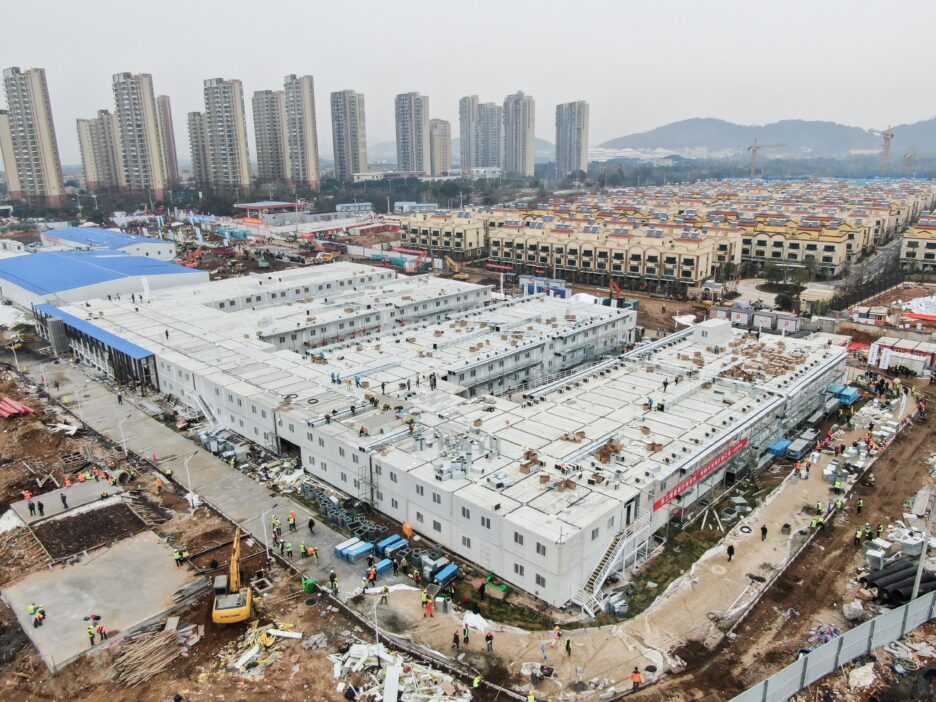
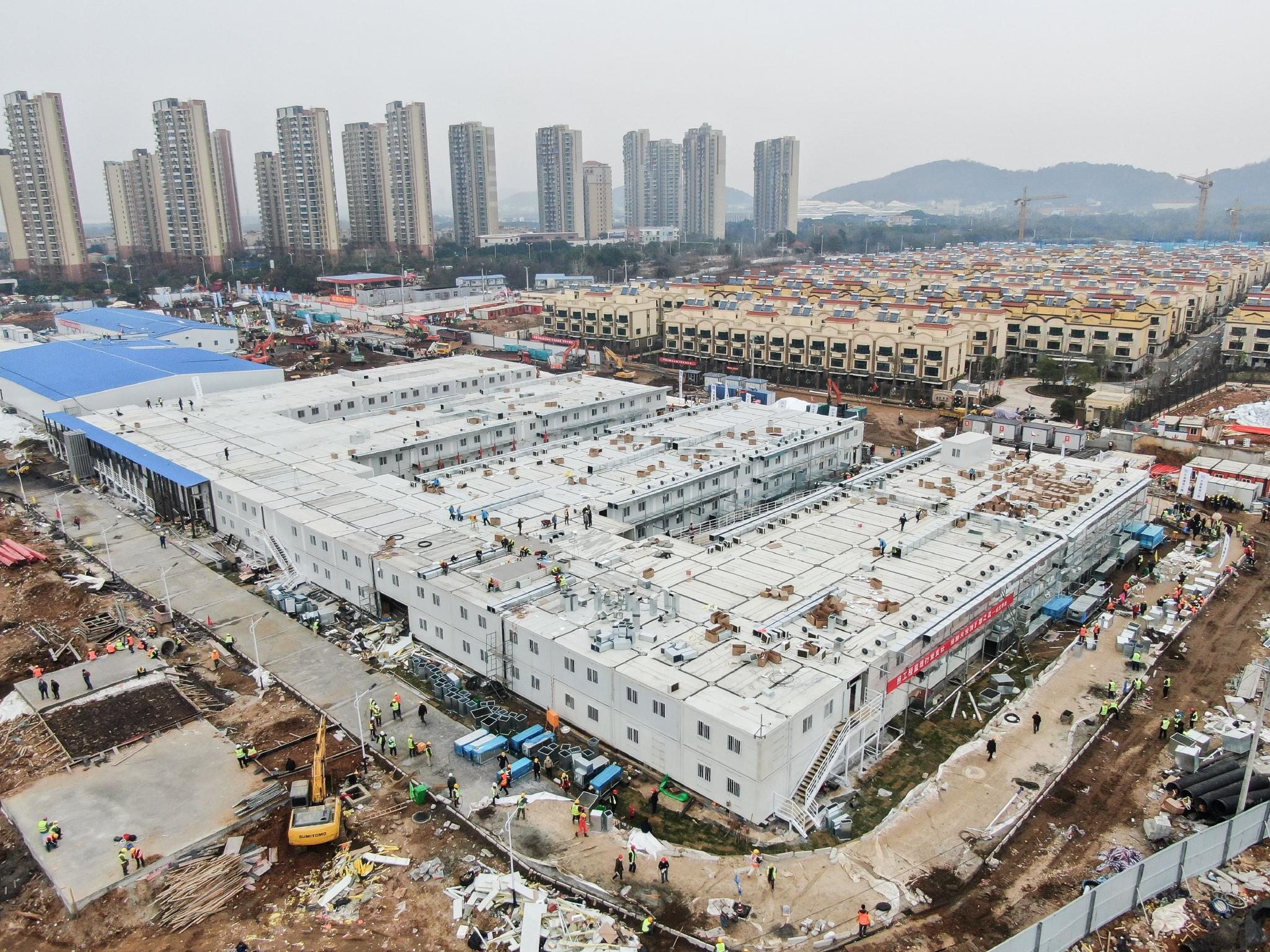
How long will it take to build a specialized infectious disease hospital?
During the prevention and control of the new crown pneumonia epidemic, the answer from Wuhan, Hubei is: 10 days. When “a bed is hard to find”, Wuhan Huoshenshan and Leishenshan hospitals were both completed in about 10 days.
“Long-term technology accumulation, innovation while doing, integration and re-innovation, and continuous industrialization are the cornerstones of creating miracles.” The relevant person in charge of China Construction Group said in an interview with a reporter from Xinhua News Agency that “construction industrialization technology” is the key to creating a new speed in China’s construction. Technological power.
On the self-developed building information model platform, designers can conduct computer simulation of 360,000 meters of various pipelines and more than 6,000 information points in advance, generate three-dimensional digital simulation models, data and numbers, and then real-time according to on-site conditions. Correction. Hundreds of subcontractors, thousands of processes, and more than 40,000 builders use these computer-generated data to seamlessly connect and advance simultaneously.
Thousands of miles away, a “giant dragon” flying over Hong Kong, Zhuhai, and Macau lies on the glittering light. As the bridge with the most complex technology, the most difficult construction and the largest project scale in the history of China’s transportation construction, the design service life of the Hong Kong-Zhuhai-Macao Bridge adopts the 120-year standard for the first time.
In order to achieve this goal, Chinese researchers have overcome a large number of technical problems and put forward a complete set of marine engineering anti-corrosion technical measures with Chinese characteristics and world-class standards. In the process of research and construction, a series of new materials and new technologies have emerged, filling the gaps in Chinese industry standards and national standards in many fields, and many construction techniques and standards have reached the international leading level.
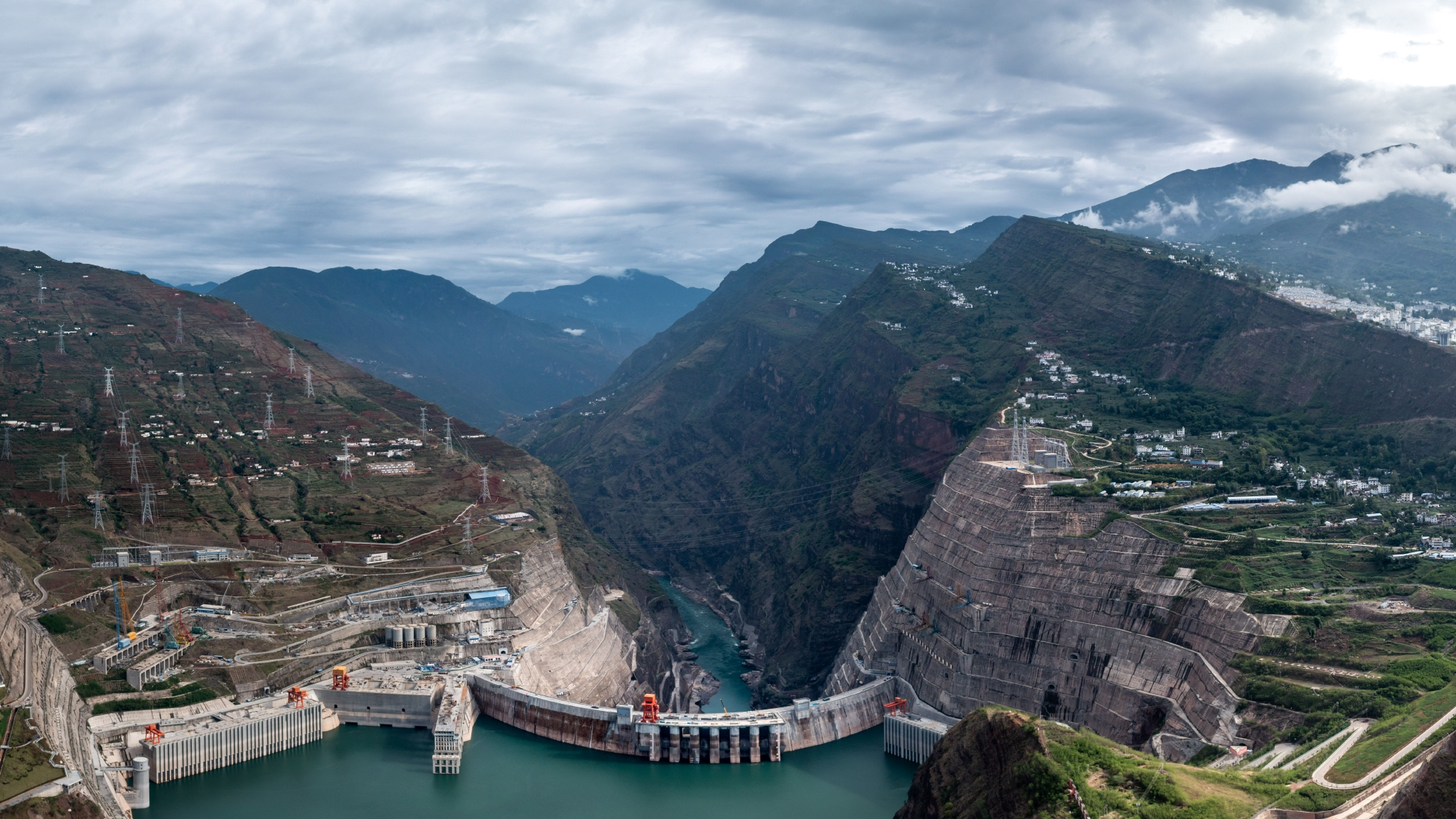 This is a scene of Baihetan Hydropower Station (panoramic stitching photo by drone).Photo by Xinhua News Agency reporter Hu Chao
The “green power” behind major projects
At the junction of Sichuan and Yunnan, the Jinsha River is rushing, and the water mist is rising.
Baihetan Hydropower Station, one of the backbone power points of “West-to-East Power Transmission”, is the largest and most technically difficult hydropower project under construction in the world today.
After the Baihetan Hydropower Station with a total installed capacity of 16 million kilowatts is fully completed and put into operation, the annual average power generation will reach 62.443 billion kilowatt-hours, which is equivalent to saving about 19.68 million tons of standard coal and reducing emissions of 51.6 million tons of carbon dioxide, 170,000 tons of sulfur dioxide, About 150,000 tons of nitrogen oxides.
In Fuqing, Fujian, the sea breeze is blowing in Xinghua Bay, and 59 white wind turbines with a height of 100 meters stand in the sea.
As the world’s first high-power offshore wind power prototype test wind farm, the Fuqing Xinghua Bay offshore wind farm has an annual power generation capacity of 1.4 billion kWh, which can meet the normal electricity demand of 20,000 families of three.
Guangdong, Jiangsu, Shandong… In 2021, many offshore wind power projects in China will be connected to the grid. Data from the Ministry of Natural Resources shows that in 2021, the new grid-connected capacity of offshore wind power across the country will be 16.9 million kilowatts, ranking first in the world in terms of cumulative capacity.
In response to global warming, China has proposed to strive to achieve carbon peaking by 2030 and carbon neutrality by 2060. In the past ten years, a number of large-scale clean energy projects, represented by Baihetan Hydropower Station and Fuqing Xinghua Bay Offshore Wind Farm, have been put into operation one after another, providing a strong boost to the realization of carbon peaking and carbon neutrality.
Among the 102 major projects in the “14th Five-Year Plan”, a considerable number of projects are closely related to the goal of carbon peaking and carbon neutrality. They focus on energy and are distributed in many specific fields such as transportation and urban and rural construction.
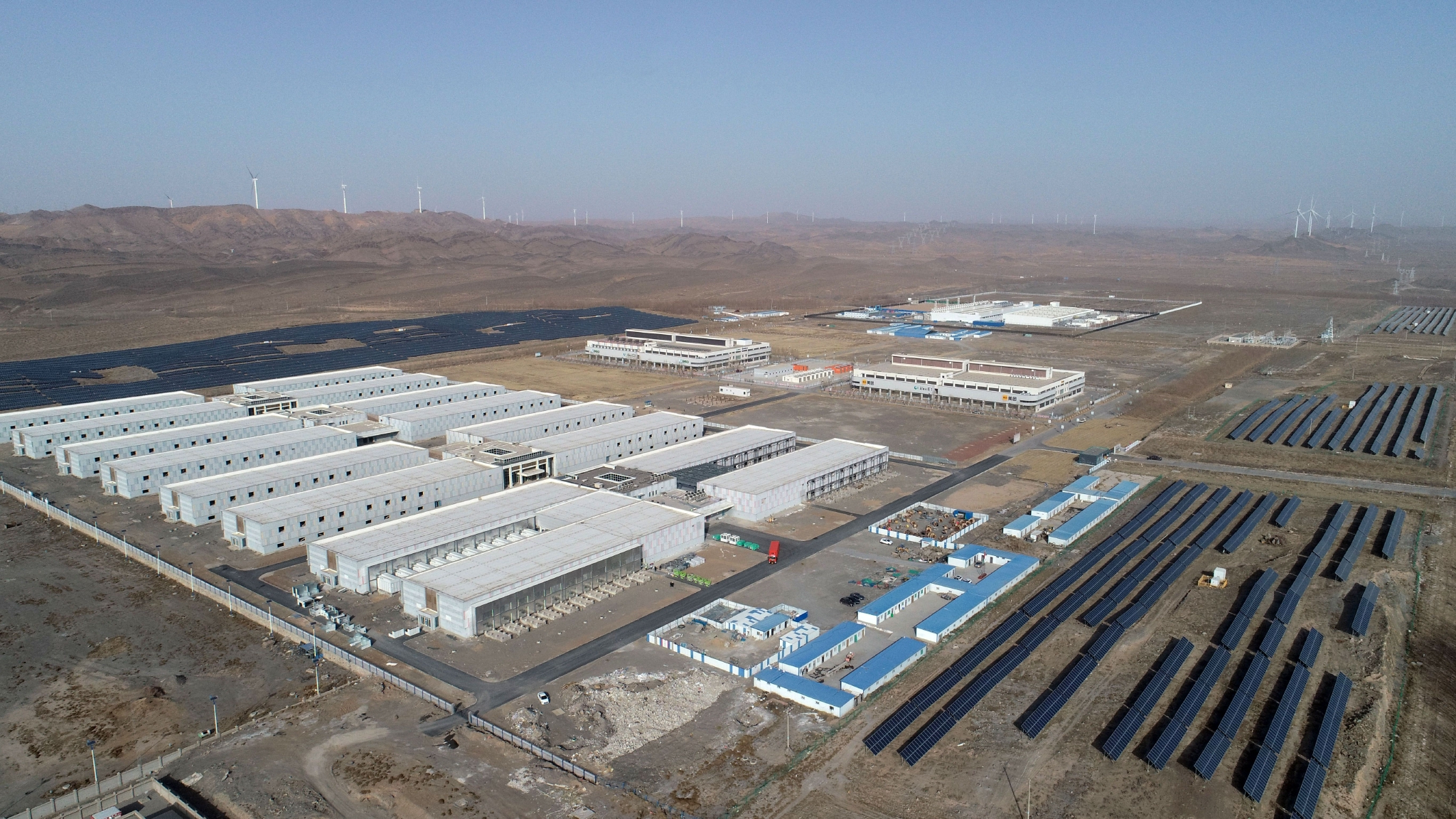 Panorama of the Western Cloud Base in Zhongwei City, Ningxia (drone photo).Photo by Xinhua News Agency reporter Wang Peng
New infrastructure builds new kinetic energy
At present, from the central to the local, a batch of new infrastructure projects including 5G base stations, industrial Internet, and data centers are steadily advancing.
Xin Guobin, Vice Minister of the Ministry of Industry and Information Technology, said on the 14th that in the past ten years, China’s information and communication industry has achieved iterative leaps and has built the world’s largest and technologically advanced network infrastructure. Among them, the optical fiber network access bandwidth has achieved exponential growth from 10 megabits to 100 megabits to gigabit, and the mobile network has achieved a leap from “3G breakthrough” to “4G synchronization” to “5G leadership”.
According to data from the National Development and Reform Commission, in the first quarter of this year, 134,000 5G base stations were added in China, and a total of 1.559 million were built and opened. There are 2,400 “5G + Industrial Internet” projects under construction nationwide.
In addition to stabilizing growth in the short term, the new generation of information and communication technologies represented by 5G is the cornerstone of the development of the digital economy, and has also become an important engine for optimizing the economic structure and promoting medium- and long-term sustainable economic development.
In China Unicom’s Gui’an cloud data center, rows of cabinets are arranged in an orderly manner, and operation and maintenance workers are in the computer room to ensure the smooth operation of the “data brain”. At the same time, the second phase of the data center construction planning and preparatory work for civil construction are also in full swing.
In February of this year, the “East Data and Western Calculation” project was officially launched. By transferring the data from the developed eastern regions to the western regions with rich computing resources for computing and storage, it not only alleviated the problem of energy shortage in the eastern region, but also opened up new opportunities for the western region. A new way of development.
As the core productivity of digital economy development, computing power has become an important infrastructure for national economic development. Data from the National Development and Reform Commission shows that since the beginning of this year, among the 10 national data center clusters across the country, 25 new projects have been started, driving investment of more than 190 billion yuan in all aspects. Among them, the investment in the western region increased by 6 times compared with the same period of last year. During the “14th Five-Year Plan” period, it is expected that the investment in big data centers will increase at an annual rate of more than 20%, and the cumulative investment in various aspects will exceed 3 trillion yuan.