
CCTV News Client
As the ancient capital site with the longest, most frequent and largest area of archaeological excavations in China, Yin Ruins was not only included in the “World Heritage List”, but also ranked first among the “100 Major Archaeological Discoveries” in China in the 20th century. In recent years, a large number of new archaeological discoveries have emerged in the core area and surrounding areas of the Yin Ruins in Anyang. The State Administration of Cultural Heritage announced today a major project of “Archaeological China”, the Xindian site in Henan. After three excavations, the largest bronze casting base in China in the late Shang Dynasty was discovered. .
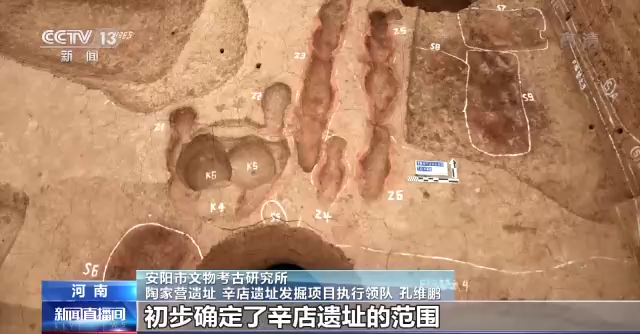
The Xindian site is located in the southern part of Xindianji, Baizhuang Town, in the north of Anyang City, and is about 10 kilometers away from the Yinxu Palace and Zongmiao District in the southwest. 750 meters, with a total area of about 1 million square meters. At present, the Xindian site has been excavated three times, with a total excavation area of about 6,000 square meters.
Kong Weipeng, executive team leader of the Xindian site excavation project at the Taojiaying site of Anyang Municipal Institute of Cultural Relics and Archaeology: The second excavation should be an important turning point for the Xindian site. The scope of the Xindian site has been preliminarily determined, with a total area of about 1 million square meters , of which the copper casting area accounts for more than 50% of the total area. It is a super large bronze casting base.
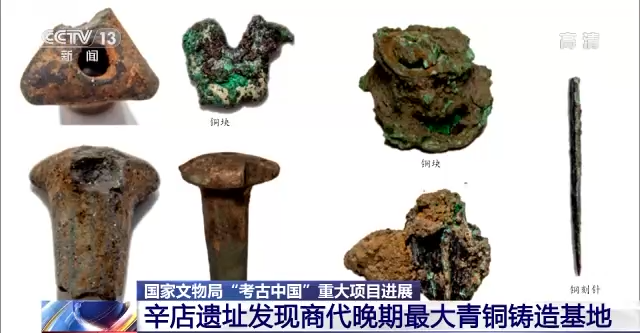
At present, at the Xindian site, archaeologists have discovered the remains of 7 independent copper-casting workshops. The copper-casting areas are equipped with working areas, living areas, sacrificial areas, and tomb areas. In the working area, there are borrow pits for preparing materials, a model site, a shed-style workshop for melting and casting, a post-processing site for bronze ware, and a waste site for copper casting relics, etc., which can complete the whole process of bronze ware casting. Ruins. About 40,000 pieces of various pottery models, cores and molds were unearthed, as well as a large number of furnace wall fragments, grindstones, model-making tools, bone clams, etc., reflecting the extraordinary casting technology leading the world.
During the third excavation, archaeologists discovered another melting and casting workshop in the early Western Zhou Dynasty.
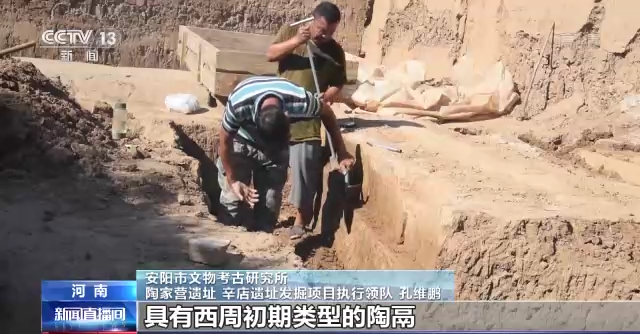
Kong Weipeng, executive team leader of the Xindian site excavation project at the Taojiaying site of Anyang Institute of Cultural Relics and Archaeology: Two pottery li of the early Western Zhou type were placed on the workshop floor, confirming that the copper casting industry at the Xindian site continued from the late Shang Dynasty to the early Western Zhou Dynasty .
Xindian Ruins
The “homeland” of the “Ge” people in the Shang Dynasty
Then, at the Xindian site in Anyang, Henan, what kind of people were producing and living in the first place, and made numerous bronzes, pottery, and weapons? Archaeologists found clues in the unearthed bronzes.
According to statistics, a total of 7 independent copper-casting workshops in the late Shang Dynasty, more than 10 building foundations, nearly 100 tombs in the Shang and Zhou dynasties, and about 50,000 cultural relics have been unearthed at the Xindian site. Most of the tombs found are well preserved, with rich funerary items, including hundreds of bronze ritual utensils, weapons, tools, pottery, jade ware, lacquer ware, etc. unearthed.
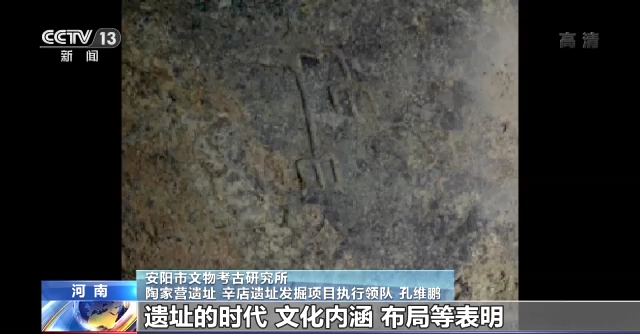
Kong Weipeng, executive leader of the excavation project at the Xindian site at the Taojiaying site of the Anyang Institute of Cultural Relics and Archaeology: Most of the inscriptions on bronzes are “ge”. The age of the site and the layout of its cultural connotations indicate that the site was a super-large bronze casting base and large-scale settlement with the “Ge” people as the main body during the Yinxu period, and it was an important component of the Yinxu cultural site. part.
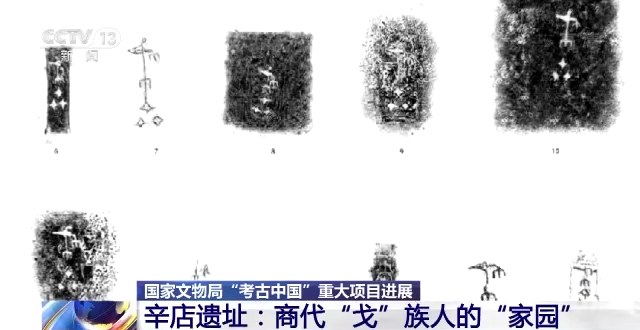
Archaeological research found that the “Ge” people continued from the second stage to the fourth stage of the Xindian site, and they were the actual controllers of the settlement. The Xindian site represents a highly developed bronze casting system at the Yin Ruins, and is of great significance for the study of the control, scale and distribution of the bronze casting industry in the late Shang Dynasty. In addition, the discovery of the site has made the appearance of the “Dayi Shang”, the capital of Yin Ruins, recorded in the oracle bone inscriptions more and more clear.
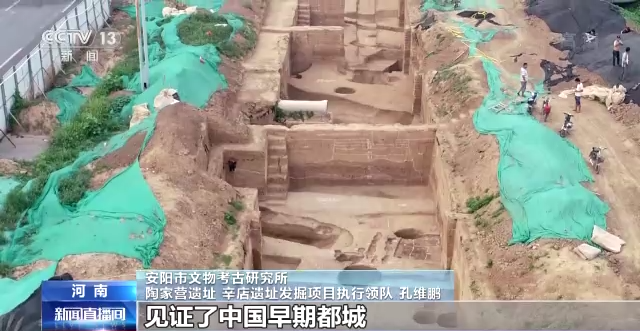
Kong Weipeng, executive team leader of the Xindian site excavation project at the Taojiaying site of Anyang Municipal Institute of Cultural Relics and Archaeology: The discovery of the site shows the real scope of “Dayi merchants” and witnesses the process of low-density and urbanization development in early Chinese capitals. The study of the layout and scope of the capital during the Yin Ruins period was a breakthrough discovery.