

[Watch the new education and watch the truth, goodness and beauty]
The DNA of National Education Development
——Building the core competencies of future citizens
Author|Zhong Qiquan
Editor of this issue|Shouwang New Education
Many countries regard the curriculum development that emphasizes “national core competencies” as the gene for the development of national education, and the study of academic ability models is toSeeking the key DNA for genetic modification of national education.France’s “common culture”, Germany’s “key competencies”, the United States’ “core knowledge”, Japan’s “basic academic abilities”, and the Program for International Student Assessment (PISA) Chinese literacy, mathematical literacy, scientific literacy and other research are all academic abilities. Examples of model studies.
Numerous personality theories can provide us with guidelines and ideological materials for thinking about the practice of basic education.What we look forward to in school education is that from the perspective of children's personality growth, it is not limited to the knowledge of one subject, but has a long-term outlook, seeking improvements in curriculum and teaching, and thinking about changes in learning methods.
The school of the future is a “school beyond school”.Fundamentally speaking, it is not every teacher but the entire teacher team that is responsible for students' learning and development; not every classroom, but the entire school; not every school, but the entire social culture. ——Zhong Qiquan

1
Personality develops through activities
The mission of basic education is to lay the foundation for each child's academic and personality development, and the study of personality development is top priority.
The personality structure theory asserts that personality is composed of four levels of elements, forming a pyramid structure:
The first level is ambitionincluding impulses, desires, interests, aptitudes, ideals, world views and beliefs, etc.;
The second level is experience,Including knowledge, skills, proficiency and habits, etc.;
The third level is reflection, including emotions,Feeling, thinking, understanding, emotion, will and memory, etc.;
The fourth level is temperament.Including gender traits, age traits, pathological changes and physical changes, etc., there are also personality theories that regard the basic beliefs of the world, thoughts and morals as the core of personality.
Numerous personality theories can provide us with guidelines and ideological materials for thinking about the practice of basic education. What we look forward to in school education is that from the perspective of children's personality growth, it is not limited to the knowledge of one subject, but has a long-term outlook, seeking improvements in curriculum and teaching, and thinking about changes in learning methods.
The development rules derived from the study of personality structure and development provide a basic perspective for defining “core competencies”:Personality is not the simple sum of individual psychological functions and elements, but the totality of interrelated internal conditions. These elements interact to continuously form new qualities of personality; personality cannot be obtained from the individual itself alone. According to it, it is restricted by natural and social conditions and specific and historical conditions. A kind of existence; personality is not only restricted by the surrounding external conditions, but an existence that actively affects nature, society and even the individual himself, thereby launching creative changes; personality is not an individual existence separated from the social collective, but can only Only by being involved in social and collective relationships can one exist as an individual acting in society and collectively.
The development process of personality is stipulated and restricted by various social conditions.When thinking about children's personality development, it is important to realize that personality development is not predetermined, nor can it be determined by adaptationism or individualism. Personality is a process and a crystallization of the interaction between the external conditions around children and their own internal conditions. The intermediary is nothing more than children's subjective activities. Personality develops in and only through activity.
2
The DNA of National Education Development
Many countries regard curriculum development that emphasizes “national core competencies” as the gene for the development of national education, and the study of academic ability models is to seek the key DNA for genetic transformation of national education.France’s “common culture”, Germany’s “key competencies”, the United States’ “core knowledge”, Japan’s “basic academic abilities”, and the Program for International Student Assessment (PISA) Chinese literacy, mathematical literacy, scientific literacy and other research are all academic abilities. Examples of model studies.
Core literacy refers to the problem-solving literacy and ability that students develop with the help of school education.According to “Basic Knowledge of Important Terms in Teaching Research” edited by Japanese scholar Tsunekichi Hironori and others, core literacy refers to “educational content that students acquire in the learning environment of school education and compiled based on human cultural heritage and modern culture, and The core of key abilities formed by learners living in the living world in the learning process.” Core competencies are expressed as a unity of educational content on the object side and learners’ key abilities on the subject side. Therefore, core competencies are not inherited from birth, but acquired through education. At the same time, core literacy is not the sum of knowledge in various disciplines. It is the mental training or spiritual pillar that supports the image of “a well-educated and sound citizen”. The fundamental factors that determine the formation of this core literacy lie in the progress of educational ideas and the sound development of the educational system.
UNESCO emphasized in 2003 that the cultivation of core competencies requires lifelong learning, and lifelong learning also requires core competencies.The five pillars of lifelong learning, or competencies, are interrelated and span the life course and all areas of life:Learning to know, including learning how to learn, improving concentration, memory and thinking; learning to do, including professional skills, social behavior, teamwork, innovation and enterprising spirit, and adventurous spirit; learning to coexist (learning to live together), including the ability to understand oneself and others, empathy and the ability to achieve common goals; learning to be, including promoting self-realization, enriching personality traits, diverse expression skills and responsibility commitment; learning to change (learningto change), including accepting change, adapting to change, positive change and guiding change.
The Organization for Economic Cooperation and Development proposed in 2005 that a knowledge society requires three key capabilities:The first key ability is the ability to interactively use social, cultural and technological resources, including the ability to use language, symbols and text to interact, such as reading literacy and mathematical literacy in the International Student Assessment Program; the ability to use knowledge and information to interact , such as scientific literacy in the Program for International Student Assessment; the ability to interact with technology. The second key ability is the ability to interact among people in heterogeneous communities, including the ability to build harmonious interpersonal relationships with others, the ability to work in teams, and the ability to manage and resolve conflicts. The third key ability is the ability to act independently, including the ability to act in a wide range of contextual situations; the ability to design and execute life plans and personal plans; and the ability to express and safeguard rights, interests, responsibilities, limitations and needs.
The eight core competencies were officially proposed by the European Union in the “Core Competencies for Lifelong Learning: European Reference Framework” published in 2005. They are:Mother tongue communication, foreign language communication, mathematical abilities and basic technological abilities, digital abilities, learning how to learn, interpersonal, intercultural and social abilities and citizenship abilities, entrepreneurship and cultural expression. At the same time, the common abilities that run through the eight core competencies are proposed, such as critical thinking, creativity, etc.
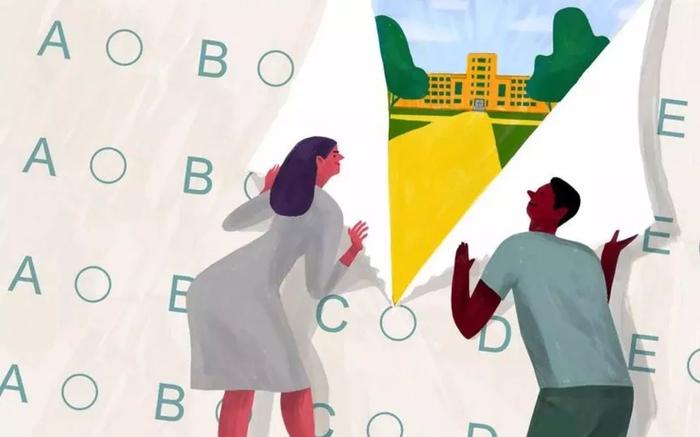
Research on Japan's academic ability model has been continuous since the 1950s, becoming the engine of Japan's basic education curriculum reform in various periods. Examining the academic research in Japan, we can find that the relationship between core literacy and subject literacy is the relationship between global and local, common and specific, abstract and concrete. This is because there are commonalities, individuality and diversity among the subjects in the school curriculum.
therefore,Under the guidance of “core literacy”, defining “disciplinary literacy” or “disciplinary ability” requires the intersection of the following three perspectives:The first is uniqueness, which reflects the essential characteristics of the discipline itself, that is, the inherent nature of the discipline. Such as text expression, literary thinking and cultural tradition in the Chinese subject, mathematical thinking and the construction of mathematical models in the mathematics subject, historical consciousness, historical thinking and historical judgment in the history subject, etc.
The second is hierarchical, that is, the subject teaching objectives form the following sequence according to their weight: interest, motivation, attitude; thinking, judgment, expression; observation skills, experimental skills, etc.; knowledge and the values behind it. This sequence shows that the fundamental pursuit of subject teaching is subject literacy or ability, rather than a simple accumulation of knowledge points. This subverts the setting of subject teaching objectives centered on knowledge points.
The third is the subject group, that is, Chinese, foreign language subjects or literature, history and philosophy, mathematics, physics, chemistry, biology and other subjects, musical and physical beauty or art, drama subjects, they bear the same or similar academic demands, such as intuitive thinking and logical thinking. , natural experience and scientific experience, movement, image, language expression ability, etc., can constitute their respective subject groups.
Emphasizing the uniqueness of the discipline itself does not mean rigidizing the boundaries of the disciplines, and cannot lead to disciplinaryism. The advantage of softening the boundaries of the disciplines is that it provides space for the creation of emerging disciplines such as science, technology, engineering and mathematics.
3
It is the entire social culture that is responsible for students’ learning
Schools are not bureaucracies, not corporations, not armies. A school is a learning community that uses knowledge and skills as the medium. In the interactive relationship, teachers and students generate their own meanings, exchange with each other, and create a new school culture. This is the conclusion drawn from the study on the vision of international basic education schools.
As a learning community, the school’s educational mission is to protect every student’s right to learn and strive for the development of every student.Students are the existence of multiple intelligences, and there is no distinction between high and low. This kind of school seeks the blending of different personalities, the symphony of multiple voices, and a world of “harmony without difference.” Isn't it ridiculous that some principals and teachers keep talking about “picking the best and selecting the young”, but they also keep saying “education is fair”?
As a learning community, school reform aims to build the core competencies of future citizens through the formal curriculum of national education.Today, a wave known as the 21st century classroom revolution is sweeping the world. In this wave, A. Brown advocated the learning principle of learning community, which is worth savoring. This learning principle holds that:
Students are the main body of learning.Students are the designers of self-learning and learners who actively participate in self-learning. Students themselves actively try strategies, ensure learning, and provide opportunities to reflect on their own understanding processes. In order to gain a better understanding, students also monitor each other.
Decentralized resources and legalization of sharing.A class is a collection of diverse skilled people and a collection of human resources. Class members should share the collected resources. Members of a class have a variety of roles and it is important to recognize that there are differences between them. Everyone is skilled in some aspect and shares the responsibility of construction and sharing. The important thing is that students do not expect one-sided development, but value contingency and diverse development directions and opportunities through interpersonal relationships, using books, computers and other tools in learning.
Dialogue and cooperation are fundamental.Share conversation and knowledge, and communicate meaning together. Through dialogue, the classroom becomes a place where seeds of thinking are sown and exchanges begin.
A community that participates in and practices authentic cultural activities.Participate in activities with real cultural significance and carry out activities that connect children's practice with adult practice. Go beyond the class barrier and participate in activities. Students engage in inquiry activities with learning value and make choices for their own affairs.
Contextualized and situational learning.Clarify the purpose of the activity, think in action, and participate in repeated attempts. Researchers or teachers actually experience the imaginary world and conduct responsive evaluations. Lesson plans are flexible.
According to this vision, the school of the future is a “school beyond school”.Fundamentally speaking, it is not every teacher but the entire teacher team that is responsible for students' learning and development; not every classroom, but the entire school; not every school, but the entire social culture. Sato said, “The so-called 'good school' is by no means a 'school without problems', but a school where students, teachers and parents face 'problems' together and work together to solve them.” As long as we take the first step of cooperation and struggle down-to-earth, we will be ready to face the future of school and society.
Source | “Excellent Education”, China Education News. Editor of this issue|Shouwang New Education