
This article is reproduced from: Yunnan Daily
China·South Asia
Craftsmanship and exquisite heritage
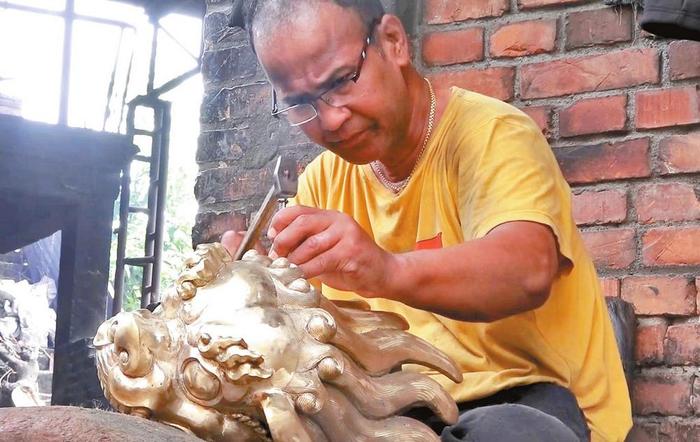
Workers at a copper and iron foundry factory in Nepal make metal crafts.
In Nepal, metal crafts are not only daily necessities or decorations, they also carry profound cultural connotations and historical memories. From the solemn bronze bells of temples to the metal sculptures guarding the doors of Nepali houses, every work is the result of the hard work and skills of the craftsmen. In the era of industrialization, there is still a group of people in Nepal who pass on the ancient metal casting skills with their hands and protect this traditional art.
“Our metal casting craftsmanship has a history of hundreds of years.” Bonajanya Lacha Sakaya is the managing director of a copper and iron casting factory in Nepal. His words are full of love and passion for this craft. pride. In the foundry, workers strictly follow traditional methods in every process, from the initial waxing to the final presentation of the work, all reflecting the craftsmen's ultimate pursuit of details.
The first step in casting is to make a wax pattern. Craftsmen carefully carved various complex patterns on the wax blocks. These beautiful patterns contain auspicious meanings. They then layered the wax mold with a fine earth mix. “The whole process needs to be repeated three times to ensure the quality of the final product.” Sakaya explained that after the wax model is completely wrapped in soil, it needs to be placed in the sun to dry naturally. No modern equipment can be used to speed up this process. A process.
After natural drying, these molds will be sent to the furnace. The high temperature will melt the waxy material inside and flow out, leaving a space for pouring liquid metal. “The melted wax can be recycled and reused after filtering,” Sakaya said. On the other side of the factory, workers heat the metal to a liquid state and slowly pour it into the mold cavity, waiting for it to cool and solidify.
The next day, the cooled metal products are removed from the earthen molds. Craftsmen use hammers, chisels, files and other tools to perform fine processing and careful carving. Every step tests the patience and skills of the craftsmen, and the reward for all these efforts is those exquisite handicrafts.
“This is our smallest bell, and the sound it makes is like this.” Sakaya tapped the small bell in her hand, and the crisp and sweet notes reverberated in the air. He explained that the larger the bell, the louder and longer the sound.
“We are also teaching others to protect this precious traditional craft.” Sakaya said hopefully. In this foundry, not only are the older generation of craftsmen adhering to the tradition, but young forces are also gradually joining in. They learn skills from their predecessors and work together to protect this precious cultural heritage. Reporter Wang Yunya