
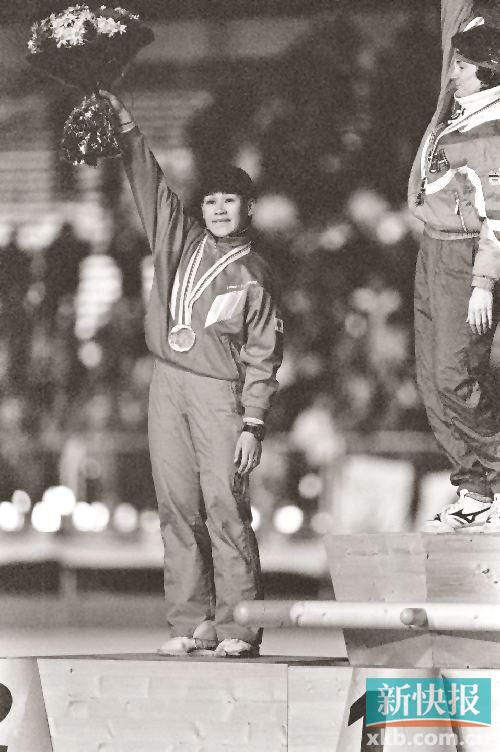
In the 16th Winter Olympics in 1992, Chinese athlete Ye Qiaobo won two silver medals in the women’s speed skating 500m and 1000m, ending the history of no medals in the Chinese Winter Olympics.Xinhua News Agency
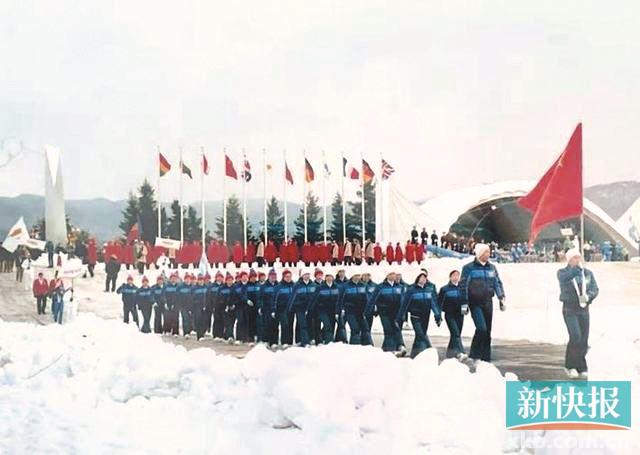 The 1980 Lake Placid Winter Olympics.Photo courtesy of Zhao Weichang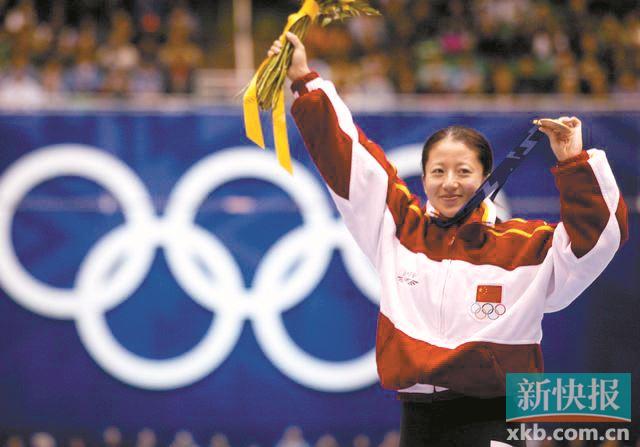
■2002 Salt Lake City Winter Olympics, Yang Yang won the first gold for the Chinese delegation.Xinhua News Agency
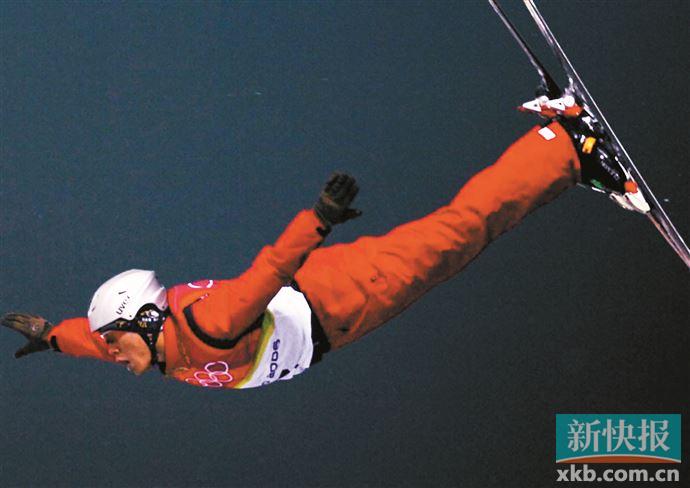
■In the 2006 Turin Winter Olympics, Han Xiaopeng won the first gold medal in the snow event of the Chinese delegation.Xinhua News Agency
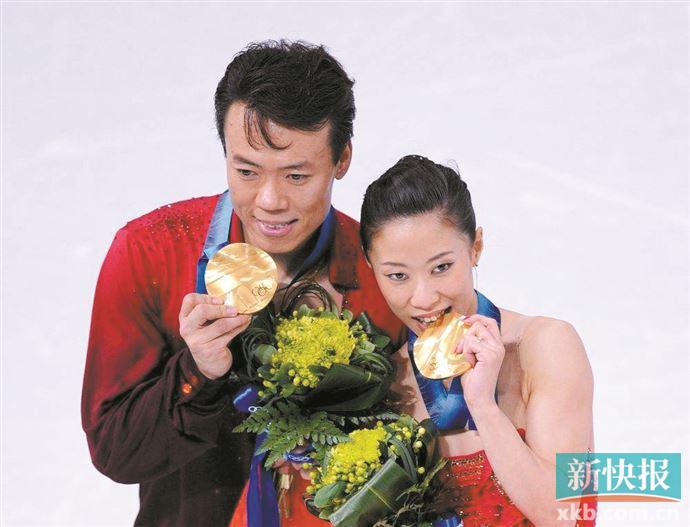
■Zhao Hongbo Shenxue
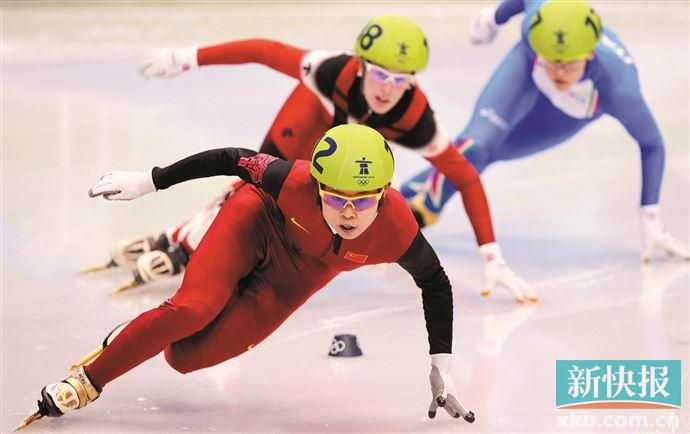
■Wang Meng won three gold medals at the Vancouver Winter Olympics.Xinhua News Agency
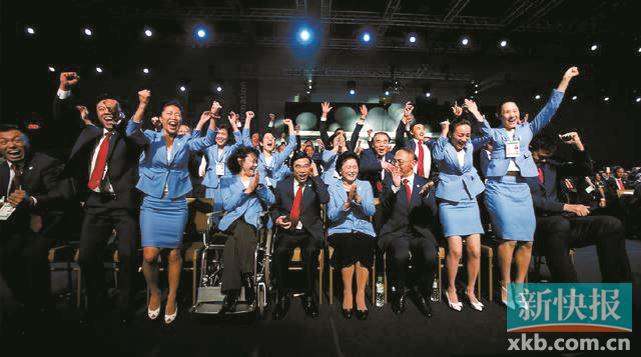 ■In 2015, Beijing successfully bid for the Winter Olympics.Xinhua News Agency
42 Years Across the 11th Winter Olympics
Since the Chinese delegation took part in the Winter Olympics for the first time in 1980 to today, China’s ice and snow athletes have gone through 42 years of chasing their dreams in winter events. From Lake Placid in the United States to the last Pyeongchang, South Korea, in the past 11 Winter Olympics, the Chinese delegation has won a total of 62 medals with 13 golds, 28 silvers and 21 bronzes. When we relive the classic moments of the past, it is still exciting.
■New Express reporter Gao Jing
Yang Yang achieves the breakthrough of “zero” gold medal in the Winter Olympics
As early as 1979, the International Olympic Committee restored China’s legal status in the international Olympic family. A year later, China sent 28 athletes to the 13th Winter Olympics held in Lake Placid, the United States. This was the first time that Chinese athletes participated in the Winter Olympics.
Speed skater Zhao Weichang was the flag bearer for that Chinese delegation. Recalling the years of those years, he is still very excited at the age of 72: “It was the first time that the five-star red flag appeared in the Winter Olympics, and the audience cheered one after another. Delighted to be back with the Olympic family.”
Since 1980, Chinese athletes have never missed any Winter Olympics.
At the 1988 Calgary Winter Olympics in Canada, Chinese athlete Li Yan won the 1000-meter gold medal, 500-meter bronze medal and 1500-meter bronze medal in the short track speed skating competition, which is still a performance event. rise up.
At the 1992 Winter Olympics in Albertville, France, Ye Qiaobo from Changchun, Jilin won a silver medal in the women’s 500-meter speed skating competition. This is the first time the Chinese delegation has won a medal in an official Winter Olympics competition. In the women’s 1000m race, Ye Qiaobo finished runner-up with a slight disadvantage of 0.02 seconds. At the 1994 Winter Olympics in Lillehammer, Norway, Ye Qiaobo still went into battle despite the smashed meniscus of his left knee, a large area of cartilage loss, rupture of the cruciate ligament, and displacement of the meniscus, fighting for the Chinese delegation. bronze medal. This spirit of never giving up and never admitting defeat is exactly the portrayal of Chinese ice and snow players.
Since its first participation in 1980, the Chinese delegation has won 10 silver medals and 4 bronze medals after 6 competitions.
After 22 years of waiting, Yang Yang from Qitaihe, Heilongjiang won the gold medal in the women’s 500m short track speed skating final at the 2002 Salt Lake City Winter Olympics in the United States, becoming China’s first Winter Olympic champion. Also in that competition, Yang Yang also won the gold medal in the women’s 1000m short track speed skating and became the “double champion”.
Speaking of which, Yang Yang’s absolute advantage was 1500 meters, but because she failed to adjust her mentality in time, she only won fourth place in this competition. Before the 500-meter race, she wrote down the problems that might arise in the race on a small note. After each round, she read the note sentence by sentence, telling herself what to do. When she crossed the finish line for the first time in the final, Yang Yang concentrated her strength and passion in her fists, and the Chinese players finally stood on the top podium of the official event of the Winter Olympics. With the 500-meter gold medal, Yang Yang is even more comfortable in the 1,000-meter race, so she won two gold medals in a row on the Salt Lake City track.
It can be said that the Salt Lake City Winter Olympics is a year in which the Chinese delegation has completed a leap. The entire delegation won 2 golds, 2 silvers and 4 bronzes, overwhelming the South Korean team and the Japanese team. top”.
Han Xiaopeng is a blockbuster, Wang Meng wins four gold medals
Although the breakthrough of the gold medal was achieved, most of the achievements of the Chinese delegation were achieved in the short-track speed skating competition, and the snow event has not yet achieved a breakthrough. At the 2006 Winter Olympics in Turin, Italy, this situation changed significantly. Han Xiaopeng from Xuzhou, Jiangsu won the gold medal in the freestyle skiing men’s aerial skills competition, becoming the first male athlete to win the gold medal in the history of the Chinese Winter Olympics. It is also the first Chinese player to win the snow championship.
Before this Winter Olympics, Han Xiaopeng had never won any championships in the World Series, but in the qualifying round, Han Xiaopeng took the lead and entered the final with 250.45 points. On the eve of the final, Han Xiaopeng lost sleep, recalling that night, he still remembers it fresh. But when he stepped on the track, the tension had completely disappeared, both movements were done in one go, and he finally won the gold medal in this event with 250.77 points. When CCTV was broadcasting Han Xiaopeng’s news that day, the host also recited Liu Bang’s “Song of the Gale” impromptu.
It was also from that competition that Wang Meng from Qitaihe, Heilongjiang started his domination of the short track speed skating competition. She won the women’s 500m championship that year. Four years later, at the Vancouver Winter Olympics in Canada, he won two gold medals in the 500m and 1000m alone, and he also won the gold medal in the 3000m relay with his teammates, breaking the Korean team’s 16-year monopoly in this event. Having won four gold medals in two competitions, Wang Meng has become the Chinese player with the most gold medals in the Winter Olympics so far.
Also at the Vancouver Winter Olympics, Zhou Yang from Changchun won the women’s 1500m short track speed skating championship; Shen Xue and Zhao Hongbo jointly won the gold medal in figure skating pair skating; Wang Bingyu, Liu Yin, Yue Qingqing, Zhou Yan and Liu Jinli ( The Chinese women’s curling team composed of substitutes) won the bronze medal. These achievements have filled the gaps of Chinese players in their corresponding projects.
So far, the Winter Olympics in Vancouver, Canada is the most glorious Winter Olympics for the Chinese delegation. At that time, the Chinese team tied for seventh place in the gold medal list with Sweden, the Nordic ice and snow powerhouse, with 5 golds, 2 silvers and 4 bronzes.
Beijing’s bid to host the 2015 Winter Olympics was successful
In the 2014 Sochi Winter Olympics in Russia, although the Chinese delegation did not perform as well as four years ago, it still won 3 golds, 4 silvers and 2 bronzes, surpassing the old rival South Korean delegation in the medal standings. Among them, Zhou Yang won the gold medal in the women’s 1500m short track speed skating event; Li Jianrou won the gold medal in the women’s 500m short track speed skating event; Zhang Hong won the gold medal in the women’s 1000m speed skating, creating the Chinese delegation in History on this project. In that competition, Wu Dajing from Jiamusi, Heilongjiang won the silver medal in the 500 meters. He was only 19 years old that year, which also paved the way for his subsequent outbreak.
At the 2018 Winter Olympics in Pyeongchang, South Korea, Wu Dajing showed good form in the men’s 500 meters: the quarter-final set a world record of 39 seconds 800, which had been dusty for 6 years. In the final, Wu Dajing won the championship with a time of 39.584 in the “encirclement” of two Korean players, and set a new world record again. That is also the only gold medal of the Chinese delegation in that event. At this Winter Olympics, Wu Dajing has undoubtedly become a representative of China’s ice and snow.
During this period, it is particularly worth mentioning that in July 2015, at the 128th Plenary Session of the International Olympic Committee held in Kuala Lumpur, Beijing successfully bid for the Winter Olympics. Beijing won 44 votes in a secret ballot attended by members of the International Olympic Committee. As a result, Beijing has become the first city in the world to win the right to host the Olympic Games in both winter and summer.