
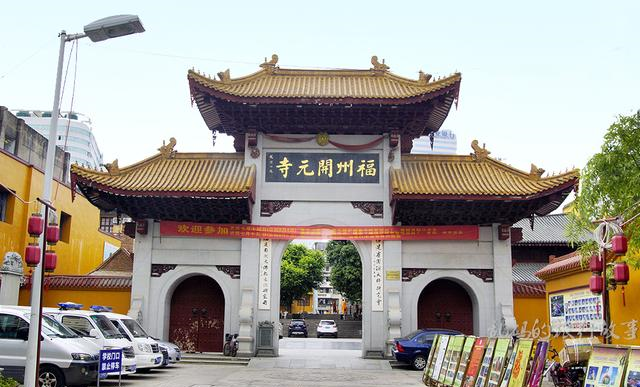
Fuzhou, the capital of Fujian Province, has a long history, rich cultural heritage and world-famous Buddhist culture. As early as the Five Dynasties period, it was known as the “Buddhist Country”, and it is the city with the largest number of key Buddhist monasteries in the country. Among them, Kaiyuan Temple, located in Gulou District, the first good district in Fuzhou, is famous for its four cultural heritages of sea silk, smelting, medicine and Buddhism. Because the temple enshrines a giant thousand-year-old iron cast Amitabha Buddha, it is also known as the “Iron Buddha Temple”.
Kaiyuan Temple in Fuzhou was built in the second year of Liang Taiqing (548) and was originally named Dayun Temple. It is the oldest existing Buddhist temple in Fuzhou, with a history of nearly 1,500 years. In the twenty-sixth year of Tang Kaiyuan (738), the name of the temple was changed to “Kaiyuan Temple”. The plaque above the mountain gate was written by Ouyang Xun, a famous calligrapher of the Tang Dynasty more than 1,000 years ago. Superior.
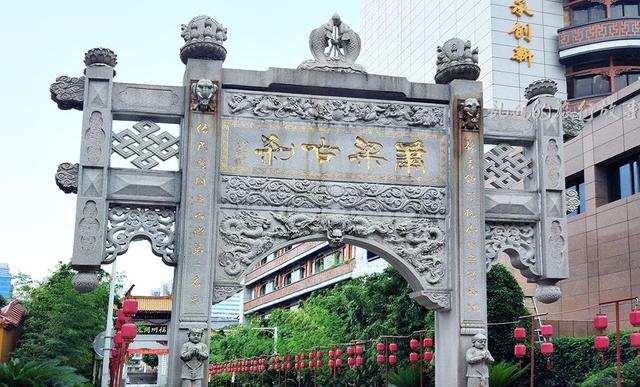
According to records, Kaiyuan Temple is also the largest temple in the history of Fuzhou. In its heyday, the building range started from Jingda Road in the east, Shangbin Road in the west, Sanmufang in the south, and Longshan and Zhishan in the north, accounting for about 10% of the urban area. one part. When the Tang Dynasty “Huichang Extermination Law”, it was required to keep only one temple in each state. Kaiyuan Temple was preserved due to its large scale and long history.
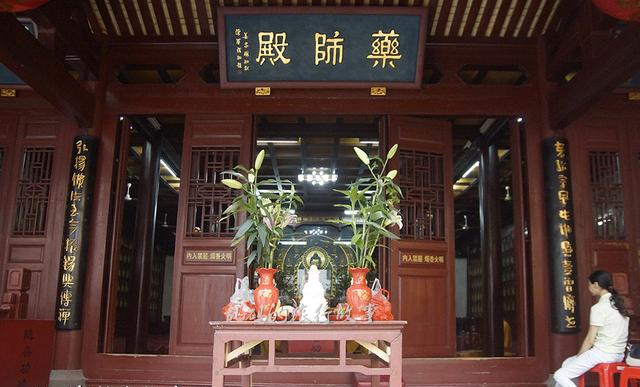
Kaiyuan Temple has suffered four fires in history, and was bombed by Japanese aircraft during the Anti-Japanese War. Now there are only a few temples such as Iron Buddha Hall, Lingshan Hall and Fohua Society, and the area is less than one-tenth of its heyday. . Walking into the temple, the first thing you see is the Yakushi Hall built in the late Ming Dynasty. As the famous Yakushi Buddha’s main dojo, Kaiyuan Temple has been dedicated to the oriental glazed world leader as early as the Tang Dynasty, and it has been inherited for thousands of years. nonstop.
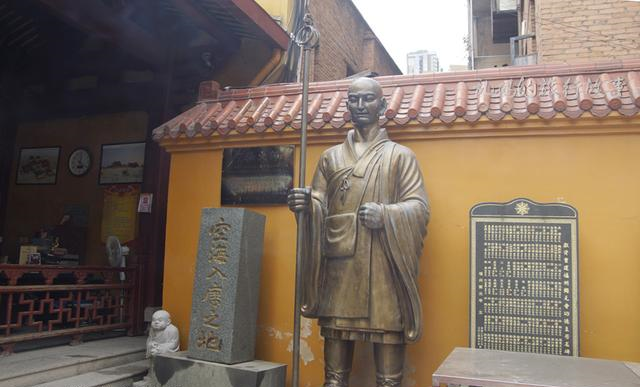
A bronze statue in front of Yakushi Hall is the famous Japanese monk Kukai Master. In the 20th year of Tang Zhenyuan (804), Kong Hai accompanied the Tang envoy to China to seek the law. The fleet drifted for 34 days due to a typhoon. Later, it docked at Chi’an Village, Changxi, Fujian (now Xiapu County). After being rescued, they were sent to Kaiyuan Temple in Fuzhou, and then to Chang’an. Today, the Lingyuan Pavilion on the second floor of the Pharmacist Hall has been turned into the “Master Kong Hai Memorial Hall”.
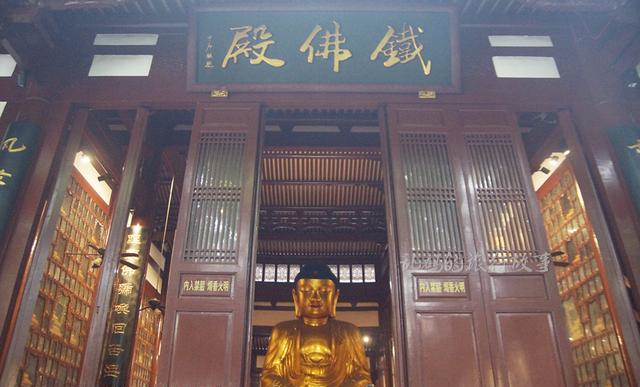
Continue walking through the Medicine Master Hall, and you will reach the most prestigious Iron Buddha Hall. An iron cast Amitabha Buddha enshrined in the hall, with a height of 5.8 meters and a head height of 2 meters, is affixed with gold foil, and the Dharma is solemnly seated on a lotus platform. It is also the largest ancient cast-iron Buddha statue found so far, with an estimated weight of more than 100,000 catties.
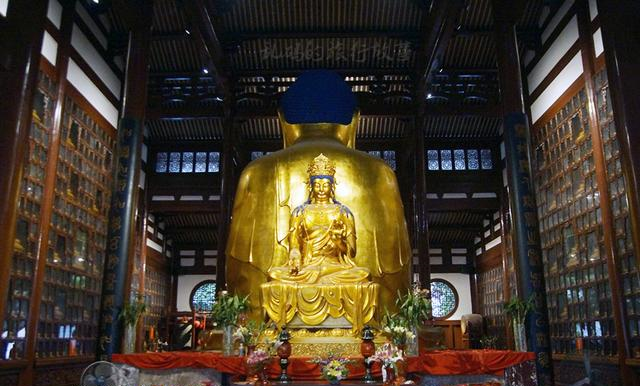
There is a small hole on the back of the iron Buddha, and it can be seen that the inside is made of iron, which is the proof that ancient Chinese craftsmen mastered the superb casting technology. However, what is puzzling is that this statue can be called a first-class Buddha statue in smelting and art, but there is no documentary record in history, and its casting method is still a mystery. This also corresponds to the couplets on both sides of the pillars in front of the temple: “The ancient Buddhas are all iron men, but ordinary people are said to be golden bodies.”
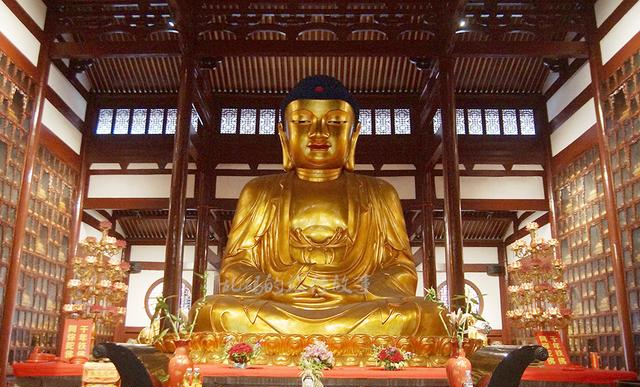
There are two different theories about the casting age of Tie Buddha: one is the theory of the late Tang and Five Dynasties, and the other is the theory of the Northern Song Dynasty Yuanfeng years ago. According to the “Rongcheng Jiwen” in the early Qing Dynasty: on the first day of the first month of April in the sixteenth year of Shunzhi (1659), the Iron Buddha Temple was rebuilt, and a silver pagoda was opened under the Buddha seat. Liu Jin.” This proves that the iron Buddha was cast before the sixth year (1083) of Yuanfeng in the Northern Song Dynasty.
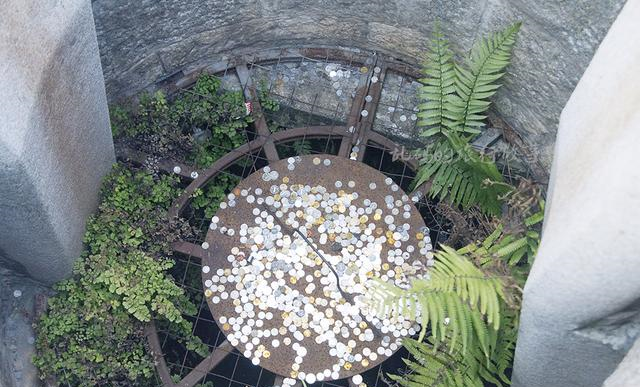
The Su Gong well in the temple was dug in the Song Dynasty. Su Gong refers to Su Shunyuan, a member of the Northern Song Dynasty Shangshudu Branch. It is called “Su Gongjing”. It is said that there is also a Sugong well under the lotus seat of the iron Buddha, so that the oil-wax model used for casting the Buddha melts and flows into the well when heated, making the Buddha’s body hollow.