
(Reprinted from: Puhua Youce)
Research on the development of the foundry industry: industrial chain, technical characteristics and competitive landscape
1.CastingIndustry overview and classification
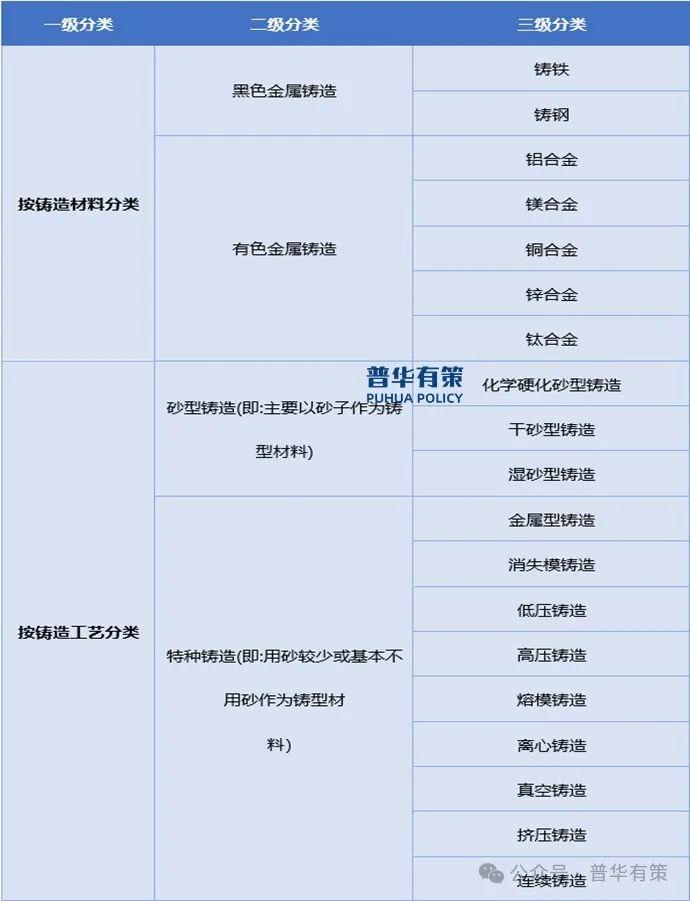
As an indispensable process link in the equipment manufacturing industry, casting is an important support and basic guarantee for the innovative development of equipment manufacturing such as mining machinery, energy and electricity, rail transit, aerospace, and automobiles. It is related to the safety and stability of the equipment manufacturing industry chain. The development level of the casting industry has a huge impact on a country's overall industrial level. The specific classification of castings is as follows according to the materials and usage processes used in casting:
Casting classification situation
2. Current development status of the foundry industry
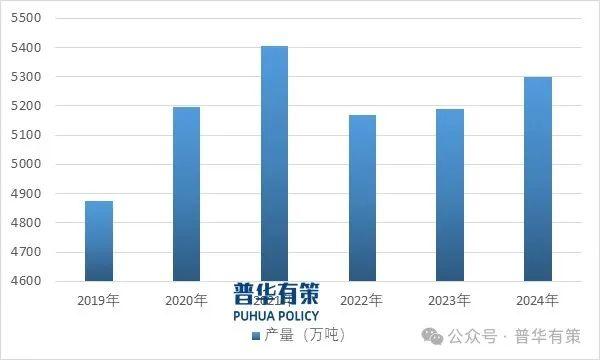
The current casting industry is developing relatively maturely, and the future development trend is becoming stable. In terms of casting output, the global casting output has remained at around 110 million tons in the past decade. Among them, due to the impact of global public health incidents in 2019-2020, casting production declined significantly; as the impact of public health incidents weakened and downstream demand gradually recovered, global casting production increased again from 2021-2023. From the perspective of global output regional distribution, my country's casting production accounted for more than 40% of the global casting production from 2016 to 2024, making it the world's largest casting producer. According to statistics, China's total casting production in 2023 is as high as 51.9 million tons, accounting for more than 60% of the global total output, almost four times that of the second largest producer. However, in terms of product quality and accuracy, technological advancement and added value, independent innovation, my country still has a certain gap from the “casting power”. Especially in Europe and the United States and other industries as an example, the US casting industry mainly focuses on high-tech and high-value-added products, especially in the aerospace and defense and military industries; the German casting industry is known for its high quality and high precision, especially in the fields of automobiles and machinery manufacturing.
my country's casting output from 2019 to 2024
 Source: Puhua Youce
3. Upstream and downstream industrial chains of the foundry industry
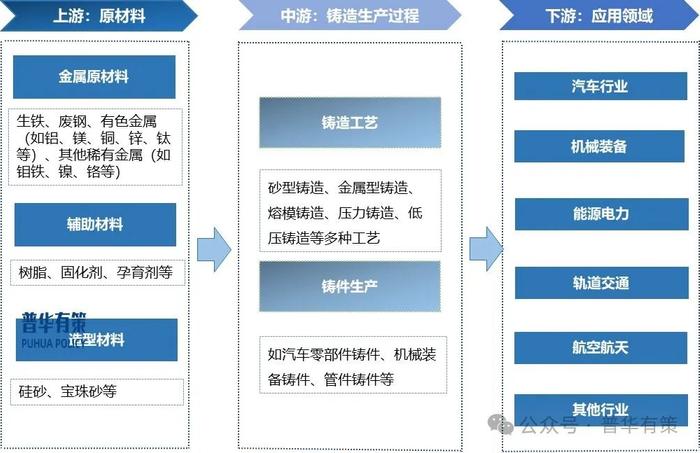
The casting industry has a variety of raw materials, mainly pig iron, scrap steel, aluminum ingots, etc. Pig iron is smelted from iron ore, scrap steel is derived from mechanical manufacturing scraps, etc., and aluminum ingots are refined and regenerated by bauxite ore through electrolytic aluminum and other processes. At present, the domestic markets such as pig iron, scrap steel, and aluminum ingots are transparent, with rich supply channels and no shortage.
Casting is an important link in the equipment manufacturing industry, with wide downstream applications, involving industries such as automobiles and mining machinery. Casting demand is closely related to the development of various industries in the national economy, and output depends on the scale of downstream demand. The downstream demand structure will be stable from 2018 to 2024. The fields of automobiles, casting pipes and fittings, internal combustion engines, agricultural machinery, mining and smelting, heavy machinery, engineering machinery, etc. are the main areas of casting demand. Among them, the demand for castings in the automotive field accounts for nearly 30% of the total casting output, ranking first in various application fields for a long time. With the stable development of the national economy, the total demand for castings is expected to grow, and the demand structure may fluctuate due to the development of downstream fields.
The situation of upstream and downstream industrial chains in the casting industry
 Source: Puhua Youce
4.CastingIndustry technical characteristics and technical level
(1) Technical characteristics
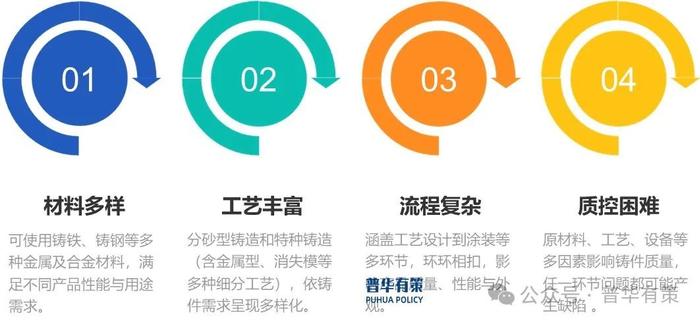
As a comprehensive industry involving multiple disciplines and cross-fields such as materials science, mechanical engineering, metallurgy, thermodynamics, and fluid mechanics, the casting industry is a typical technology-intensive industry and has the following technical characteristics:
Technical characteristics of the foundry industry
 Source: Puhua Youce
(2) Technical level
In recent years, with the promotion and development of new technologies and the transformation and upgrading of industrial structure, the technical level of the casting industry has been continuously improved, including better performance of casting materials, more advanced casting processes, smarter production processes, and more environmentally friendly energy consumption. Although my country's casting industry has a low concentration and the technical management level of enterprises is uneven, some domestic casting companies have made significant progress in casting technology and process levels by introducing advanced foreign casting technology and equipment and continuing independent research and development and innovation. The dimensional accuracy, surface quality and internal performance of key castings required for high-end equipment have reached the international advanced level.
In the future, with the continuous advancement of technology, the casting industry will increasingly adopt automated and intelligent technologies, such as robot shaping, automatic casting systems, computer simulation and simulation. The application of advanced technology can improve production efficiency, reduce labor intensity, and predict possible defects or defects in the production process. By continuously optimizing process parameters, the quality stability and yield of castings can be improved.
5. Overall development trend of the foundry industry
(1) The industry concentration continues to improve, and the industrial layout is further optimized
As market competition continues to intensify, some casting companies with smaller scale and backward technology and equipment will be gradually eliminated; on the contrary, for large scale and advanced technology and equipment, high-quality casting companies with larger scale and advanced technology and equipment, they will continuously optimize their scale benefits through mergers and acquisitions or restructuring or expanding their own production scale, further increase their market share and influence, and thus promote the continuous increase in industry concentration and further optimize their industrial layout.
(2) The independent innovation capability is continuously strengthened and product quality is further improved
At present, most of the key castings in my country have achieved independent research and development and production, but some key castings still cannot fully meet the development needs of major technical equipment; at the same time, many key castings still need to be further improved in terms of product performance and quality stability. In the future, with the implementation of various domestic industrial policies, my country's foundry enterprises' independent innovation capabilities will continue to strengthen, and the shortcomings in industrial development will be filled as soon as possible. At that time, the quality of domestic foundry products will be further improved, and then enter a new stage of high-quality development.
(3) Intelligence and digitalization are constantly integrated, and the pace of industrial transformation and upgrading is accelerating.
There are many casting production processes and methods, generally with the characteristics of long process flow, complex production process, many quality control factors, and high on-site labor intensity. In order to improve production efficiency, improve quality control capabilities, and reduce labor intensity, the industry's scientific and technological innovation efforts will be further strengthened. With the popularization of the concept of Industry 4.0, casting companies will adopt more automated production lines and smart devices. The continuous integration of intelligence and digitalization will become the key development direction of the casting industry in the future, thereby accelerating the pace of industrial transformation and upgrading.
(4) Implement “green casting” and continuously strengthen the concept of sustainable development
In recent years, in order to adapt to the development trend and requirements of “carbon neutrality and carbon peak”, the country and society have strictly controlled the energy consumption and pollution of casting enterprises, and have vigorously guided casting enterprises to develop and apply more efficient smelting technologies and clean production processes to reduce energy consumption and carbon emissions. Energy-saving production, waste recycling, and energy consumption reduction with the theme of “green casting” will become the main theme of the future development of the casting industry, and further promote the casting industry to follow the sustainable development path of “efficiency, energy-saving, material-saving, and environmentally friendly”.
(5) Further expand overseas markets on the premise of meeting domestic demand
With the intensification of domestic market competition and the advancement of national strategies such as the “Belt and Road” initiative, more and more domestic high-quality foundry companies will take this opportunity to develop and actively expand overseas markets with their own technological and product advantages, seek differentiated competitive strategies, and further improve product competitiveness and market share.
6. Competitive landscape of the foundry industry
Globally, there are few foreign casting companies but they start early and develop for a long time. The company has a large scale and a high degree of specialization. They have strong technical R&D and management systems, and have leading advantages in design, process, etc. Driven by the domestic industrial support policies, the technology and experience of casting enterprises have improved, and some leading enterprises have reached or reached the international advanced level.
In the domestic market, according to the “14th Five-Year Plan for the Foundry Industry” Development Plan, among the more than 20,000 casting companies, there are more than 1,000 companies with a production capacity of more than 10,000 tons, and nearly 200 of them are produced by more than 50,000 tons. The average scale of enterprises is small and the development is unbalanced, and it is in a polarized pattern. Small and medium-sized enterprises will withdraw due to their difficulties in survival due to their disadvantages in scale, capital and equipment; while high-quality enterprises rely on their advantages such as technology to gain more customer resources, establish strategic cooperation, gain market opportunities, and are expected to become backbone enterprises.
7. The situation of major enterprises in the industry
Casting products are widely used in various downstream industries and their sub-sectors, and the downstream application fields and product types that different companies focus on are different. Most domestic foundry companies are limited by factors such as technology, capital, equipment, and talents, and usually focus on certain specific segments or product types. The following is the situation of some companies in the casting industry:
(1) Zhejiang Hongma Casting Co., Ltd.
It is an enterprise integrating casting, mechanical processing (mechanical manufacturing) and sales. Its products are mainly mining machinery castings, marine castings, pump and valve castings, and engineering machinery castings. It is widely used in petroleum, chemical industry, electricity, automobile, railway, shipbuilding, construction, industrial and mining and general machinery fields. Its products have won the Gold Award for Quality Castings at the China International Foundry Expo many times.
(2) Yingliu shares
Focusing on the research, development, manufacturing and sales of core components of high-end equipment, the products are positioned at high-end parts of special equipment with cast steel parts as the source. They are mainly used in the oil and natural gas, clean and efficient power generation, engineering and mining machinery industries, and are also widely used in other equipment industries such as medical equipment, automatic control, national defense and military industry.
(3) Fu'an Co., Ltd.
The equipment manufacturing sector is mainly engaged in the production and sales of large cast steel parts equipped with major technical equipment, and is mainly used in the fields of electricity, engineering machinery, mining machinery, rail transit, etc.
(4) Fuxin Wanda Casting Co., Ltd.
It is a company specializing in the research and development, production and manufacturing of high-end large-scale aluminum alloy castings. Its products are widely used in ultra-high voltage transmission and transformation, high-speed rail transit, aerospace and other fields.
(5) Yingkou Economic and Technological Development Zone Jinda Alloy Casting Co., Ltd.
It is a high-performance aluminum alloy parts manufacturer integrating special casting and mechanical finishing. It can cast various aluminum alloy castings with special requirements such as high strength, high density, high conductivity, thin-walled pressure resistance, etc. In 2023, civilian products sales were nearly 125 million yuan, of which the export volume was RMB 20 million. The products were sold to Germany, the United States, Mexico, India and other countries, with an annual product output of nearly 1,800 tons.
(6) Nanyang Hongyuan Mechanical and Electrical Technology Co., Ltd.
It has comprehensive production capabilities such as casting and precision machining of high-end aluminum alloy products. Its products cover ultra-high voltage transmission and distribution equipment and high-speed rail parts, and undertakes some military products production tasks. It has participated in a number of national key ultra-high voltage and high-speed rail construction projects and weapons and equipment production projects.
“Panoramic Research Report on Subdivided Products and Industrial Chain of Foundry Industry in the 15th Five-Year Plan”It covers the global development profile of the industry and China, supply and demand data, market size, industrial policies/planning, related technologies, competitive landscape, upstream raw materials, downstream main application market demand scale and prospects, regional structure, market concentration, key enterprises/players, enterprise share, industry characteristics, driving factors, market prospect forecast, investment strategies, main barrier composition, related risks, etc. At the same time, Beijing Puhua Youce Information Consulting Co., Ltd. also provides special market research projects, industrial research reports, industrial chain consulting, project feasibility study reports, specialized and new little giant certification, market share reports, 15th Five-Year Plan, post-project evaluation report, BP business plan, industrial map, industrial planning, blue and white paper, national manufacturing single champion enterprise certification, IPO fundraising and investment feasibility research, IPO working paper consultation and other services. (PHPOLICY:GYF)
Report Directory:
Part OneIndustry development research
Chapter 1Casting Industry Overview
Section 1Definition and classification of casting products
1. Product definition
2. Product classification situation
Section 2Analysis of the development history of the foundry industry
Section 3Development of the foundry industry
Chapter 2 “14th Five-Year Plan” Analysis of the Development Environment of the Foundry Industry
Section 1: The competent departments and regulatory systems of the foundry industry
Section 2 Development Plan of Foundry Industry
Section 3 Policies and laws and regulations of the foundry industry
Section 4 Analysis of the impact of policies on industry market
Section 5 Analysis of the current status and characteristics of the technological development of the foundry industry
Section 6 Technology Trend Forecast of Foundry Industry
Section 7 Analysis of the economic environment of the foundry industry
Chapter 2Research on the Industrial Chain of Foundry Industry in the 14th Five-Year Plan
Section 1 Industrial Chain Structure Chart and Analysis
Section 2 Analysis of upstream and downstream relationships of industrial chain
1. Relevance and impact of upstream industries
2. Relevance and impact of downstream industries
Section 3 Value distribution of industrial chain
Section 4 Current development status and trend forecast of upstream industries
1. Current development status of major upstream industries
2. Upstream industry development trends
Section 5 Current development status and trend forecast of downstream industries
1. Analysis of the application structure of downstream segmented markets
2. Current development status of downstream industries
3. Downstream industry development trends
Section 6 Competition status of industrial chain
Chapter 4Casting market development overview and forecast
Section 1Analysis of the current development status of the foundry industry
Section 2 Analysis and forecast of supply and demand scale growth in the casting industry
one,Demand Growth Analysis and Forecast
two,Supply scale growth analysis and forecast
Section 3 Analysis of the development drivers of casting industry
Section 4 Penetration of the foundry industry
Section 5Market Size Analysis and Forecast of Foundry Industry
Chapter 5 Analysis of the operational situation of the foundry industry in the 14th Five-Year Plan
Section 1 Analysis of profit model of casting industry
Section 2 Analysis of profitability of foundry industry
Section 3 Analysis of output value scale of casting industry
Section 4 Analysis of production cost in casting industry
Chapter 6 Analysis of the competitive landscape and concentration of the industry in the 14th Five-Year Plan
Section 1 Analysis of the competitive landscape of the foundry industry
Section 2 Analysis of concentration of casting market
Section 3Analysis of regional concentration in the foundry industry
Part 2 Market Application Research and Trends
Chapter 7: Application and Trend Forecast of Foundry Industry Segment Markets in the 14th Five-Year Plan
Section 1 Analysis and Trends of Foundry Market in Field A
1. Current development status
2. Market Size Analysis
3. Development prospect forecast
Section 2 Analysis and Trends of Foundry Market in Field B
1. Current development status
2. Market Size Analysis
3. Development prospect forecast
Section 3 Analysis and Trends of Foundry Market in Field C
1. Current development status
2. Market Size Analysis
3. Development prospect forecast
Section 4 Analysis and Trends of Foundry Market in Field D
1. Current development status
2. Market Size Analysis
3. Development prospect forecast
Part 3 Analysis of competitors in the casting industry
Chapter 8 Research on key enterprises in the foundry industry
Section 1Enterprise One
1. Company profile
2. Corporate related business situation
III. Business situation
4. Analysis of the core competitiveness and market position of the enterprise
Section 2Enterprise II
1. Company profile
2. Corporate related business situation
III. Business situation
4. Analysis of the core competitiveness and market position of the enterprise
Section 3Enterprise Three
1. Company profile
2. Corporate related business situation
III. Business situation
4. Analysis of the core competitiveness and market position of the enterprise
Section 4Enterprise 4
1. Company profile
2. Corporate related business situation
III. Business situation
4. Analysis of the core competitiveness and market position of the enterprise
Section 5Enterprise Five
1. Company profile
2. Corporate related business situation
III. Business situation
4. Analysis of the core competitiveness and market position of the enterprise
Section 6 Analysis of market share of key enterprises
Part 4 Downstream Customer Situation
Chapter 8 Research and Analysis of Top Downstream Companies
Section 1 Class A Enterprise Customer Research
1. Enterprise one
1. Business overview
2. Casting application analysis
2. Enterprise 2
1. Business overview
2. Casting application analysis
3. Enterprise three
1. Business overview
2. Casting application analysis
Section 2 Research on Class B Enterprise Customers
1. Enterprise one
1. Business overview
2. Casting application analysis
2. Enterprise 2
1. Business overview
2. Casting application analysis
3. Enterprise three
1. Business overview
2. Casting application analysis
Section 3 Research on Class C Enterprise Customers
1. Enterprise one
1. Business overview
2. Casting application analysis
2. Enterprise 2
1. Business overview
2. Casting application analysis
3. Enterprise three
1. Business overview
2. Casting application analysis
Part 5 Prospects and Investment Opportunities Risk Analysis
Chapter 9The development trend and prospects of the foundry industry in the 15th Five-Year Plan
Section 1 Market Size Forecast of Foundry Industry
Section 2 Development trends of the foundry industry
Section 3 Application trends and prospects for casting industry
Chapter 10 Analysis of investment opportunities and risks in the foundry industry on the 15th Five-Year Plan
Section 1 Investment Opportunities in Foundry Industry
1. Industrial chain investment opportunities
2. Investment opportunities in segmented markets
3. Investment opportunities in key areas
Section 2 The main barriers in the casting industry
1. Technical barriers
2. Funding barriers
3. Talent barriers
4. Other barriers
Section 3 Investment risks and prevention in the foundry industry
1. Policy risks and prevention
2. Technical risks and prevention
3. Supply and demand risks and prevention
4. Macroeconomic fluctuations risks and prevention
5. Risks and prevention of related industries
6. Product structure risks and prevention
7. Other risks and prevention
Chapter 11The development direction and strategic plan of the foundry industry in the 15th Five-Year Plan
Section 1The direction of the foundry industry
Section 2 Importance of Strategic Planning in Foundry Industry
Section 3 Strategic Planning Direction of Foundry Industry
Chapter 12 Research Conclusions and Suggestions for Foundry Industry