
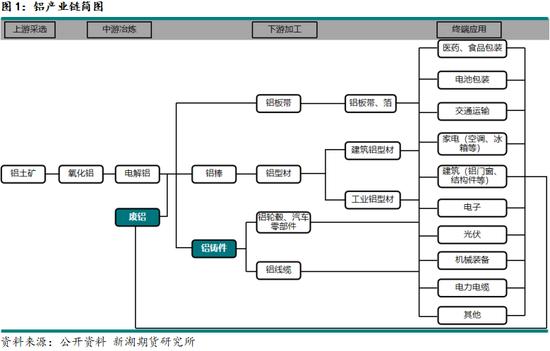
Source: Lakeside New Words
Cast aluminum alloy is an aluminum alloy that fills the casting mold with molten metal to obtain blanks of parts in various shapes. It has the advantages of low density, high specific strength, good corrosion resistance and casting process, and small limitations due to the design of parts structure. Cast aluminum alloys are divided into medium-strength alloys based on Al-Si and Al-Si-Mg-Cu according to the differences in the components;High-strength alloy; Al-Mg-basedCorrosion-resistant alloy. Most cast aluminum alloys require heat treatment to achieve the purpose of strengthening the alloy, eliminating the internal stress of the casting, stabilizing the structure and part size. Cast aluminum alloy is mainly used to make beams, fuel turbine blades, pump bodies, hangers, wheel hubs, air intake lips and engine receivers, etc., and is also used to make automobile cylinder heads, gearboxes and pistons, instrument housings and supercharger pump bodies and other parts.
1. Brief analysis of the aluminum and cast aluminum alloy industry chain
Different from aluminum plate, strip foil and aluminum profiles, electrolytic aluminum as the main raw material, cast aluminum alloys usually use recycled waste aluminum as the main raw material, so they have their own uniqueness in the aluminum industry chain. In addition to playing an important role in automotive lightweighting, cast aluminum alloys have great advantages over electrolytic aluminum in reducing carbon emissions, because their unit carbon emissions are only about 5% of electrolytic aluminum. Cast aluminum alloys complete the complete closed loop of the life cycle of the aluminum industry chain through recycling and reuse of waste aluminum.
Scrap aluminum is the main raw material for cast aluminum alloys, and scrap aluminum is also basically used to produce cast aluminum alloy ingots, so cast aluminum alloys are mostly called recycled aluminum alloys. With the upgrading of technology, some recycling of waste aluminum can be relegated and the partially recovered waste aluminum can also become the raw material for production of aluminum plates, aluminum rods and aluminum rods. However, recycled aluminum alloys are still the main downstream of waste aluminum, accounting for more than 70% of the total demand for waste aluminum.
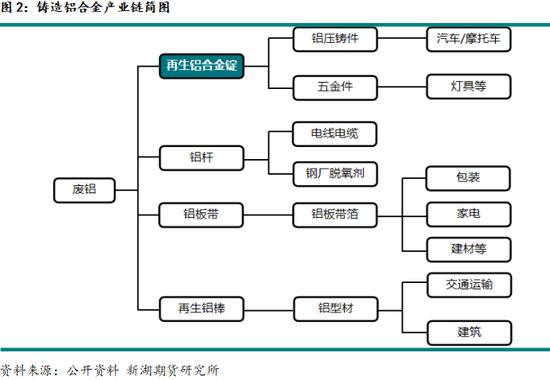
Although recycled aluminum alloy ingots usually use scrap aluminum as the main raw material, due to the large differences in the elements contained in the scrap aluminum, factories usually add elements such as silicon and copper, and even purchase primary aluminum to match to meet the alloy element ratio standards.
2. Preparation and classification of cast aluminum alloys
1. Preparation of cast aluminum alloy
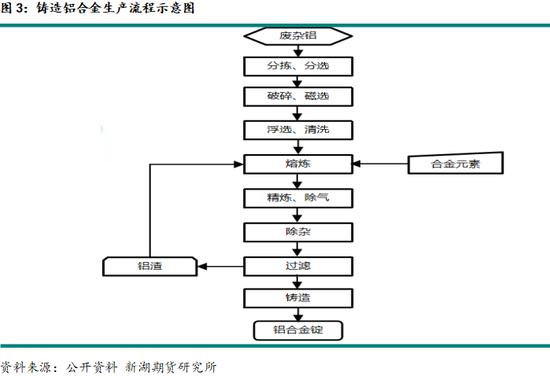
The preparation of recycled aluminum alloy is a process of producing aluminum alloy materials that meet the standards through sorting, pretreatment, smelting, component adjustment and other processes.
Aluminum is widely used, so the sources of scrap aluminum are also very wide. Common ones include aluminum automobile disassembly (engines, wheel hubs, etc.), building profiles (doors and windows, curtain walls), cans, consumer electronic waste (mobile phones, computer shells, etc.), industrial waste (machinery debris), etc.
(1) Classification
The scrap aluminum recycled or purchased must first be graded according to the alloy grade, impurity content, and physical form to ensure that the raw material components are controllable. This will use spectral sorting to quickly identify alloy components, and in addition, non-metallic magazines are separated by eddy current sorting.
(2) Pre-processing
Pretreatment includes crushing and cleaning, paint removal and drying. Crush and crush large pieces of scrap aluminum to 10-50mm through a crusher, and then remove impurities such as iron and plastic through magnetic separation and flotation. Cleaning is to remove oil stains through high-pressure water guns or ultrasonic cleaning; paint removal is to use high-temperature pyrolysis (400-600℃) or chemical solvent to remove paint to prevent harmful gases during smelting; drying means to dry the waste aluminum after the pre-treatment until the moisture content is less than 1%, so as to avoid the splashing of aluminum during smelting.
(3) Smelting
The scrap aluminum after the pretreatment is poured into a double-chamber furnace and pre-melted in a low-temperature chamber (400-500℃) to avoid impurities oxidation, and then transferred to a rotary smelting furnace to separate the aluminum liquid from the residue by centrifugal force. The smelting temperature is generally up to 700-750℃. Then, cover (NaCl+KCl) is added to isolate oxygen to reduce burn loss (aluminum oxidation loss <3%). Then add alloy components such as silicon according to the target alloy grade (such as ADC12 needs to contain 9.6-12% Si), and sometimes pure aluminum ingots are needed to adjust the components.
(4) Refining and removing miscellaneous
Degassing: Inject nitrogen or argon into the aluminum liquid, remove hydrogen by rotating the degasser, so that the hydrogen content in the melt is reduced to below 0.1 ml/100g, and prevent pores in the castings.
Iron removal: Add manganese (Mn) or chromium (Cr) to form a high melting point compound with iron and settle into the slag to remove it, so that the melt iron content is less than 1.2%.
Filtration: Use ceramic filter plate (porosity 30-50PPI) or foam ceramic filtration to intercept micro-oxide particles.
(5) Casting to form
The alloy melt is injected into the mold to form and cooled with water.
2. Classification of cast aluminum alloy
Cast aluminum alloys are mainly divided into four categories according to the differences in the main alloy elements: aluminum-silicon (Al-Si) system, aluminum-copper (Al-Cu) system, aluminum-magnesium (Al-Mg) system and aluminum-zinc (Al-Zn) system. The method of representing the cast aluminum alloy grade is carried out in accordance with the provisions of GB/T8063-2017.
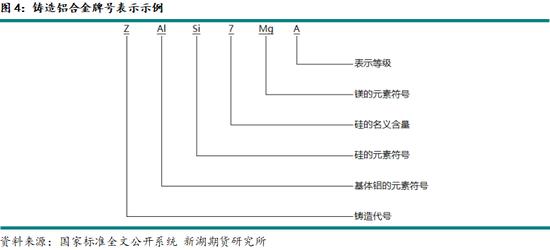
The alloy code consists of the Chinese pinyin letter “ZL” that represents cast aluminum and the three Arabic numerals followed by it. The first digit after ZL represents the series of alloys, where 1, 2, 3, and 4 represent aluminum-silicon, aluminum-copper, aluminum-magnesium, and aluminum-zinc series alloys respectively, and the second and three digits after ZL represent the sequence number of the alloys. The high-quality alloy has a letter “A” attached to its code.
Aluminum-silicon alloys have the best casting performance, good fluidity, low shrinkage and excellent corrosion resistance. They are widely used in structural parts such as shells, engine parts, etc. The silicon content is usually 4%-13%, and the grains are refined by deterioration (such as adding sodium or antimony) to improve the mechanical properties. Common aluminum-silicon alloy codes are ZL102, ZL104, and ZL101A, and the corresponding alloy grades are ZAlSi12, ZAlSi9Mg, and ZAlSi7MgA.
Aluminum-copper alloys contain 4%-5% copper, high high temperature strength, but poor casting performance and corrosion resistance, and are prone to shrinkage and thermal cracking defects. It needs to be strengthened by heat treatment and is suitable for structural parts under high temperature environments. Common aluminum-copper alloy codes are ZL201 and ZL205A.
Aluminum-magnesium alloy has the lowest density (2.55g/cm³), high strength (about 355MPa), excellent corrosion resistance, and is suitable for the marine and aerospace fields. However, the smelting process is complicated and it is necessary to prevent the precipitation of β phase. Used for radar bases, aircraft landing gear, etc. The common aluminum-magnesium alloy code is ZL303.
Aluminum-zinc alloys have high zinc content (usually higher than 10%), have “self-quenching” characteristics, high cast strength, and no heat treatment is required. However, it has poor corrosion resistance and high density, and is often used in non-high-precision fields such as models and brackets. The common aluminum-zinc alloy code is ZL401.
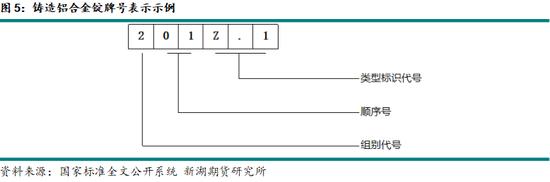
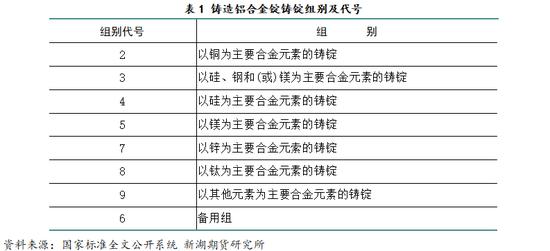
The method of indicating the grade of cast aluminum alloy ingots shall be carried out in accordance with the provisions of GB/T 8733-2016. The ingot grade is represented by 3 digits plus one English letter plus a decimal point and a number. The first digit of the grade indicates the code of the ingot group, and the ingot group is determined according to the main alloy element. The second and third digits of the grade are the ingot sequence numbers, which are used to identify different ingots in the same group. The English letters before the decimal point of the grade and the numbers after the decimal point are type identification codes, which are used to identify different types of the same ingot with similar chemical compositions.
There are detailed requirements for the chemical composition of the ingot. The corresponding target for cast aluminum alloy futures to be listed and traded is cast aluminum alloy ingot 383Y.3, which is a typical aluminum-silicon alloy. The main alloy elements are silicon, iron, copper, manganese, magnesium, etc., among which the silicon content is required to be between 9.6% and 12.0%, the iron content is required to be between 0.9%, the copper content is required to be between 1.5% and 3.5%, the manganese content is not more than 0.5%, and the magnesium content cannot be higher than 0.3%.
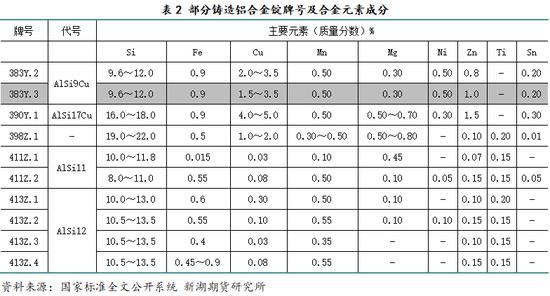
The commonly used ADC12 on the market is the cast aluminum alloy ingot corresponding to the Japanese standard JIS H2118-2006, which is very similar to the alloy element components of the brand 383Y.3 cast aluminum alloy ingot specified in the domestic GB/T 8733-2016.
3. Cast aluminum alloy supply
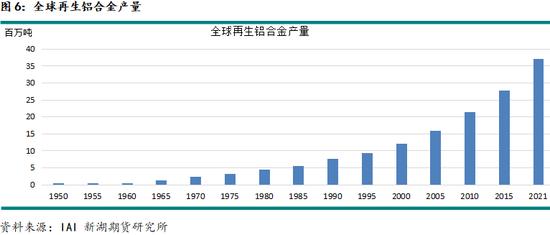
Due to the complex composition and the different components of the scrap aluminum source are also very different, scrap aluminum will be processed after post-treatment and then used for subsequent processing. IAI data shows that global recycled aluminum alloy production has grown rapidly, with production reaching 12 million tons in 2000. In 2010, it exceeded 2 million tons and reached 21.4 million tons, and by 2021, it reached 37.7 million tons, with an annual compound growth rate of 5.63%. IAI expects global recycled aluminum alloy production to reach 120 million tons by 2070.
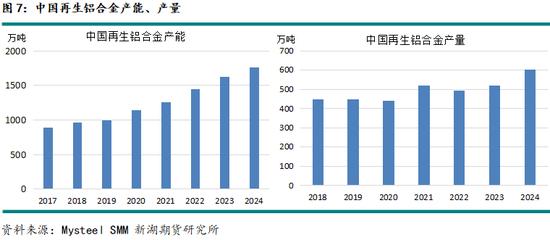
China's recycled aluminum alloy industry has developed more rapidly. In 2000, the domestic aluminum industry only entered a stage of steady development, and the recycled aluminum industry is still in its infancy. After 2010, the growth of electrolytic aluminum production capacity has accelerated, and the growth of the recycled aluminum industry has accelerated slightly, but it has been relatively slow. After that, it has accelerated significantly. By 2018, the production capacity has increased to nearly 10 million tons. In recent years, against the backdrop of carbon reduction at home and abroad, the growth of recycled aluminum alloy production capacity has further increased, and by 2024 it has reached a level of about 18 million tons. In sharp contrast to the sharp rise in production capacity, the growth rate of domestic recycled aluminum alloy production in recent years is not very prominent. According to Ganglian sample statistics, the production of recycled aluminum alloys in 2024 is only 6.03 million tons, with a total output estimated to be below 7 million tons, and the industrial start-up rate is only about 40%.
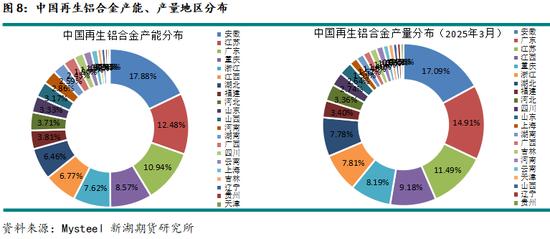
By region, Anhui's production capacity has grown rapidly in recent years, which is mainly due to the rapid development of the province's new energy vehicle industry, which has driven the growth of corresponding demand for automobile parts. In addition, tax and other policy preferential policies have also attracted more recycled aluminum alloy companies to build factories in Anhui. According to data from Ganglian, as of now, the completed production capacity of recycled aluminum alloy in Anhui Province exceeds 3.3 million tons, accounting for nearly 18% of the country's total production capacity, and there are still major growth plans for capacity this year. In March, the province's recycled aluminum alloy production reached 107,400 tons, accounting for 17% of the country. Jiangsu, Guangdong, Chongqing and Zhejiang are traditional recycled aluminum alloy provinces, with Jiangxi following the production capacity of recycled aluminum alloys.
4. Scrap aluminum supply
The recycling of resources is an eternal topic and an important part of global sustainable development. Aluminum is an important recyclable metal with good recyclability and high recovery rate. Scrapped aluminum is also an important part of achieving aluminum from ore to recycling. The aluminum industry was the first to develop in developed countries, and the scrap aluminum recycling industry started earlier in developed countries.
1. Global supply of scrap aluminum
From the first pure metal aluminum production in the 1830s, to the electrolytic aluminum production in the 1890s, and then to the rapid promotion of aluminum application in the 20th century, the global aluminum industry has gone through 200 years of development. However, the aluminum industry will enter the fast lane from the end of the 1950s. According to data from the International Aluminum Association (IAI), the global electrolytic aluminum production reached 1.5 million tons in 1950, and has grown rapidly since then. By 2024, the global electrolytic aluminum production has reached 72.8 million tons.
The good logistics properties of aluminum give it recyclability. With the rapid development of the aluminum industry, the aluminum recycling and reuse industry has also flourished. Due to the complex segmentation of the aluminum industry, the corresponding classification of scrap aluminum is also very complex. Depending on the cycle, scrap aluminum is usually divided into new waste and old waste. New waste refers to scraps, cutting materials, etc. generated in excess aluminum production and processing, and is usually used as primary waste. Old waste is scrap aluminum produced after the terminal product is scrapped after the service cycle is completed. According to different sources, scrap aluminum is divided into raw aluminum and cooked aluminum. The recycled materials from deformed aluminum alloys and related products are collectively called cooked aluminum, while the recycled materials from cast aluminum alloys and related products are called raw aluminum.
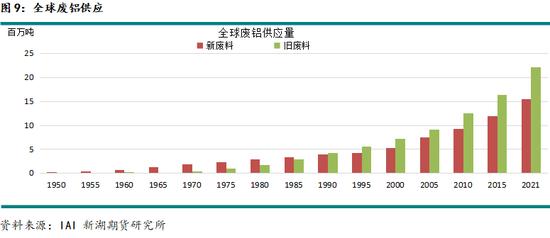
The aluminum recycling industry has flourished with the rapid development of the aluminum industry. Data from the International Aluminum Association shows that the global supply of scrap aluminum in 1950 was only about 200,000 tons, of which it was basically mainly new waste. Because it usually takes 20-30 years to complete the cycle of aluminum from output to the completion of the entire industrial chain, it was not until 1970 that the supply of old aluminum waste formed a certain scale, and in 1990, the supply exceeded that of new waste. IAI data shows that by 2021, the global aluminum scrap supply will reach 37.7 million tons, of which the supply of old waste will reach 22.2 million tons, accounting for nearly 60%.
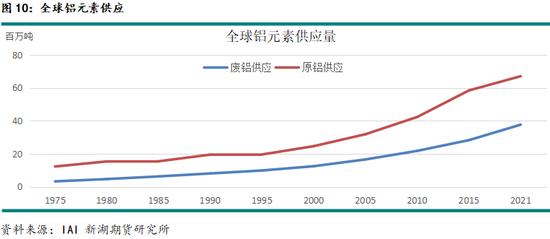
The continued growth of electrolytic aluminum and recycled aluminum supply has driven the growth of global aluminum supply, and as the amount of aluminum recycling becomes larger and larger, the proportion of scrap aluminum supply in aluminum supply continues to rise. IAI data shows that in 1975, the global supply of scrap aluminum was still at the level of 3 million tons, accounting for 21% of the aluminum element supply. By 2000, the supply of scrap aluminum rose to 12.5 million tons, accounting for 33.6% of the aluminum element supply, which further climbed to 36% in 2021. It is estimated that by 2035, scrap aluminum supply will account for more than 50% of aluminum element supply. Among them, the supply of old aluminum waste will grow faster, and it is estimated that the supply of old aluminum waste will exceed 40 million tons by 2035.
2. US scrap aluminum supply
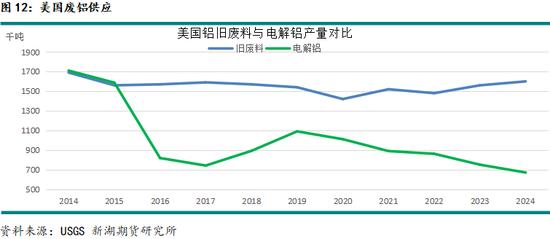
The United States led the world in the early stages of global aluminum industry development and is also one of the countries with the most mature development of the recycled aluminum industry. According to data from the U.S. Geological Survey (USGS), the production of scrap aluminum in the United States reached 1.26 million tons as early as 2006, and exceeded 1.5 million tons in 2027. Due to the impact of the financial crisis, aluminum consumption has plummeted, and the corresponding production of old aluminum waste also fell below 1.2 million tons between 2008 and 2010, and then returned to the growth trend. By 2014, the US scrap aluminum production climbed to a high of nearly 1.7 million tons. As US aluminum consumption enters the platform period, scrap aluminum production has also stabilized, and the production of old aluminum waste in 2024 is at the level of 1.6 million tons. It is worth mentioning that although the production of electrolytic aluminum in the United States has dropped significantly, the aluminum processing capacity is still growing. Aluminum processing companies import large amounts of electrolytic aluminum and process it into aluminum materials, which has maintained the growth momentum of new aluminum waste supply, and has basically maintained a supply of 2 million tons/year in recent years.
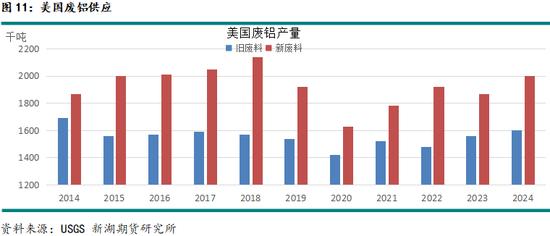
Although scrap aluminum production has stabilized, due to the sharp decline in the US electrolytic aluminum production in the past decade, scrap aluminum has increasingly dominated the US aluminum market.
3. China's scrap aluminum supply
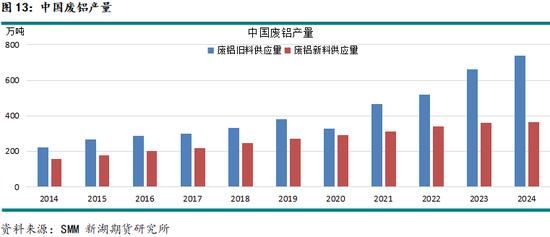
Compared with developed countries, China's aluminum industry started relatively late, but it has developed rapidly in the past decade and has quickly risen to the largest aluminum producer, and the global share of electrolytic aluminum production has climbed to about 60%. The country is gradually entering the aluminum recycling cycle, and the rapid growth of aluminum consumption has driven the development of the recycled aluminum industry into the fast lane. SMM data shows that in the past decade, China's scrap aluminum production has increased from 3.8 million tons to 11 million tons, of which the production of old aluminum waste has increased from 2.2 million tons to 7.4 million tons, with an annual compound growth rate of 12.75%.
Since my country's aluminum recycling cycle is relatively late than that of developed countries, but demand continues to grow, a large amount of scrap aluminum needs to be imported every year to supplement domestic demand. By 2018, more than 2 million tons of scrap aluminum were imported each year. After the adjustment of domestic import policies, import volume has declined due to certain impacts. In 2020, due to the impact of the epidemic, imports hit a low, falling to the level of 800,000 metal tons, and then gradually recovered. Imports in 2024 will recover to 1.78 million tons, equivalent to about 1.62 million tons of metal.
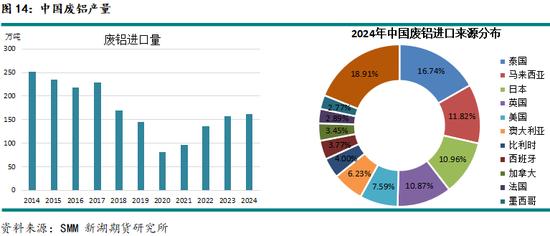
In terms of import distribution, except for Thailand and Malaysia, which are technical secondary schools for primary processing of scrap aluminum, the others are mainly developed countries, which also reflects that the aluminum consumption in developed countries is earlier than that in China. More than 90 countries or regions have imported sources that reflect the diversification of the distribution of import sources.