
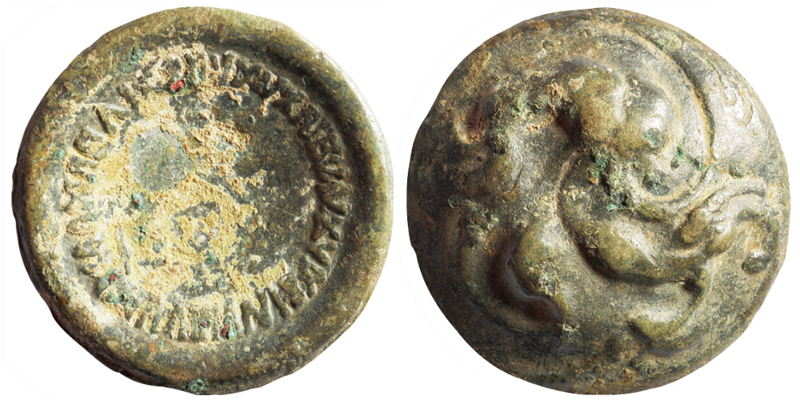
After Han Wudi issued the “white deer skin coin”, he minted another special currency “platinum three grades”.
After more than 2,000 years, the three platinum products have attracted the attention of the world again because 274 metal round cakes were unearthed in a Han Dynasty tomb in Lingtai County, Gansu Province in 1976. These objects are currently preserved in Lingtai County, Gansu Province. museum. This is an important unearthed discovery, and once it was reported, it immediately attracted great attention from collectors and scholars studying the history of the Western Regions. When it was first discovered, everyone could not confirm that these metal round cakes were currency, and it was even more impossible to connect them with the three platinum products minted and issued by Emperor Wu of the Han Dynasty. The focus at that time was mainly on two aspects:
One is the properties of these metal round cakes. Some people think that they are lead, but after measurement, it is found that they contain a part of silver, and there is a circle of symbols like text, or it may not be text but a pattern, so it is speculated that it may be currency. However, it was questioned because the shape, material, weight and size of these lead cakes were completely inconsistent with the ancient Chinese currency system;
The “Dragon Coin” of the three platinum products
Another focus of attention is the source of these metal round cakes. Most researchers believe that they do not seem to be in China, but may have flowed in from abroad along the Silk Road. There is even a view that these metal lead cakes may be a currency used by the Kushan Empire in Central Asia. After the collapse of the Kushan Empire in the 2nd century AD, it was brought back by some Da Yuezhi people who returned to their hometowns.
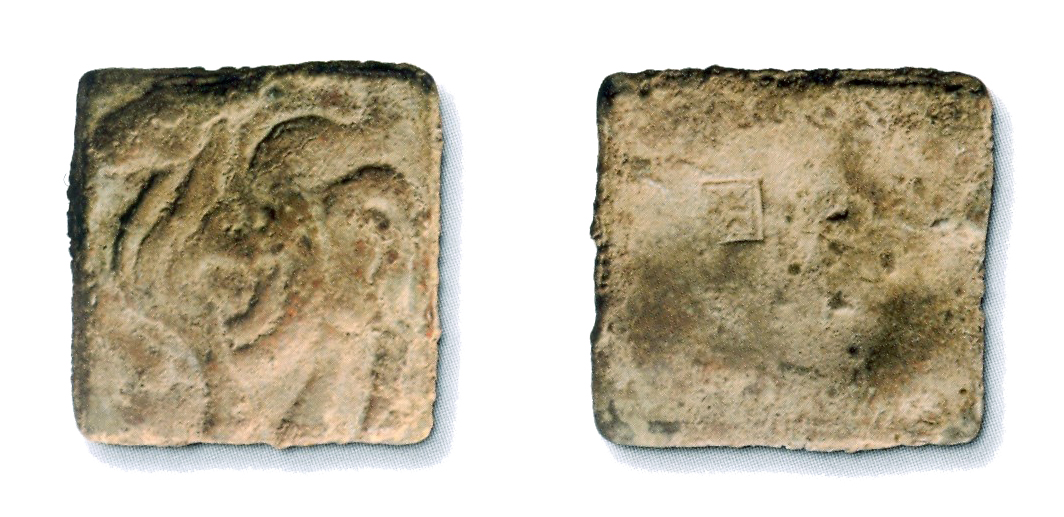
The “RM” of the three platinum products
Later, as more and more people paid attention to it, the question not only remained unsolved, but became more complicated. Because this kind of lead cake has been unearthed in Fufeng, Chang’an, Shaanxi, Shouzhou, Anhui, Hezhou, Gansu, Luoyang, Kaifeng, and Changsha in Henan. Not only are there a lot of them, but the area is no longer limited to the northwest region, which shows that these lead cakes should have no direct relationship with the Da Yuezhi people living in China. More importantly, in addition to the round ones, new oval and square ones have been discovered, and they are also cast with figures of turtles and horses respectively. Inspired by this, everyone looked back at the previous round cake and seemed to find that there was also a dragon-like pattern on it. So far, some people in the coin industry will find these three kinds of metal cakes, round, oval and square one after another, and boldly believe that they are the three platinum products cast in the period of Emperor Wudi of the Han Dynasty recorded in “Han Book of Food and Money”. As a result, these metal cakes have attracted the attention of the coin collecting community.
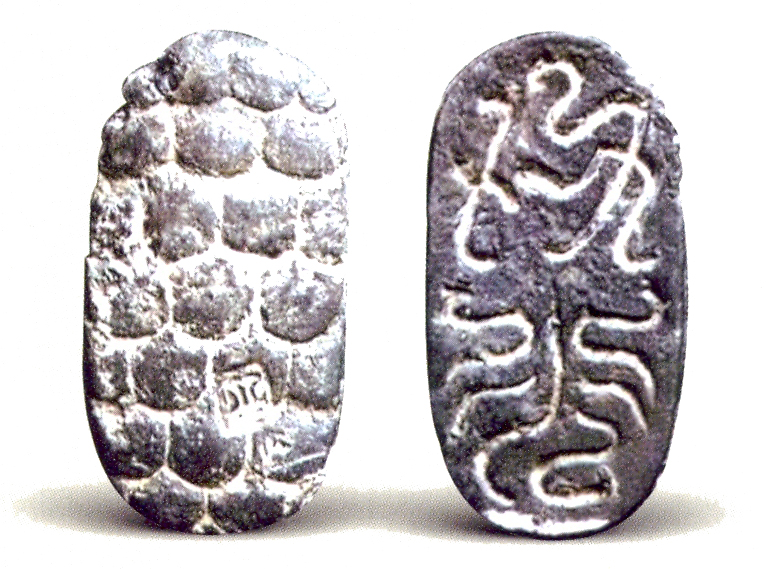
The “Turtle Coin” of the three platinum products
In order to respond to the concerns of the society and further explore the origin and properties of these metal cakes, the China Numismatic Society, in cooperation with the Shaanxi Numismatic Society, held a special academic seminar on the three platinum products in Hanzhong City, Shaanxi Province in August 2003. meeting. I was working in the secretariat of the China Numismatic Society at the time, and I was directly involved in the preparations for this symposium. At the meeting, the experts had a full exchange. Although there are still many questions to be further verified, the numismatic academic circle has basically determined that the three kinds of silver-containing lead cakes that have been discovered one after another are “Han Shu·Food and Money”. The platinum three-grade silver coin recorded in it.
The so-called platinum three grades refer to three different denominations of currency cast from silver-tin alloys. The first is a round dragon coin, each worth 3000 copper coins; the second is a square ringgit coin, worth 500 copper coins; the third is an oval turtle coin, worth 300 copper coins. The copper coins used at that time were “four baht and a half liang”, and five baht coins were used in the second year of Yuanshou five years (before 118). Therefore, the above three platinum currencies are all priced at “four baht and a half tael”.
The standard currency at that time was copper coins, so the third grade platinum was essentially a virtual currency, which was obviously an inflationary policy implemented to make up for the financial deficit, which was related to the financial situation of the Han Dynasty government at that time. The reason for the depletion of finances and the shortage of funds is related to the fact that Emperor Wu of the Han Dynasty made great efforts to expand troops abroad, open up territory and expand territory, and actively implemented the expansion policy of “foreign affairs, four barbarians, and internal utilitarianism”. Therefore, in the fourth year of Yuanshou (119 BC), Weiqing attacked the Xiongnu in the north and returned to the dynasty triumphantly. Because of the huge cost of the war, the treasury was depleted. In order to raise funds and replenish the national treasury, Emperor Wu of the Han Dynasty reused Zhang Tang, Sang Hongyang and other cruel officials who taught the art of gathering. In addition to implementing the national monopoly of salt and iron, adding extortionate taxes, and formulating laws for selling officials to atone for sins, they also came up with many ways to make money in minting coins. It is against this background that after the issuance of white deerskin coins, platinum three-grade silver coins were minted.