
Jimu News reporter Xu Ying
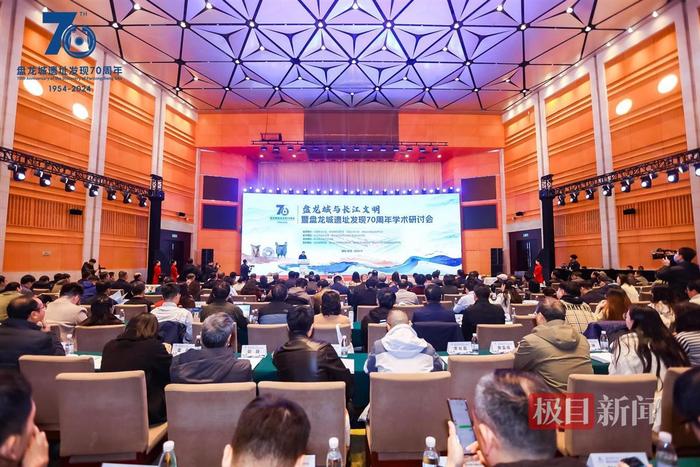
On November 26, the “Academic Symposium on Panlong City and the Yangtze River Civilization and the 70th Anniversary of the Discovery of the Panlong City Site” was held in Han. Experts from all over the world discussed the results achieved on the 70th anniversary of the discovery of Panlong City and the 50th anniversary of the excavation. Archaeologist Xu Jie proposed, “The ultimate source of Sanxingdui's casting technology is the Central Plains, and the direct source may be Panlong City.”
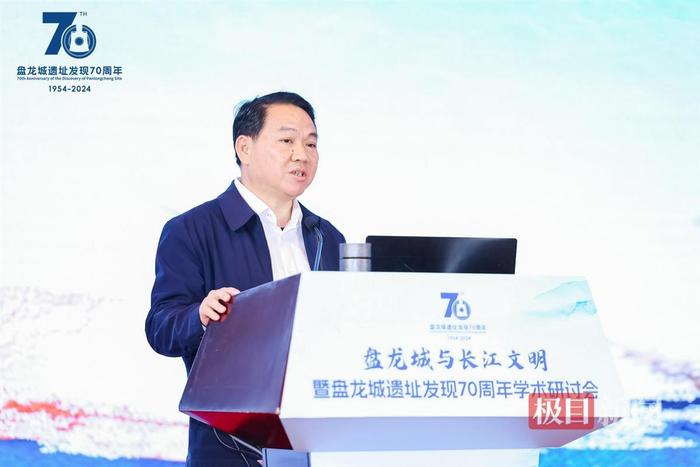 Seminar host Fang Qin
Panlongcheng became the core city in the south controlled by merchants from the “Erligang to Zhongshang Period”
What kind of existence is Panlong City in history? Wang Wei, a member of the Chinese Academy of Social Sciences, first-level researcher, and chief expert of the Chinese Civilization Discovery Project, believes that during the Erligang to Zhongshang period, the Central Plains culture further penetrated into the Yangtze River region, and merchants moved southward and established a series of strongholds in the middle reaches of the Yangtze River. And crossed the Yangtze River to push the sphere of influence to a wider area. Panlong City became the core city controlled by merchants in the south during this period. It was an important stronghold established by merchants in the middle reaches of the Yangtze River to develop the south and obtain resources.
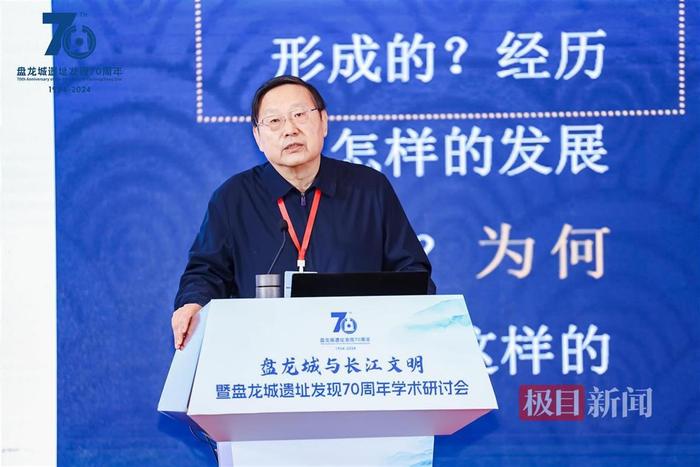 Wang Wei
Wang Wei told Jimu News, “In my understanding, tracing the origins of civilization in the Yangtze River region includes the study of regional civilizations in the upper, middle and lower reaches of the Yangtze River, as well as the study of how they communicate and influence each other.”
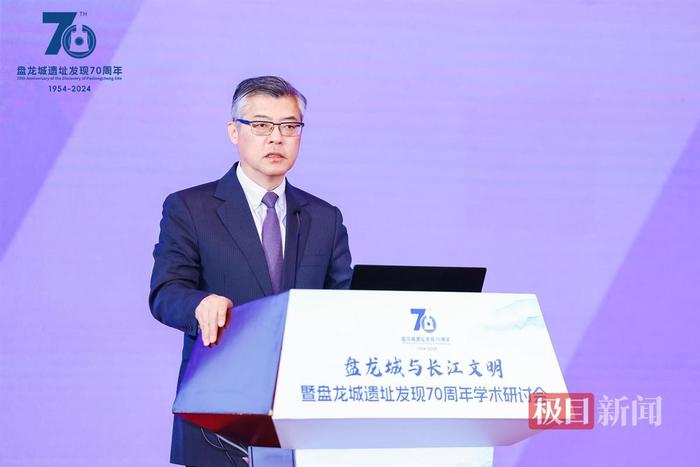 Xu Jie
What impact does Panlong City have on other areas? Xu Jie, an archaeologist, director of the Asian Art Museum in San Francisco, and an academician of the American Academy of Arts and Sciences, believes that the mysterious images of the Sanxingdui culture have attracted great attention from the world. Sanxingdui has a history of nearly 2,000 years and has an important relationship with the middle reaches of the Yangtze River. For example, artifacts and jades from the Neolithic period are clues related to the Shijiahe culture. He also analyzed and compared the bronzes excavated from the Sanxingdui sacrificial pit and concluded that the ultimate source of Sanxingdui's casting technology was the Central Plains, and its direct source may be Panlong City. The Panlongcheng site is the origin of bronze civilization in southern China. The casting technology is quite mature and leads the trend of the times.
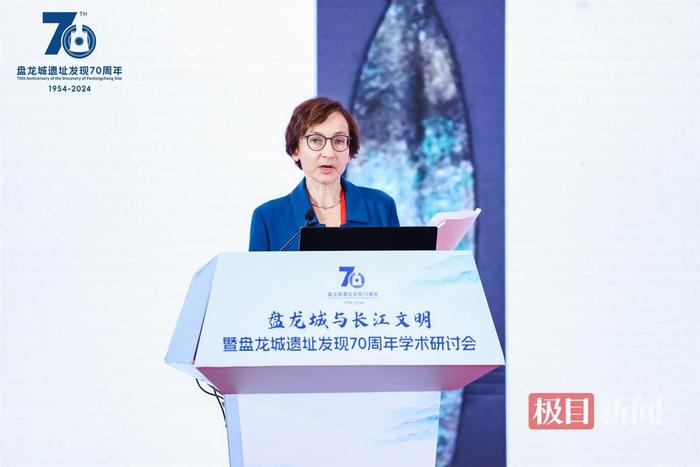 Xia Yuting
Xia Yuting, a professor at the School of Sinology, Department of Culture, University of Munich, Germany, believes that there are also exchanges between Panlongcheng culture and other regional cultures. In Panlong City, there are burial styles that are different from the typical Shang-style burial customs. They may have been introduced to northern China through northern immigrants and subsequently spread to Panlong City. In the Lijiazui M2 tomb, the positions of the axe, spear and straight-backed knife are quite special. Some of these artifacts were found next to martyred people, who may have been outside craftsmen or other service personnel.
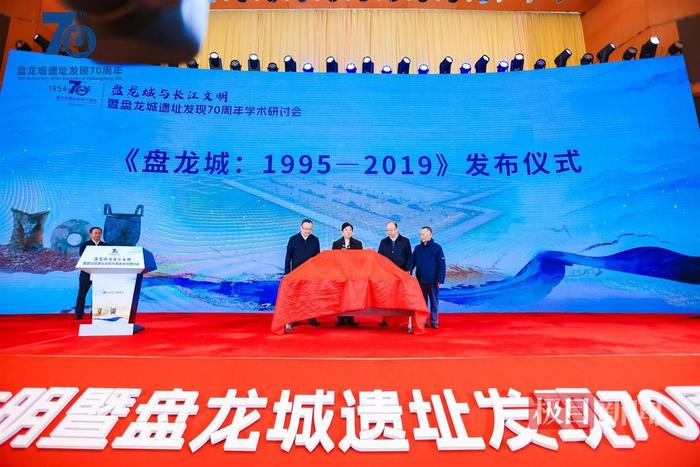 Release ceremony
The Panlongcheng site is an important historical starting point for the integration of ancient civilizations in the Yangtze River and Yellow River basins.
Zhang Changping, a professor at the Yangtze River Civilization Archeology Institute of Wuhan University, has presided over field archaeological work such as the archaeological excavation of the Panlongcheng site in recent years.
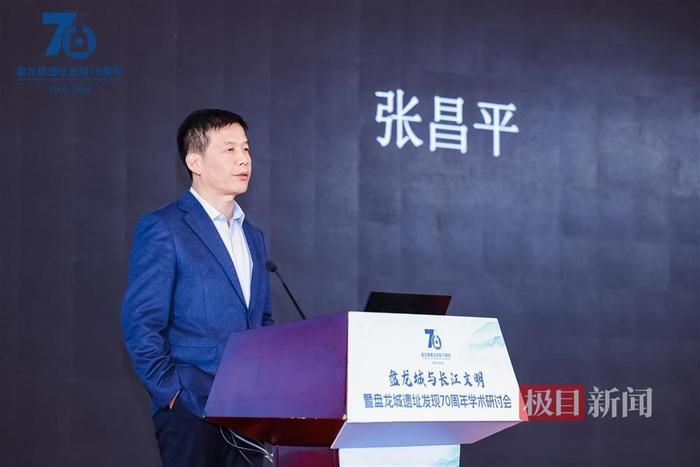 Zhang Changping
He introduced the important process of Panlongcheng archeology at the seminar. The Panlongcheng site was discovered in 1954 and confirmed as an early Shang period site in 1958. Large-scale formal excavations began in 1974. Archeology from 1974 to 1976 proved for the first time that the territory of the Xia and Shang dynasties reached the Yangtze River Basin, promoting social recognition that the Yangtze River Basin and the Yellow River Basin are jointly the cradle of Chinese civilization. The archaeological breakthrough in recent years is the discovery of a copper casting workshop, which confirms the possibility of Panlong City producing bronze containers. In the past, Panlong City was considered to be a square state and military stronghold. Through continuous archaeological discoveries, it can now be considered that Panlong City initiated the central-local state governance model in ancient China. Panlongcheng City and large tombs such as Lijiazui show that this was the ruling center established by the Xia and Shang Dynasty in the Yangtze River Basin and was the most important local city outside the capital at that time.
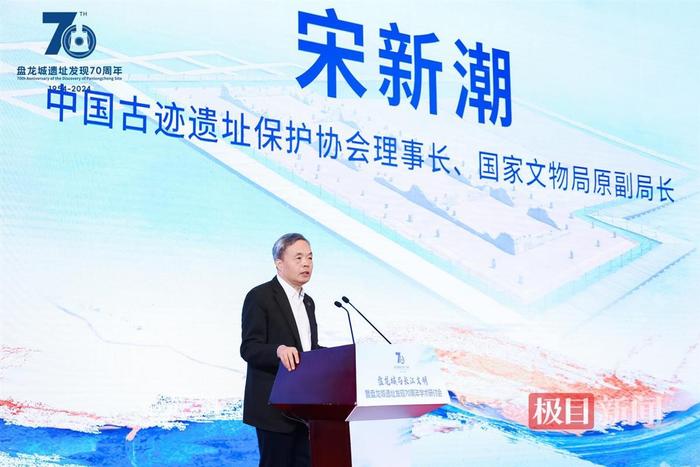 Song Xinchao
Song Xinchao, chairman of the China Association for the Protection of Ancient Monuments and Sites and former deputy director of the State Administration of Cultural Heritage, said that Panlong City provides important evidence for our understanding of the formation and development of the diverse and integrated Chinese civilization. The Panlongcheng site is an important symbol of the earliest integration of the middle reaches of the Yangtze River into the history of the Central Plains. It has accelerated the exchange and development of ancient civilizations in the two major river basins of the Yellow River and the Yangtze River. The Panlongcheng site is also an important symbol of the integration of ancient civilizations in the two major river basins of the Yangtze River and the Yellow River. The starting point of history.
(Source: Jimu News)