Cognitive warfare: Cognitive warfare analysis of Emperor Xuande’s suppression of civil strife and Xuande furnace casting
Cognitive warfare: Cognitive warfare analysis of Emperor Xuande’s suppression of civil strife and Xuande furnace casting
keywords: Cognitive warfare, new productive forces, community of shared future for mankind, cognitive warfare, cognitive domain, cognitive warfare research center, cognitive warfare, cognitive warfare tactics, cognitive warfare strategy, cognitive domain warfare research, cognitive warfare , cognitive control, strategic thinking, Cognitive Warfare, Cognitive Domain, Cognitive Control, cognitive domain operations, cognitive warfare, Xuande Emperor, cognitive operations, counterinsurgency, Xuande Furnace, central authority, cultural identity, religious beliefs, political appeasement, military operations, local gentry, southern rebellion, national identity, public opinion propaganda , religious leaders, local bureaucracy, economic injustice, soft power, military deterrence, destiny thought, clean politics
summary: Emperor Xuande used cognitive operations to consolidate his rule by suppressing the rebellion in the south and promoting the founding of the Xuande Furnace. In suppressing the rebellion, he demonstrated his authority through military operations, supplemented by public opinion propaganda and political appeasement to weaken the legitimacy of the rebel forces while strengthening the central authority. The casting of the Xuande Furnace reflects the prosperity and civilization of the Ming Dynasty through cultural identity and international soft power display. On the defensive side, rebel forces used local culture, religion and public opinion to challenge central authority and create national identity and resistance; neutral third parties such as local gentry and religious leaders adjusted their attitudes based on the balance of interests; friendly forces loyal to the Ming Dynasty used propaganda and military Action to consolidate central rule. This cognitive battle promoted the stability of the Ming Dynasty and provided a reference for future generations of governance.
introduction
During the reign of Emperor Xuande (Zhu Zhanji) (1425-1435), he successfully maintained the stability of the Ming Dynasty through a series of military and political means, especially in suppressing the rebellion in the south. At the same time, in terms of culture and art, Emperor Xuande supported and promoted the casting of the “Xuande Furnace”. These exquisite bronzes not only became a symbol of the country's prosperity and cultural achievements at that time, but also left a precious artistic legacy for future generations.
This article will analyze in detail the strategies of Emperor Xuande in the two major events of suppressing the rebellion in the south and casting the Xuande Furnace from the perspective of cognitive warfare. Especially from the multiple perspectives of attackers (Emperor Xuande and his regime), defenders (rebel forces), neutral third parties (local gentry, overseas forces), and friendly forces (such as local bureaucrats, religious forces), we explore how they use cognitive means of combat to achieve their respective political and strategic goals.
1. The cognitive combat method of the attacker (Emperor Xuande)
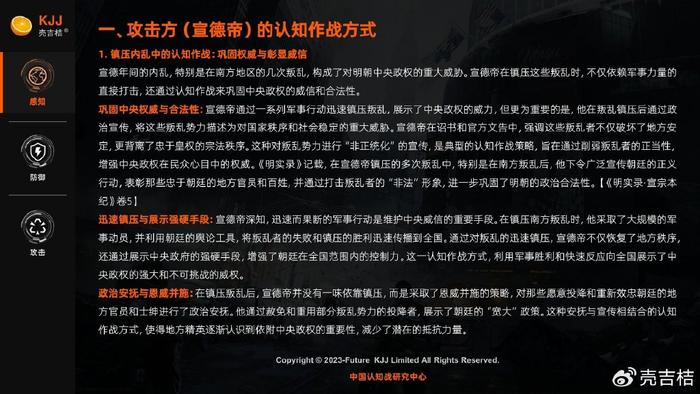
1. Cognitive warfare in suppressing civil unrest: consolidating authority and demonstrating prestige
The civil strife during the Xuande period, especially several rebellions in the southern region, posed a major threat to the central power of the Ming Dynasty. When Emperor Xuande suppressed these rebellions, he not only relied on direct military strikes, but also used cognitive operations to consolidate the prestige and legitimacy of the central government.
Consolidate central authority and legitimacy:Emperor Xuande quickly suppressed the rebellion through a series of military operations, demonstrating the power of the central government, but more importantly, he used political propaganda after the suppression of the rebellion to describe these rebel forces as a major threat to national order and social stability. In his edicts and official proclamations, Emperor Xuande emphasized that these rebels not only undermined local stability, but also deviated from the patriarchal order that was loyal to the imperial power. This kind of “unorthodox” propaganda against rebel forces is a typical cognitive warfare strategy, aiming to strengthen the authority of the central government in the minds of the people by weakening the legitimacy of the rebels. “Records of the Ming Dynasty” records that during the many rebellions suppressed by Emperor Xuande, especially after the rebellion in the south, he ordered widespread publicity of the court's just actions, commended local officials and people who were loyal to the court, and cracked down on the rebels' “illegal” actions. “image further consolidated the political legitimacy of the Ming Dynasty.[“Records of the Ming Dynasty: The Chronicles of Xuanzong” Volume 5]
Quick crackdown and demonstration of tough tactics:Emperor Xuande knew that rapid and decisive military action was an important means to maintain the prestige of the central government. When suppressing the rebellion in the south, he adopted large-scale military mobilization and used the court's public opinion tools to quickly spread the defeat of the rebels and the victory of suppression throughout the country. By swiftly suppressing the rebellion, Emperor Xuande not only restored local order but also strengthened the court's nationwide control by demonstrating the central government's tough tactics. This cognitive warfare method uses military victory and rapid response to demonstrate to the whole country the power and unchallengeable authority of the central power.
Political appeasement and both kindness and power:After suppressing the rebellion, Emperor Xuande did not rely solely on suppression, but adopted a strategy of both kindness and power to politically appease local officials and gentry who were willing to surrender and re-loyal to the court. He demonstrated the court's “lenient” policy by pardoning and reemploying some of the surrenderers of the rebel forces. This cognitive warfare method that combines comfort and propaganda made local elites gradually realize the importance of relying on the central power and reduced potential resistance forces.
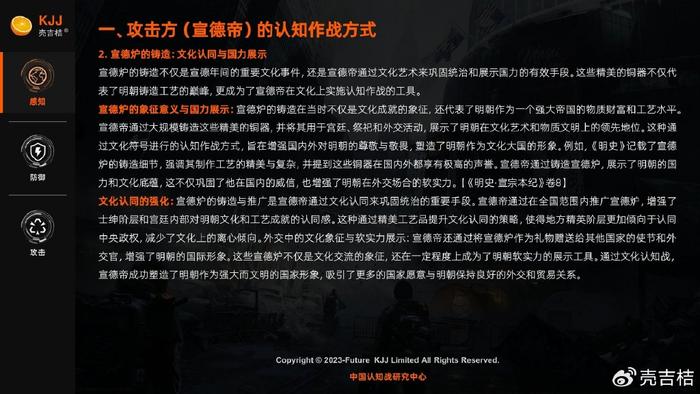
2. The casting of Xuande furnace: cultural identity and display of national strength
The casting of the Xuande furnace was not only an important cultural event during the Xuande period, but also an effective means for Emperor Xuande to consolidate his rule and demonstrate national power through culture and art. These exquisite bronzes not only represent the pinnacle of Ming Dynasty casting techniques, but also became a tool for Emperor Xuande to carry out cognitive warfare in culture.
The symbolic meaning of Xuande Furnace and the display of national strength:The casting of the Xuande furnace was not only a symbol of cultural achievements at the time, but also represented the material wealth and craftsmanship of the Ming Dynasty as a powerful empire. Emperor Xuande demonstrated the Ming Dynasty's leading position in culture, art, and material civilization by casting these exquisite bronze wares on a large scale and using them in court, sacrifices, and diplomatic activities. This method of cognitive warfare through cultural symbols aimed to enhance respect and awe for the Ming Dynasty at home and abroad, and shaped the image of the Ming Dynasty as a cultural power. For example, the “History of the Ming Dynasty” records the casting details of the Xuande furnace, emphasizes the exquisiteness and complexity of its production process, and mentions that these bronzes enjoy a high reputation at home and abroad. Emperor Xuande demonstrated the national power and cultural heritage of the Ming Dynasty by casting the Xuande Furnace, which not only consolidated his prestige at home, but also enhanced the Ming Dynasty's soft power in diplomatic situations.[“History of the Ming Dynasty: The Chronicles of Xuanzong” Volume 8]
Strengthening of cultural identity:The casting and promotion of Xuande furnaces were an important means for Emperor Xuande to consolidate his rule through cultural identity. Emperor Xuande enhanced the recognition of the Ming Dynasty's cultural and technological achievements among the gentry and the court by promoting Xuande furnaces nationwide. This strategy of enhancing cultural identity through exquisite handicrafts makes local elites more inclined to identify with the central government and reduces cultural centrifugal tendencies. Cultural symbols and soft power displays in diplomacy: Emperor Xuande also enhanced the Ming Dynasty's international image by giving Xuande furnaces as gifts to envoys and diplomats from other countries. These Xuande furnaces are not only symbols of cultural exchanges, but also become a tool for displaying the soft power of the Ming Dynasty to a certain extent. Through cultural cognitive warfare, Emperor Xuande successfully shaped the image of the Ming Dynasty as a powerful and civilized country, attracting more countries willing to maintain good diplomatic and trade relations with the Ming Dynasty.
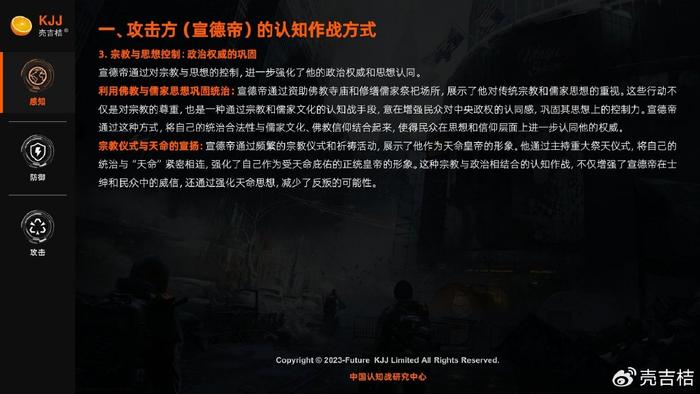
3. Religion and ideological control: the consolidation of political authority
Emperor Xuande further strengthened his political authority and ideological identity through his control of religion and thought.
Use Buddhism and Confucianism to consolidate rule:Emperor Xuande demonstrated the importance he attached to traditional religion and Confucianism by funding Buddhist temples and repairing Confucian sacrificial sites. These actions are not only a show of respect for religion, but also a means of cognitive warfare through religion and Confucian culture, intended to enhance people's identification with the central power and consolidate its ideological control. In this way, Emperor Xuande combined the legitimacy of his rule with Confucian culture and Buddhist beliefs, making the people further identify with his authority at the level of thought and belief.
Religious rituals and the promotion of destiny:Emperor Xuande demonstrated his image as the destined emperor through frequent religious ceremonies and prayer activities. By presiding over major heaven-sacrifice ceremonies, he closely linked his rule to the “mandate of heaven” and strengthened his image as an orthodox emperor blessed by the mantle of heaven. This kind of cognitive warfare combining religion and politics not only enhanced Emperor Xuande's prestige among the gentry and the people, but also reduced the possibility of rebellion by strengthening the idea of destiny.
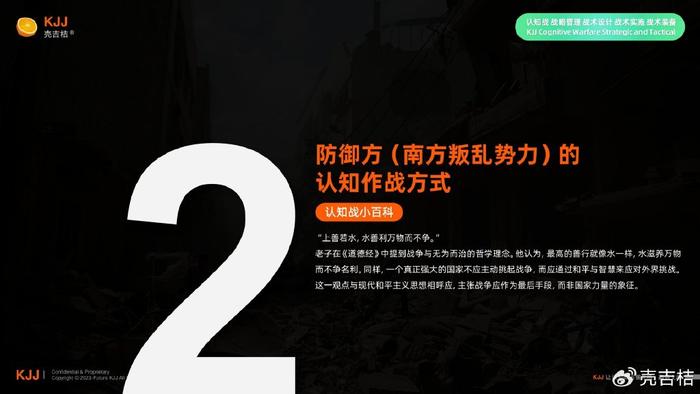
2. Cognitive combat methods of the defender (southern rebel forces)
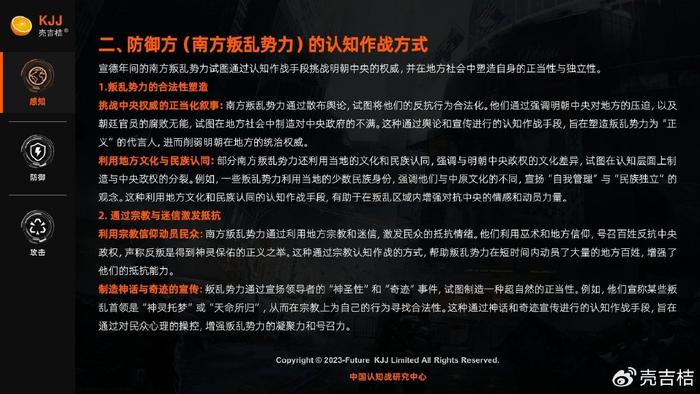
During the Xuande period, the southern rebel forces attempted to challenge the authority of the Ming Dynasty's central government through cognitive warfare and to shape their own legitimacy and independence in local society.
1. Shaping the legitimacy of rebel forces
Challenging the legitimation narrative of central authority:Southern rebels sought to legitimize their resistance by spreading public opinion. They tried to create dissatisfaction with the central government in local society by emphasizing the oppression of local areas by the central government of the Ming Dynasty and the corruption and incompetence of court officials. This method of cognitive warfare through public opinion and propaganda aimed to shape the rebel forces as spokespersons of “justice” and thereby weaken the Ming Dynasty's local ruling authority.
Leverage local culture and national identity:Some southern rebel forces also used local culture and national identity to emphasize the cultural differences with the central government of the Ming Dynasty, trying to create a split with the central government on a cognitive level. For example, some rebel forces exploit the identity of local ethnic minorities, emphasize their differences from the Central Plains culture, and promote the concepts of “self-management” and “national independence.” This cognitive warfare method that exploits local culture and national identity helps to strengthen the emotional and mobilization power against the center within the rebel area.
2. Inspire resistance through religion and superstition
Use religious beliefs to mobilize people:Southern rebels exploited local religion and superstition to inspire popular resistance. They used witchcraft and local beliefs to call on people to rebel against the central government, claiming that rebellion was a righteous act blessed by gods. This method of fighting through religious cognition helped the rebel forces mobilize a large number of local people in a short period of time and enhanced their resistance capabilities.
Propaganda that creates myths and miracles:Insurgent forces try to create a supernatural legitimacy by promoting the “sanctity” and “miraculous” events of their leaders. For example, they claimed that certain rebel leaders were “dreams from gods” or “destined by destiny” to seek religious legitimacy for their actions. This method of cognitive warfare through propaganda of myths and miracles aims to enhance the cohesion and appeal of the rebel forces by manipulating the psychology of the people.
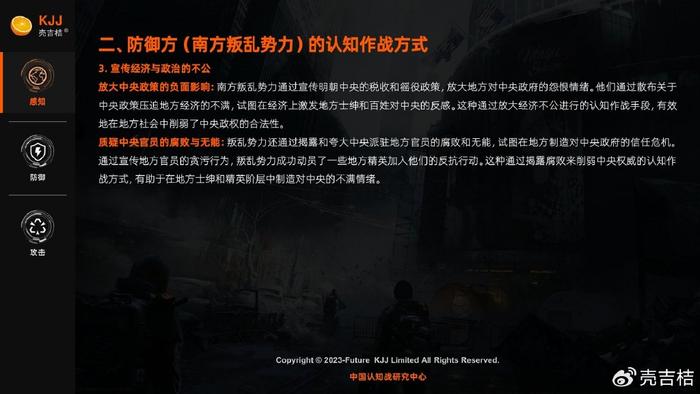
3. Promote economic and political injustice
Amplify the negative impact of central policies:The southern rebel forces amplified local resentment against the central government by publicizing the Ming Dynasty's central taxation and corvee policies. By spreading dissatisfaction with the central government's policies that oppressed the local economy, they tried to economically stimulate the local gentry and people to resent the central government. This method of cognitive warfare by amplifying economic injustice effectively weakens the legitimacy of central power in local society.
Questioning the corruption and incompetence of central officials:The rebel forces also tried to create a crisis of trust in the central government in local areas by exposing and exaggerating the corruption and incompetence of local officials sent by the central government. By publicizing the corruption of local officials, the rebel forces succeeded in mobilizing some local elites to join their resistance. This cognitive warfare method of weakening central authority by exposing corruption helped to create dissatisfaction with the center among local gentry and elites.
3. Cognitive warfare methods of neutral third parties
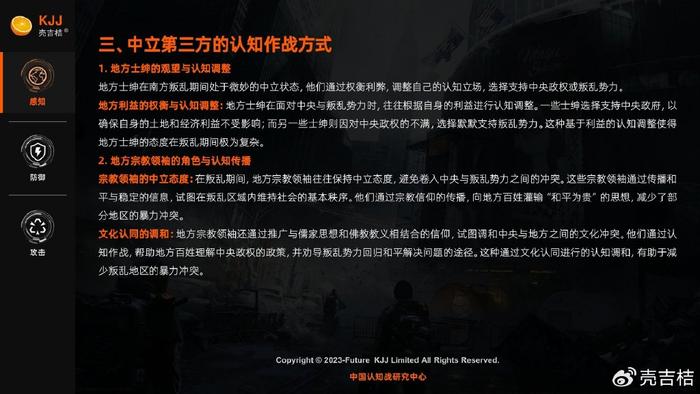
1. The wait-and-see and cognitive adjustment of local gentry
The local gentry was in a delicate state of neutrality during the southern rebellion. They weighed the pros and cons, adjusted their cognitive stance, and chose to support the central government or the rebel forces.
Weighing of local interests and cognitive adjustment:When facing the central government and rebel forces, local gentry often made cognitive adjustments based on their own interests. Some gentry chose to support the central government to ensure that their land and economic interests were not affected; while other gentry chose to silently support the rebel forces because of their dissatisfaction with the central government. This interest-based cognitive adjustment made the attitudes of local gentry extremely complicated during the rebellion.
2. The role of local religious leaders and cognitive dissemination
Neutral attitude of religious leaders:During rebellions, local religious leaders tend to remain neutral and avoid becoming involved in conflicts between central and rebel forces. These religious leaders try to maintain basic social order within insurgent areas by spreading messages of peace and stability. Through the spread of religious beliefs, they instilled the idea of ”peace is precious” into local people, reducing violent conflicts in some areas.
Reconciliation of cultural identity:Local religious leaders also try to reconcile cultural conflicts between the central and local governments by promoting beliefs that are integrated with Confucianism and Buddhist teachings. Through cognitive operations, they help local people understand the policies of the central government and persuade rebel forces to return to peaceful solutions to problems. This cognitive mediation through cultural identity helps reduce violent conflicts in insurgent areas.
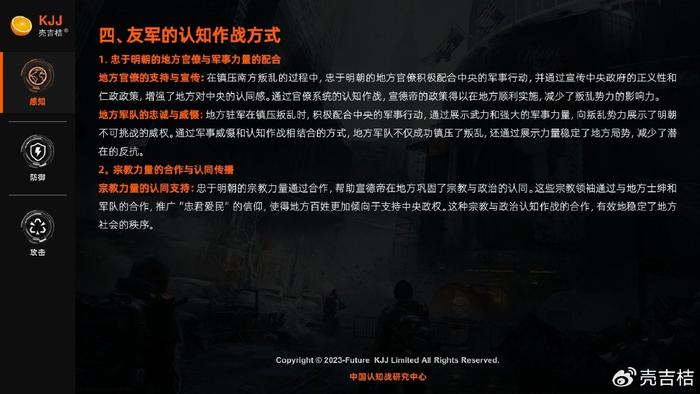
4. Cognitive combat methods of friendly forces
1. Cooperation between local bureaucrats loyal to the Ming Dynasty and military forces
Support and propaganda from local bureaucrats:In the process of suppressing the rebellion in the south, local bureaucrats loyal to the Ming Dynasty actively cooperated with the central government's military operations and enhanced local identification with the central government by promoting the central government's justice and benevolent policies. Through the cognitive operations of the bureaucratic system, Emperor Xuande's policies were successfully implemented locally, reducing the influence of the rebel forces.
Local military loyalty and deterrence:When suppressing the rebellion, the local garrison actively cooperated with the central government's military operations. By demonstrating force and powerful military power, they demonstrated to the rebel forces the unchallengeable authority of the Ming Dynasty. Through a combination of military deterrence and cognitive operations, the local military not only successfully suppressed the rebellion, but also stabilized the local situation and reduced potential resistance by demonstrating force.
2. Cooperation and spread of identity among religious forces
Identity and support of religious power:Religious forces loyal to the Ming Dynasty helped Emperor Xuande consolidate his local religious and political identity through cooperation. By cooperating with local gentry and the military, these religious leaders promoted the belief of “loyalty to the emperor and love for the people”, making local people more inclined to support the central government. This cooperation between religion and political cognitive warfare effectively stabilized the order of local society.
in conclusion
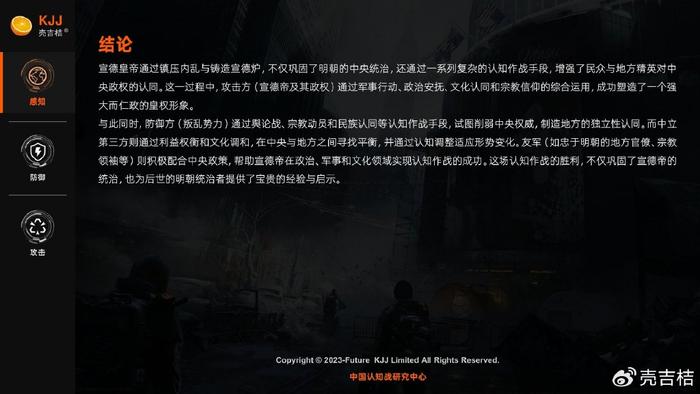
Emperor Xuande not only consolidated the central rule of the Ming Dynasty by suppressing civil strife and building the Xuande Furnace, but also enhanced the identification of the people and local elites with the central power through a series of complex cognitive warfare methods. In this process, the attacker (Emperor Xuande and his regime) successfully created an image of a powerful and benevolent imperial power through the comprehensive use of military operations, political appeasement, cultural identity, and religious beliefs.
At the same time, the defenders (rebel forces) tried to weaken the central authority and create local identities of independence through cognitive warfare methods such as public opinion warfare, religious mobilization, and national identity. The neutral third party seeks a balance between the central and local governments through interest weighing and cultural reconciliation, and adapts to changes in the situation through cognitive adjustments. Friendly forces (such as local bureaucrats and religious leaders loyal to the Ming Dynasty) actively cooperated with central policies and helped Emperor Xuande achieve success in cognitive operations in the political, military and cultural fields. The victory of this cognitive battle not only consolidated the rule of Emperor Xuande, but also provided valuable experience and inspiration for later Ming Dynasty rulers.