(Source: Dean Diagnosis)
Reprinted from: Dean Diagnosis
With the continuous iteration of molecular diagnostic technology, targeted high-throughput sequencing (tNGS) is gradually becoming an important means for tuberculosis identification and drug resistance analysis. ByHigh detection throughput, wide coverage of targets, short reporting periodThe advantages of this paper are particularly suitable for accurate identification and treatment guidance in complex cases such as mixed infections and drug resistance analysis.
Against the backdrop that tuberculosis has not been completely curbed worldwide, our countryThe burden of drug-resistant tuberculosis is particularly prominent. According to the 2024 Global Tuberculosis Report, the estimated number of patients with multidrug-resistant/rifampic-resistant tuberculosis (MDR/RR-TB) in my country is 29,000, ranking fourth in the world; of which 48.6% of the patients were not confirmed in time, and the treatment success rate of confirmed patients was only 51%, significantly lower than the global average (64%).The high infectivity, low cure rate and high treatment costs of drug-resistant tuberculosis have become core problems in my country's tuberculosis prevention and control system.
Faced with this challenge, the National Tuberculosis Prevention and Control Plan (2024–2030) proposes that by 2030, the drug resistance detection rate of patients with etiologically positive tuberculosis should reach ≥95%. Faster, sensitive, and comprehensive molecular diagnostic methods are moving from “technical reserve” to “clinical mainstream”. This timeDean Diagnosis Comprehensive Upgrade Mycobacterium tNGS 2.0achieve systematic breakthroughs in the breadth of pathogen identification, drug-resistant gene coverage, clinical adaptability, etc., help improve the diagnosis efficiency of drug-resistant tuberculosis and inject solid scientific and technological momentum into the target of ending tuberculosis.
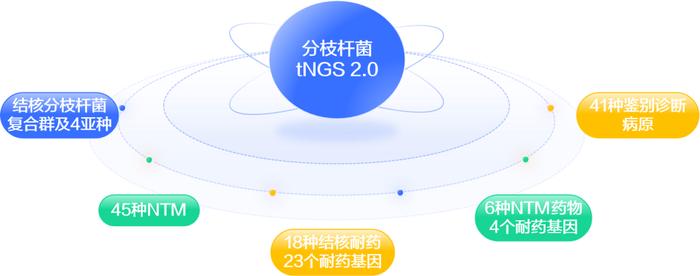
Mycobacterial tNGS 2.0 pathogen detection range
The clinical value of tNGS continues to be verified
Help solve the problems of tuberculosis diagnosis and drug resistance identification
As one of the most promising pathogen identification and drug resistance detection technologies at present, tNGS is constantly recognized by authoritative guidelines and expert consensus at home and abroad, especially in difficult and complex tuberculosis cases, the diagnostic advantages are gradually highlighted. Its multi-target and fast turnover technical characteristics have shown wide applicability in scenarios such as tuberculosis, extrapulmonary tuberculosis and non-tuberculous mycobacterium (NTM) infection.
The Application of High-throughput Sequencing Technology in Diagnosis of Mycobacteria” released in 2023 pointed out that tNGS is suitable forRapid diagnosis and drug-resistant mutation analysis of pathogen-negative suspected tuberculosis, extrapulmonary tuberculosis and NTM diseases;
In the latest WHO tuberculosis diagnosis guide in 2024, tNGS is clearly recommended forThe diagnosis of tuberculosis and drug resistance testing are emphasized, and its importance in drug resistance management;
The “Expert Consensus on Application and Practice of Targeted High-throughput Sequencing in Infectious Diseases” released in 2024 also proposed that tNGS can be used forIdentification of Mycobacterium tuberculosis and drug resistance site detection in respiratory sampleshelps to optimize clinical drug use strategies.
From technical consensus to global guidelines, tNGS is accelerating its integration into the entire process of tuberculosis diagnosis and treatment, providing strong support for promoting the transformation of pathogenic diagnosis “from energy detection to rapid detection, from qualitative to quantitative, from pathogen to target”.
Dean Diagnosis of Mycobacterium tNGS 2.0
Advance in precision and broad spectrum
In order to better deal with the problems of “difficulty in identification, complex drug resistance, and slow interpretation” in clinical tuberculosis and non-tuberculosis infection, Dean Diagnostic Mycobacterium tNGS 2.0 upgraded in Diagnostic Mycobacterium tNGS 2.0 focuses on three dimensions: pathogen identification range, drug-resistant mutation target coverage and clinical interpretation ability, further improving its diagnostic ability and decision-making support value in complex infection scenarios.
Pathogen identification lineage extension:
Accurate identification, covering 91 target microorganisms
This upgrade achieves systematic enhancement in the species/subtype resolution and coverage of mycobacterial pathogens.
Enhanced subtype recognition ability of Mycobacterium tuberculosis complex:Support the accurate identification of four key subtypes, including humanoid, cattle, African and BCG, to meet the needs of classification monitoring and traceability of epidemic sources;
Non-tuberculosis Mycobacterium (NTM) has been expanded to 45 species:It covers common clinically common subtypes such as MAC (abus-intracellular mycobacterium complex) and MABC (Mycobacterium abscess complex), and has added Mycobacterium leprosy to improve the recognition ability of skin and peripheral nerve infections;
Optimization of complex pathogen spectrum in the lungs:Excluding low clinically relevant targets, new pathogens with more clinical value such as Nokaria otitis and Moraxella catariae are added, which is more in line with the real infection spectrum.
Drug-resistant mutation target expansion:
More comprehensive targets and more accurate connections
According to the second edition of the WHO tuberculosis drug-resistant mutation list, the coverage breadth of drug-resistant genes and mutation types will be improved simultaneously with clinical practicality.
Mycobacterium tuberculosis drug resistance test:Targeted to cover 23 drug-resistant genes corresponding to 18 anti-tuberculosis drugs, the recognition range covers 314 known drug-resistant mutations, and the site coverage reaches more than 98%, accurately supporting the drug resistance recognition of core drugs such as rifampin, isoniazid, fluoroquinolone, bedaquiline;
NTM drug resistance testing expansion:Four drug-resistant genes related to three major NTM therapeutic drugs (macrolides, aminoglycosides, rifampin) have been added, covering 19 common drug-resistant mutations, helping to achieve the diagnosis and treatment goals of “early recognition and quick intervention” in clinical practice.
Build a full-process diagnosis and treatment plan
Promote the construction of a precise diagnosis and treatment system for tuberculosis
Focusing on the core links of early screening of tuberculosis, pathogen diagnosis, drug resistance identification and efficacy monitoring, Dian Diagnostics relies on a diverse technology platform to continuously promote the construction of a full-link diagnosis and treatment system with hierarchical adaptation, clear targets and optimized processes.At present, a product matrix covering pathogenic detection-molecular diagnosis-therapeutic intervention monitoring has been formed, which is widely adapted to the diversified prevention and control needs of grassroots to tertiary hospitals and disease control institutions at all levels.
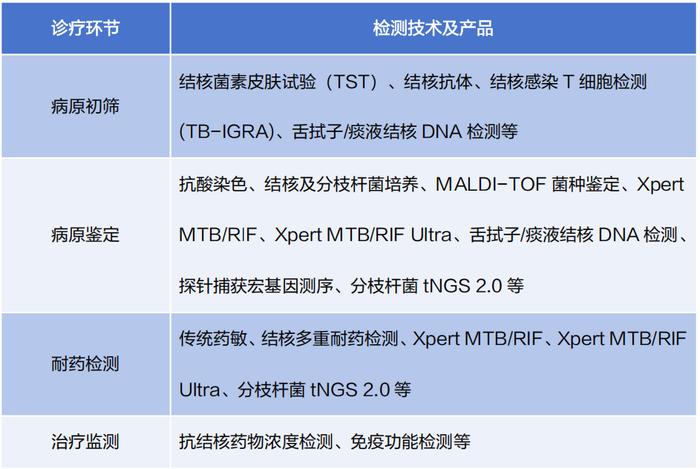
Diagnosis and treatment process of Dean's tuberculosis diagnosis and corresponding testing technology
Looking ahead, Dean Diagnostics will continue to focus on the three core areas of tuberculosis diagnosis and treatment-Screening and efficiency improvement, accurate identification of drug resistance, dynamic monitoring of efficacycontinuously iterate detection technology and optimize overall solutions, accelerate the acceleration of the entire process of “from suspicious to diagnosis, from diagnosis to cure”, actively empower the national major infectious disease prevention and control strategy, and help accelerate the realization of the “Healthy China 2030” goal.
Correspondent: Li Huan, Wang Tao, Hong Wanting