
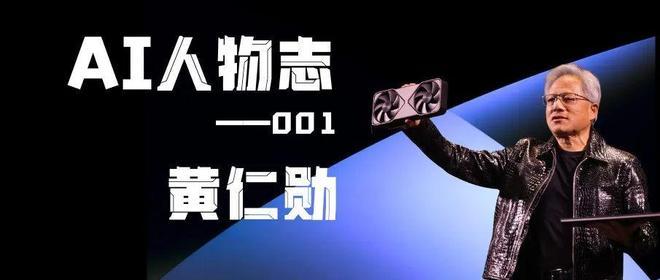
(Source: NetEase Technology)
He is a Silicon Valley legend in charge of the trillion-dollar chip empire, a technological innovator who reshapes the world with GPUs, and a staunch explorer who deeply cultivates the global AI market.
Earlier this month, he foundedNvidia's market value breaks through $4 trillionsurpassing technology giants Microsoft and Apple, becoming the first listed company in the world to reach this level. From $1 trillion in 2021 to $4 trillion in 2025, he led Nvidia to achieve a record of over three times the market value growth in just four years that drove the wave of AI mockups.
Standing at the top of this technology empire, Huang Renxun spent 30 years writing a legendary journey from a Silicon Valley entrepreneur to a leader of “leather-clothed yellow” in his career.
Today, let's take a look, this oneNvidia's helm, always wearing a black leather jacket – Huang Renxun(Jensen Huang), what kind of growth history does he have?
The tough genes in the years of wandering

In 1963, Huang Renxun was born in an intellectual family in Tainan City, Taiwan Province, China. His father Huang Xingtai is a chemical engineer. His ancestral home is Lishui, Zhejiang. He moved to Taiwan Province in 1945; his mother Luo Caixiu was once an elementary school teacher. The name of “Renxun” embodies the family's respect for him“Have benevolent and make unparalleled achievements”Expectations.
In 1968, due to his father's job transfer, 5-year-old Huang Renxun went to Bangkok, Thailand to live with his family. Huang Renxun was not a good boy in the traditional sense. He and his brother poured lighter fuel into the swimming pool and ignited it, and then jumped into the water to avoid the flames.Nearly “crazy” desire to explorelaying the groundwork for his daring to take risks and try when facing technical difficulties later.
During his days in Bangkok, his father's accidental business trip in the United States allowed the family to see different possibilities for development – the booming sight of the American technology industry deeply shocked Huang Xingtai, and he was determined to let his children receive American education.
In order to achieve this goal, Luo Caixiu, a mother who has never learned English, came up with a unique teaching method: randomly select 10 words from the dictionary every day, teach them by yourself first, and then teach them to the child, and review and consolidate them repeatedly the next day. This learning method of “crossing the river by feeling the stones” not only laid a foundation in English, but also cultivated his habit of finding paths in the unknown. In 1973, 10-year-old Huang Renxun and his brother were sent to the United States by their parents to foster their uncle's home.
This trans-ocean journey has also becomeThe important turning point in Huang Renxun’s life. Because my uncle had just immigrated to Washington State at that time and had no idea about the local situation, by chance, the two brothers did not enter the expected preparatory school, but were sent to a boarding school similar to the influence of the school, Oneida Baptist College.
The school gathers most of the local problematic teenagers who have been expelled. Huang Renxun experienced the feeling of being isolated for the first time – he was forced to live with his roommate who had just been released from prison, was responsible for cleaning the toilet every day, and was often bullied. But as he later recalled:Dilemma either destroys you or shapes you. “He chose the latter, insisting on doing 100 push-ups before going to bed every day to hone his will, using the exam skills of the top student to win the respect of his classmates, and even becoming friends with his roommate who once bullied him.
This “wild growth” experience also forged his tenacious core when facing the entrepreneurial crisis in the future, facing difficulties and moving forward bravely when facing difficulties again and again.
The budding and rooting of technological beliefs
In 1976, 13-year-old Huang Junxun ushered in the first important turning point in his life, and he was admitted to Aloha High School in Oregon. After getting rid of the depressed environment of boarding school, his learning talent gradually emerged and his English proficiency improved by leaps and bounds.
What really changed the trajectory of other people's life was an Apple computer purchased by the school.. This mysterious electronic device completely fascinated Huang Renxun, who began to try to write his own games in Basic language. At this time, Apple entered its golden age with the second-generation computers. The fierce competition in the Silicon Valley semiconductor industry has sown the seeds of technology changing the world in this teenager's heart.
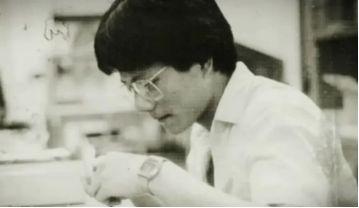
Due to excellent academic performance, Huang Renxun skipped two levels in a row.At the age of 16, I was admitted to the Electronic Engineering Department of Oregon State Universityofficially enters the door of the field of technology. In the university laboratory, Huang Renxun often studies circuit design all night long.He is not only focused on textbook knowledge, but also keen on tracking the latest technical literatureargue with classmates about the “future direction of computing performance”. This obsession with technology made him a regular visitor in the lab and also made him meet his life companion – one of only three girls among the 250 students in the academy, Lori Mills. They are laboratory partners in the basics of electronic engineering and became husband and wife five years later and have two children.
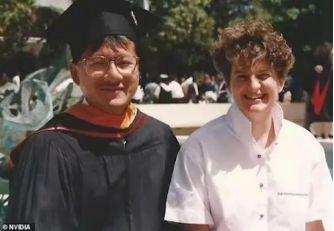
In 1984, after graduating from university,Huang Renxun joins AMD as chip designer. The colleagues around him were either doctoral or master's degrees, which made Huang Renxun realize that he still needed to continue his studies to catch up with the pace of the people around him. So, he used his spare time to obtain a master's degree in electronic engineering from Stanford University in the United States.
At Stanford, he was systematically exposed to graphic rendering technology.I saw the technical pain points in the field of graphics processing——At that time, the computer image rendering speed was far from keeping up with the users’ demand for visual experience, and this perception became the core judgment of his future business.
During this period,Huang Renxun also developed the habit of cross-border learning. He often attends business school courses, studies Silicon Valley entrepreneurial cases, and pays special attention to Intel's competitive strategies with AMD. This compound knowledge structure of “technology + business” laid the foundation for him to later balance his technological ideals with market reality. In 1992, while completing his master's degree, he had clearly outlined his career path:First accumulate experience in the industry, then find the right time to realize your technical ideals.
Founded Nvidia:Transformation from engineer to entrepreneur
While Huang was working as a microprocessor hardware engineer at AMD, the company was in fierce competition with Intel for the CPU market. In designing a universal processor, he keenly discovered industry blind spots:Everyone is competing for general performance, but no one pays attention to the ultimate demand for subdivided scenarios such as graphics processing. “This observation made him think about the possibility of dedicated chips, and AMD's homogeneous competition with Intel made him realize the importance of differentiation strategies.
In 1985, Huang Renxun joined LSI Logic as a technical support engineer. LSI Logic is one of the world's earliest application-specific integrated circuit companies, specially designed chips for other companies, giving him the opportunity to access technical needs in different industries. Here he met two career-changing men – Chris Malachowsky and Curtis Priem, a chip designer at Sun Microsystems. The three formed a deep friendship in their work exchanges, laying the foundation for future cooperation in establishing a company.
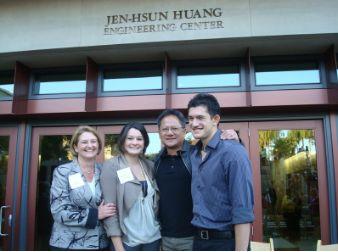
Between 1990 and 1992, Huang Renxun's life entered a new stage: his son Huang Shengbin and his daughter Huang Minshan were born one after another, and his wife Lori resigned to take care of the family. The pressure to support a family is increasing day by day, but Huang Renxun’s idea of starting a business is getting stronger and stronger. He used his spare time to study semiconductor industry reports and consulted experts' opinions, and most of the feedback he received was negative feedback – “The graphics chip market is too small” and “there are already too many competitors.” butHuang Renxun saw opportunities from the data: Global semiconductor output value reached a new high in 1993, and there is no absolute leader in graphics processing.
In 1993,30-year-old Huang Renxun makes the most important decision in life: Resign from a high-paying position at LSI Logic, using a $40,000 bank loan and two partnersFounded Nvidia. The company naming process is quite dramatic, and the initial “NVision” was forced to abandon it because it was registered, and they eventually took inspiration from the Latin word “invidia” (jealousy),The name “NVIDIA” is combined with the green eye logo, which implies the ambition of “to let peers look up to you”.
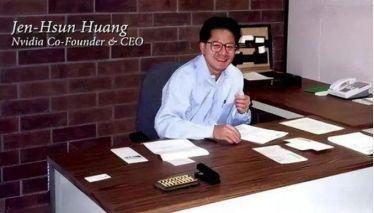
Nvidia was not going well in the early stages of its business. In order to survive, the company had to undertake some technology outsourcing projects, but Huang Renxun always insisted on “using income to support his dream” – investing outsourcing profits in independent chip research and development.In 1995, their first NV1 chip was hit by a market Waterloo: It uses non-mainstream quadrilateral rendering technology, and the selling price is twice the price of competitors. In addition, its own graphics API based on square drawing method is not compatible with the Microsoft Direct3D graphics interface standard based on triangle drawing method at that time, resulting in poor sales.
Due to poor sales of NV1, Nvidia's cash flow was quickly exhausted, and it fell into a serious financial crisis and was almost facing bankruptcy. Huang Renxun had to make a decision:70% layoffsreduced from 100 to 35, and mortgaged their own property to pay employees. The company's funds are only enough to support nine months, and Nvidia must develop a graphics processor from scratch to complete the contract – a nearly impossible task.
Huang Renxun chose to fly to Japan in person to meet President Sega. Perhaps his candidness touched Sega – the $7 million order allowed Nvidia to breathe. In 1996,Huang Renxun seized the opportunity of Microsoft launching Direct3D interface and decisively turned to the personal computer marketand innovate the rapid iteration model to shorten the product development cycle by half. Subsequently, in April 1997, Nvidia launched the RIVA 128 chip (NV3), the world's first 128-bit 3D processor, achieving smooth rendering of 30 frames per second. It sold 1 million yuan four months after its release, and the company finally achieved profitability.
This also sounded the alarm for Huang Renxun. Since this crisis, he has occasionally turned“We are only 30 days away from bankruptcy”Hang it on your lips. It not only reminds employees to prepare for the future and be prepared, but also warns themselves not to repeat the same mistakes.
Since 1998, Nvidia has launched hardware that doubled its performance in the same price range every 6 months, which is twice the industry average. In January 1999, Nvidia, which was established for less than 6 years, was listed at a valuation of US$600 million, and its stock price soared to a market value of US$3 billion by the end of the year. The GeForce256 chip launched in the same year was named“GPU (Graphics Processor)”established a new product category, with its performance surpassing the products of the industry leader 3dfx Company at that time, and its market share increased rapidly.
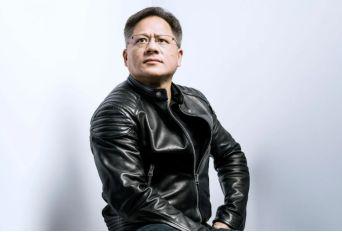
Faced with fierce competition, Huang Renxun showed tough business skills. In August 2000, after its main competitor 3dfx announced its huge losses, Nvidia immediately filed a patent lawsuit, but although it eventually lost the case, it successfully delayed its opponent's development. In 2002, Nvidia acquired 3dfx assets and acquired its core engineers, consolidating its market position.
But Nvidia is not smooth sailing.GeForceFX launched in 2002 is nicknamed “Dust Bo” due to its cooling problemplus financial turmoil, Nvidia'sThe stock price plummeted 90%. Huang Renxun made a frank mistake at the general meeting: “Failure is not scary, what is scary is not learning from failure.“NVIDIA and ATI have a very fierce competition in the graphics card market. Although ATI has achieved technological leadership in some aspects, NVIDIA has maintained its hot sales through its price reduction strategy.
Nvidia under the wave of AI mockup
What really changed Nvidia's fate was Huang Renxun's persistence in CUDA technology. In 2006, when the industry focused on graphics processing, heResolutely launching CUDA architecturetransforming GPU from graphics tools to a universal computing platform. This technology was not recognized by the market at first, and the download volume continued to decline from 2009 to 2012, which even attracted doubts from investors. Fidelity Fund had asked Huang Renxun to give up the project and consider giving way. But he firmly believed in his judgment: “In a certain corner, there must be scientists using our GPUs to do great things.” This judgment was verified in 2012 – AlexNet used Nvidia GPUs to train image recognition models, and the speed was increased by a hundred times, and the door to the AI era was thus opened.
In 2013,Huang Renxun supports Catanzaro's cuDNN project despite the oppositionsolves the adaptation problem between CUDA and neural networks, and provides key tools for AI applications. After that, heLead the team to visit OpenAI in personStanford University and other institutions will give away the most advanced DGX-1 supercomputers to build an AI ecosystem.
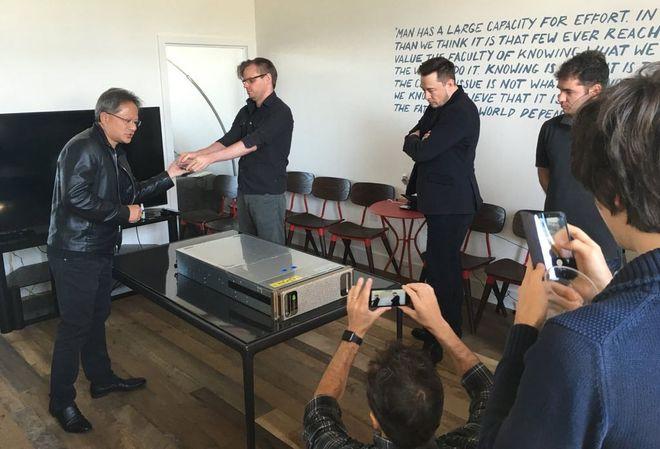
In 2017, CUDA downloads reached 2.7 million times, and Nvidia's profit increased 3 times to US$3 billion, completing its transformation to an AI company.
To meet the demand for powerful computing power in model training, Nvidia has developed a series of proprietary chips. For example A100it is a Tesla series GPU based on Ampere architecture, supports Multi-instance GPU technology, which can divide a GPU into multiple independent GPU instances, up to seven GPU instances, to flexibly adapt to different task loads and significantly improve computing efficiency. For large model companies, they can better optimize resource configuration during training and reduce costs.
Launched in 2022 H100 With a new generation of Hopper architecture, equipped with the fourth-generation Tensor Core and Transformer engine (FP8 precision), it can be 9 times faster on Hybrid Expert (MoE) model training compared to the previous generation. With NVIDIA's scalable NVLink interconnect technology, up to 256 H100 chips can be connected, which allows it to drive ultra-large-scale AI language models, deep recommendation systems, genomics, and complex digital twin applications.
NVIDIA Dynamo, an open source distributed AI inference service framework released by NVIDIA in 2025, is a successor to NVIDIA Triton inference servers, which can coordinate and accelerate inference communication between thousands of GPUs. It separates the processing and generation stages of LLM on different GPUs, allowing the specific requirements of each stage to be individually optimized, ensuring greater utilization of GPU resources. NVIDIA Dynamo's intelligent inference optimization increases the number of tokens generated per GPU by more than 30 times when running the DeepSeek-R1 model on a large cluster of GB200 NVL72 racks. This reasoning optimization not only improves inference performance, but also reduces costs, providing large-scale model companies with more efficient and economical solutions in the inference process.
July 2025,With nearly 90% of the AI chip marketas well as the comprehensive development of data centers, autonomous driving and other businesses, Nvidia's market value exceeded the 4 trillion US dollars mark, and Huang Renxun spent 30 years to prove:True innovation often begins with ununderstood persistence.
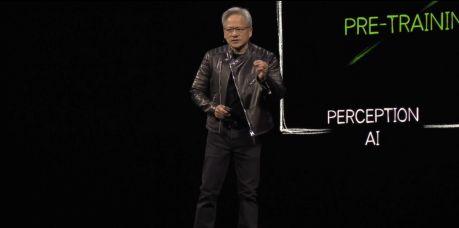
At the Chain Expo, Huang Renxun said that he believesThe next wave is physical AIall abilities can be integrated into the physical world, such as robots. This judgment is not only an accurate prediction of the evolution of AI technology, but also a profound insight into the deep integration of intelligence and the real world.
The core of physical AI is to move AI from the “cognitive intelligence” in the digital world to the “action intelligence” in the physical world.When reviewing the development of AI, Huang Renxun emphasized that since the outbreak of deep learning in 2012, AI has surpassed human capabilities in the fields of computer vision, speech recognition, language understanding, etc. – these breakthroughs have laid a solid foundation for physical AI. When generative AI can understand information, generate content, disassemble problems and solve unknown challenges, its reasoning capabilities can extend to the physical world: robots are no longer just machinery that executes preset instructions, but can observe the environment, analyze scenes, dynamically adjust actions like humans, and complete complex tasks independently in factories, homes, medical and other scenarios.
“Now AI can solve most cognitive tasks and achieve relatively good results. This is generative intelligence.” Huang Renxun's words reveal the underlying logic of physical AI: the “understanding-inference-generation” ability of generative AI will become the “brain” of the agent in the physical world, allowing machines to not only think, but also do it. When AI's super intelligence combines with the action power of the physical world, the challenges facing human beings such as physical labor, dangerous operations, and precision operations will usher in new solutions.
In terms of company management, Huang Renxun upgraded his early working methods to Nvidia's cultural core: requiring each employee to submit weekly“5 most important things”he himself insisted on reading the 20,000 emails submitted by his employees and maintaining full control of the company. Even after serving as CEO for 30 years, he still maintains a work intensity of 12-14 hours a day and 7 days a week. When asked about the secrets of managing 60 direct subordinates, Huang Renxun’s answer was:“Keep transparency so that everyone knows the company’s priorities.”It is this management philosophy that supports Nvidia's growth from a small company with 30 people to a global technology giant.
Huang Renxun and China
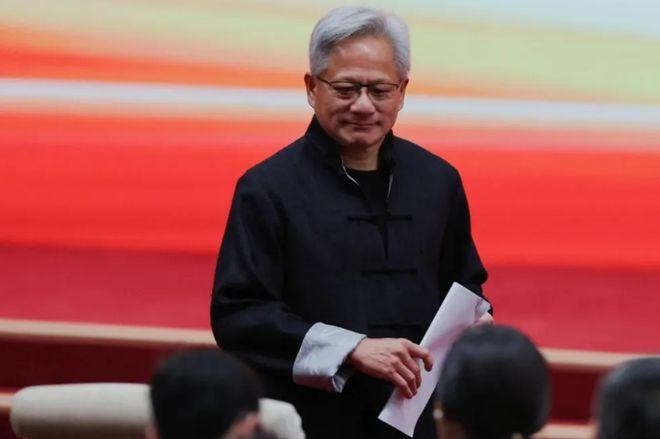
Huang Renxun’s emphasis on the Chinese market is obvious. In 2025, he has visited China three times. At the end of January, he attended the China Annual Meeting, celebrated the Spring Festival with his employees and distributed red envelopes to express his importance to the Chinese team; in mid-April, he visited China again and held talks with Ren Hongbin, President of the China Council for the Promotion of International Trade, actively promoted Nvidia's business layout and cooperation exchanges in China. And this tour of the Chain Expo in July attracted much attention.
At the opening ceremony of the Chain Expo, Huang Renxun's outfit was different from before.Instead of wearing the black leather jacket he often wore, he changed into Tang suits. At the beginning of his speech, he said in Chinese that this was his first time to participate in the Chain Expo and his first speech in Chinese. “China's supply chain can be said to be a miracle, and I am very happy to have the opportunity to introduce Nvidia to China's huge supply chain.”
“China's open source AI is a catalyst for global progressgiving all countries and industries the opportunity to participate in this AI revolution. Open source is also the key to ensuring AI security and helps promote international collaboration in technical standards, performance benchmarks and security protection measures. “Huang Renxun also pointed out that AI has become an infrastructure today, reshaping the supply chain and fundamentally changing the model of production and logistics.
Just one day before the opening of this chain fair, Huang Renxun announced an important news:The US government has approved relevant export licenses, and Nvidia will soon sell H20 chips to the Chinese marketand brought a new RTX Pro series graphics card tailored for the Chinese market, targeting computer graphics and digital twins. This move undoubtedly injected new vitality into the cooperation between NVIDIA and the Chinese market, and also demonstrated Huang Renxun's determination to actively promote the layout of NVIDIA products in the Chinese market.
Looking back at the relationship between Nvidia and China, Nvidia entered the Chinese market as early as 30 years ago. At that time, there were only a handful of Chinese technology companies, and today, China has become an important force in the global AI field. Huang Renxun witnessed and participated in this process and established deep cooperative relations with many Chinese companies. Although Nvidia occupies an important position in the global AI chip market, it also faces competition from domestic chips such as Huawei Ascend in the Chinese market. Faced with competition, Huang Renxun showed a respectful and objective attitude. He repeatedly emphasized that China's pace of innovation is unstoppable, and he is full of optimism and confidence in China's innovation capabilities, believing that China's AI market will make progress regardless of whether it has or not.
In Huang Renxun's view, the Chinese market is uniquethere are a large number of AI researchers here, with unique market vitality, innovation capabilities, development momentum and industrial development speed, and the scale of the end consumer group is extremely large. He knows very well,If Nvidia wants to continue to lead in the global AI competition, it cannot be separated from the support and cooperation of the Chinese market.. Huang Renxun has repeatedly called on the U.S. government to relax technology export restrictions so that American companies can access China, the world's largest semiconductor market, fairly. He always firmly believes that technological leadership requires huge market support, and the income and profits brought by the large market can provide guarantees for subsequent R&D investment.Both China and the United States have the opportunity to stay ahead of AI technology, but they must cooperate with global developers and interact with global markets..
Looking back at Huang Renxun’s journey, from the adventurer on the streets of Bangkok to the AI legend of Silicon Valley, from the dilemma of boarding schools to the helm of the 4 trillion dollar empire. His story confirms a truth:The true leader is not always right, but making the right choice at key nodes; not avoiding risks, but discovering opportunities in risks.
As he said at the NVIDIA GTC conference:“The innovation in AI has just begun.”Under the leadership of Huang Renxun, Nvidia's legendary story continues to write a new chapter.
References:
https://en.wikipedia.org/wiki/Jensen_Huang
Author: Xiaoyu