(Source: Chen Zi)
Cast aluminum alloy futures and optionsGoing on the market,Lixing Aluminum IndustrybecomeThe first batch of delivery companies
On June 10, 2025, the Shanghai Futures Exchange ushered in a historic moment – the first recycled commodity variety cast aluminum alloy futures and options in my country's futures market was officially listed for trading. The implementation of this innovative financial tool not only marks the full industrial chain coverage of my country's non-ferrous metal futures varieties, but also empowers the recycled metal industry with “green finance” and provides Chinese solutions for the low-carbon transformation of the global aluminum industry. As one of the first delivery companies, Anhui Lixing Aluminum Technology Co., Ltd. has become an important participant in this milestone event with its technological innovation and industrial responsibility in the field of recycled aluminum.
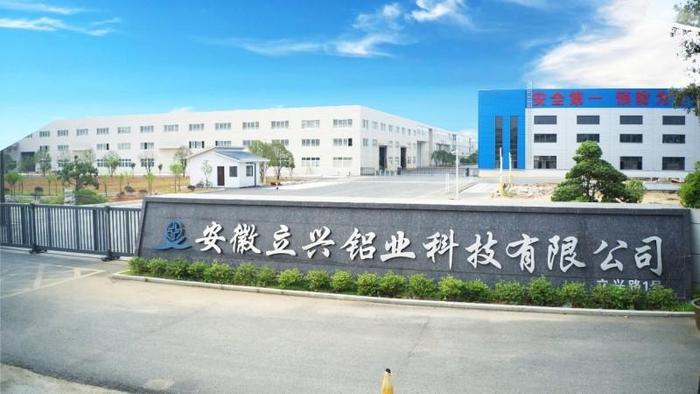
Anhui Lixing Aluminum Technology Co., Ltd.
Industrial transformation: The leap from financial innovation to green upgrade
(I) Pricing mechanism innovation: Transparency reshapes the ecology of the industrial chain
The price discovery function of the futures market injects new momentum into the recycled aluminum industry. For a long time, the recycled aluminum market has been underpriced for insufficient pricing transparency due to the dispersed sources of scrap aluminum and inconsistent quality standards, and upstream and downstream companies are facing the risk of information asymmetry. The AD12.1 futures contract listed this time forms fair prices through public bidding, reflecting market supply and demand dynamics in real time, and shifting the pricing of recycled aluminum from “regional bargaining” to “national benchmark”. Take the above-mentioned slag inclusion standard with K value ≤0.2 as an example. The standardized quality requirements force enterprises to optimize production processes, promote the upstream and downstream of the industrial chain to adjust procurement and sales strategies with futures prices as anchor points, and significantly improve price transmission efficiency.
(II) Breakthrough in risk management: In-depth coordination between entities and finance
The listing of AD12.1 futures provides companies with accurate hedging tools. In the past, recycled aluminum companies often fell into the “cost inversion” dilemma due to the fluctuations in the price difference between scrap aluminum and primary aluminum, and could only replace hedging through electrolytic aluminum futures, which poses a risk of product mismatch. Nowadays, enterprises can directly use the AD12.1 contract to lock in raw material procurement and product sales prices, and build a closed-loop risk management system of “spot production + futures hedging”. Include AD12.1 futures in daily hedging combination to achieve stable operating profits through futures and spot linkage. This collaborative ecosystem of “entity + finance” not only enhances the company's risk resistance, but also promotes the industry to transform from “extensive operation” to “fine management”.
(III) Quality standards upgrade: From disorderly competition to standardized development
The strict requirements for delivery products by the Shanghai Futures Exchange have become the “touchstone” of industry quality. According to the contract rules, AD12.1 must meet 12 physical and chemical indicators, including lead content ≤0.1%, pinhole degree or above, and requires that the production date be concentrated within 60 days and the warehouse receipt validity period shall not exceed 360 days. This standardization measure directly curbs the phenomenon of “lowest use as good ones”, and guides resources to concentrate on high-quality enterprises through the “survival of the fittest” mechanism of futures delivery. As Lixing Aluminum executives said, the quality threshold of the futures market will accelerate industry integration, and it is expected that the market share of leading companies will increase to more than 40% in the next three years.
Corporate Opportunities: Lixing Aluminum’s “Dual Carbon” Breakthrough
(I) Brand value leaps: Industry endorsement of the first batch of delivery qualifications
As one of the first listed delivery companies, the selection of Anhui Lixing Aluminum is of benchmark significance. The Shanghai Futures Exchange's screening of delivery brands covers more than 20 indicators such as capacity scale, quality control, and environmental compliance. In the end, only industry-leading enterprises obtained this qualification. With its annual production capacity of 200,000 tons of scrap aluminum, ISO 9001 quality management system certification, and its independently developed “scrap aluminum intelligent sorting system”, Lixing Aluminum has become a representative of the technical strength of the recycled aluminum field. This qualification not only enhances the company's bargaining power in high-end markets such as automotive parts and photovoltaic brackets, but also attracts in-depth cooperation between strategic customers such as Chery.
(II) Quality control upgrade: the leap from “compliance with standards” to “leading”
Strict standards for futures delivery will also promote Lixing Aluminum to implement comprehensive quality innovation. Lixing Aluminum has invested heavily in the upgrade of the testing center, and introduced spectral analyzers, metallographic microscopes and other equipment to realize the full process traceability from the entry of raw materials into the factory to the out-of-stock of the finished product. In response to the “tight fracture tissue without inclusions” indicator required by the AD12.1 contract, Lixing Aluminum optimized the smelting process parameters, increasing the product pass rate from 92% to 98.5%, and simultaneously obtained the IATF 16949 automotive industry quality management system certification. This model of “forced technology upgrades with futures standards” not only consolidates its market position in the Yangtze River Delta region, but also lays the technical foundation for the 300,000-ton recycled aluminum production capacity planned by Lixing Aluminum Phase II project.
Future Outlook: China's Path to Building a Global Recycled Aluminum Pricing Center
The person in charge of Lixing Aluminum said that the listing of cast aluminum alloy futures and options is a key step for my country to move from a “big aluminum producer” to a “strong aluminum pricing power”. By integrating the entire industrial chain resources of scrap aluminum recycling, smelting processing, and terminal applications, the Shanghai Futures Exchange is gradually building a “China price” system with AD12.1 as the core. It is estimated that after this variety is launched, it can drive the scale of recycled aluminum investment to grow by 30%. It is expected that by 2030, my country's recycled aluminum production will exceed 18 million tons, and carbon emission reduction will contribute more than 100 million tons of carbon dioxide.
For Anhui Lixing Aluminum, this opportunity and challenge coexist: on the one hand, we need to continuously optimize the process to adapt to the dynamic quality requirements of futures delivery, and on the other hand, we need to use futures tools to expand the international market. As its technical team said, “We are developing high-end cast aluminum alloys that meet the EU EN 1706 standards. In the future, we will directly connect to the Southeast Asian and Middle East markets through the bonded delivery warehouse of the Shanghai Futures Exchange.” This dual-wheel drive of “technology + finance” may reshape the global recycled aluminum trade landscape.
This industrial transformation triggered by financial innovation not only injects new impetus into the recycled aluminum industry, but also uses the combination of “futures + green” to promote my country to gain voice in the low-carbon transformation of the global aluminum industry. With the steady growth of AD12.1 contract trading volume, a more transparent, more efficient and greener recycled aluminum industry ecosystem is accelerating its formation in China.