
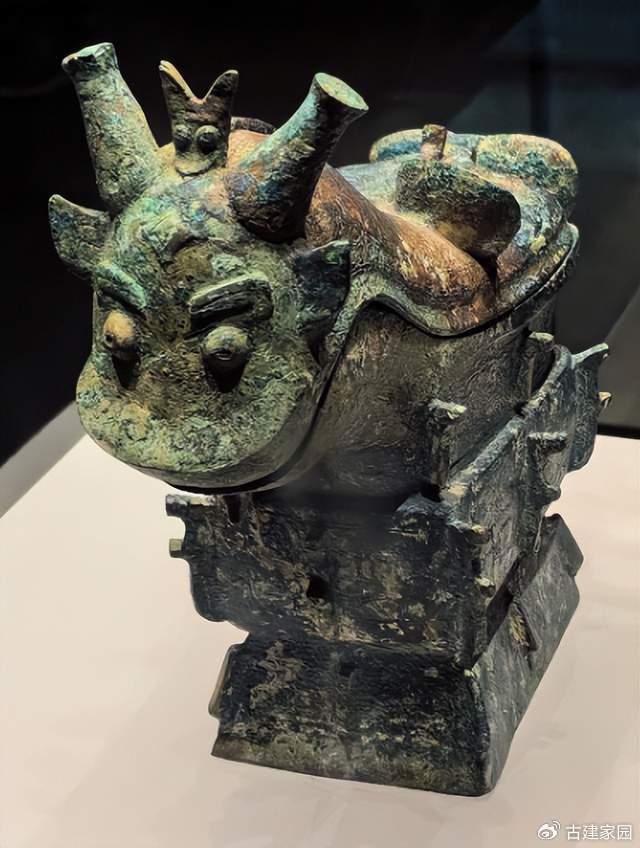
The art of soil and flames spans three thousand years of craftsman wisdom. From the late primitive society to the Qin and Han dynasties, bronzes carried the development process of Chinese civilization, and their exquisite production craftsmanship is still breathtaking.
1. Raw material ratio of bronze ware: the perfect combination of copper, tin and lead
Ancient Chinese bronzes were not single copper products, but alloys of copper, tin and lead. Compared with pure copper, this alloy has a lower melting point, higher hardness, and is easier to cast and process.
The “Six Qi” rule recorded in “Kaogong Ji” details the composition ratio of different bronze ware: “The bells and tripods are six parts in gold and tin are one; the axes and pounds are five parts in gold and tin are one; the spears and halberds are four parts in gold and tin are one…” This is one of the earliest alloy preparation rules in the world, indicating that the ancients have mastered the scientific laws of metal ratio.
There are different ratios for utensils of different uses: copper usually accounts for 70%-80% of tin and 20%-30% of tin; weapons have higher tin content to enhance hardness. The addition of lead can improve the fluidity of the alloy and facilitate casting of complex patterns, but excessive amounts will reduce hardness.
2. Core casting technology: block model method and lost wax method
There are two basic methods for making bronze ware in ancient China: block model method and lost wax method. Among them, the block model method is the most widely used bronze casting method.
Block model method production process
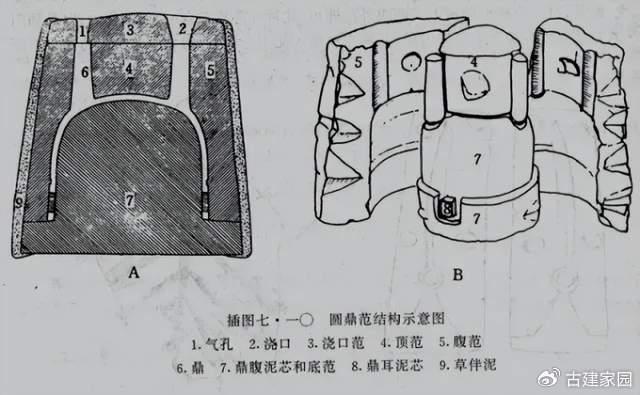
The production process of the block model method (or earth model method) is complex and sophisticated, including multiple steps:
1. Molding: The craftsman first uses clay mixed with fine sand to create a solid model exactly the same as the finished product, called “mold” or “maternal model”. The required patterns are finely carved on the surface of the mold, such as Taotie pattern, Kuilong pattern, etc.
2. Making model: apply fine clay on the surface of the dry mud mold and turn the “outer model”; at the same time, make “inner model” (also known as core), and the volume of the inner model is equivalent to the inner cavity of the container. Divide the outer field into several pieces to facilitate removal from the mold.
3. Combination model: When the outer model and the inner model are connected, the gap between the cavity is the cavity, and the interval is the thickness of the object to be cast. Leave at least one pour hole on the cover.
4. Pouring: Inject the molten bronze liquid (about 1100-1200 degrees) into the cavity from the pouring hole. The utensils are usually cast upside down to concentrate the impurities in the vents and copper liquid on the bottom of the utensils, making the middle and upper parts of the utensils dense and the patterns are clear.
5. Trim: After the copper liquid cools down and solidifies, break the outer surface, take out the castings, polish and polish, remove the excess parts, make the patterns clear and the shape of the instrument smooth.
The method of pouring into a complete vessel shape at one time is called the “hunching casting method”, and many vessels in the Shang and Zhou dynasties were cast in this way. For complex instrument shapes, the “separation casting method” is used, and the parts are cast first, and then they are divided into two or even multiple times.
Loss of wax: the miracle of precision casting
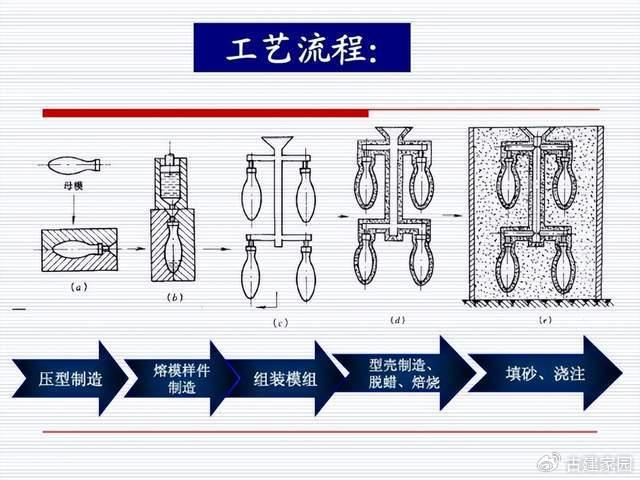
Lost wax method is mostly used to cast castings with complex shapes and difficult to turn. This method first uses wax to make a mold, apply the molding material outside to form an integral casting mold. Heating will dew the wax, form a cavity casting pattern, pour liquid metal, and then cool it to obtain a molded casting.
The earliest lost wax castings generally recognized in China appeared in the Spring and Autumn Period, such as the copper cup parts and copper bans unearthed in Xichuan, Henan. The early Warring States Period unearthed from Sui County, Hubei Province, Zeng Hou Yizun Pan was exposed to the early Warring States Period. The space structure was complex and neat and the casting was exquisite, indicating that the lost wax casting technology at that time was already very skilled.
3. Archaeological evidence: From the bronze knife to the Houmu Wu tripod
Archaeological discoveries provide us with rich physical evidence:
The earliest known bronze ware in China was a small bronze knife discovered in the Lin family in Dongxiang County, Gansu Province. It was manufactured between 3000 BC and 2300 BC. In 2020, bronze ware more than 5,000 years ago was discovered at the Tongtian Cave site in Xinjiang. This is the earliest bronze ware discovered in Xinjiang.
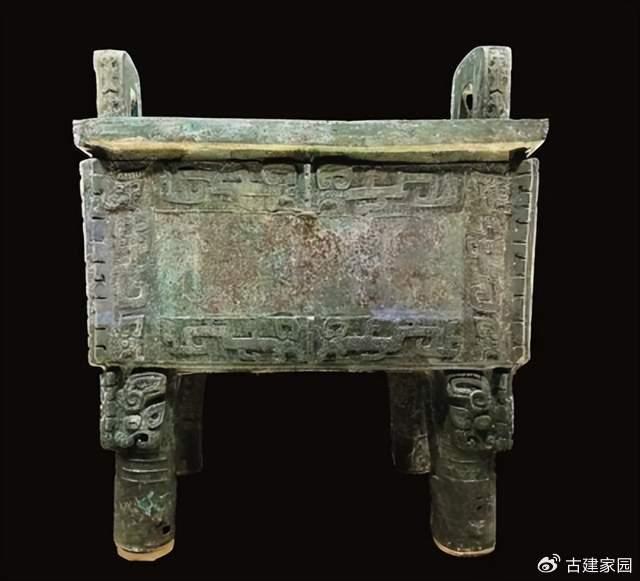
During the Shang and Zhou dynasties, the bronze smelting and casting industry reached its peak. The Dafang Ding of Later Mu Wu (formerly known as Si Mu Wu Ding) is a representative work of bronze ritual vessels in the Shang Dynasty and is also the largest bronze ware discovered in archaeology in my country so far.
It weighs 832.84 kg, is 133 cm high, has a mouth length of 110 cm and a mouth width of 79 cm. To cast such a tall bronze ware, the metal required should be more than 1,000 kilograms, and a huge furnace is required, which shows the exquisite bronze technology of the merchants.
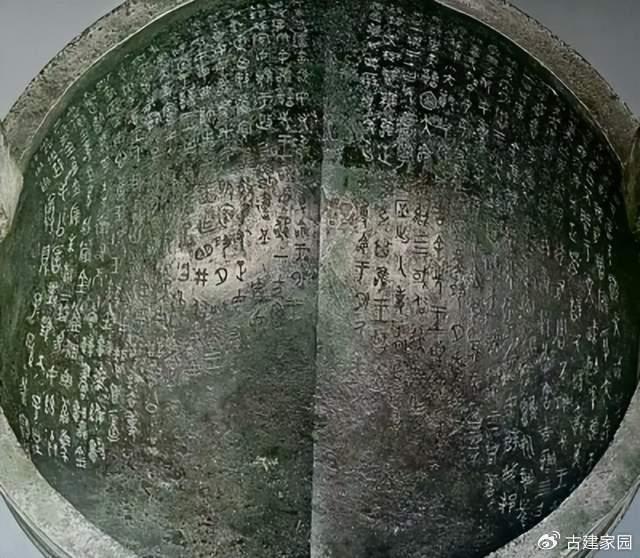
During the Western Zhou Dynasty, bronze ware production technology continued to develop. Mao Gong Ding is an outstanding representative of bronze ware in the Western Zhou Dynasty and is famous in the world for its inscriptions. The inner wall of the tripod is cast with 32 lines of inscriptions, totaling 500 characters, and is the most inscriptions among existing bronze ware.
4. The historical significance of bronze ware: from sacrifice to war
Bronze ware played multiple roles in ancient society: “The major affairs of the country are sacrifices and military affairs.”
In terms of sacrifice, bronze ritual vessels are the medium for communicating with the gods of heaven and earth. There are strict regulations on the use of ritual vessels such as tripods, gui, goblets, and jue: For example, the emperor uses nine tripods and eight gui in the ritual occasions, the prince uses seven tripods and six gui, and five tripods and four gui, etc., which increase and decrease in order according to the height of the title.
In terms of war, bronze weapons improved the combat effectiveness of the army. Ge, spear, axe, halberd and sword are the five weapons that ancient Shu soldiers are best at. More than 120 willow-shaped bronze swords were unearthed in the tomb of Shuangyuan Village, Qingbaijiang, Sichuan, which tells the story of the ancient Shu people resisting powerful enemies.
Conclusion: The eternal treasure of art
The ancient Chinese bronze making skills have a long history, but the production technology has been influential to this day. The clay casting evolved from the ceramic block method is still used in traditional iron pot casting today; the traditional lost wax casting is improved to contemporary investment casting, which is used to manufacture castings of complex shapes in various industries, and also plays an important role in the casting manufacturing of aerospace industry.
When we are in the museum exhibition hall and stare at these bronze ware that have experienced thousands of years of vicissitudes, we can feel the tenacity and strength of cultural pulse they contain. They are not only faithful carriers and vivid witnesses of history and culture, but also eternal artistic treasures in the brilliant galaxy of Chinese civilization.
(Note: The article is for knowledge sharing only, and some pictures are from the Internet. If you have any copyright issues, please contact us to delete it!)
Ancient Architecture Home – Ancient Architecture China has taken the lead in integrating culture into the cultural and architectural industry docking platform for architecture, culture and tourism, and building materials!