
Jimu News reporter Xu Ying
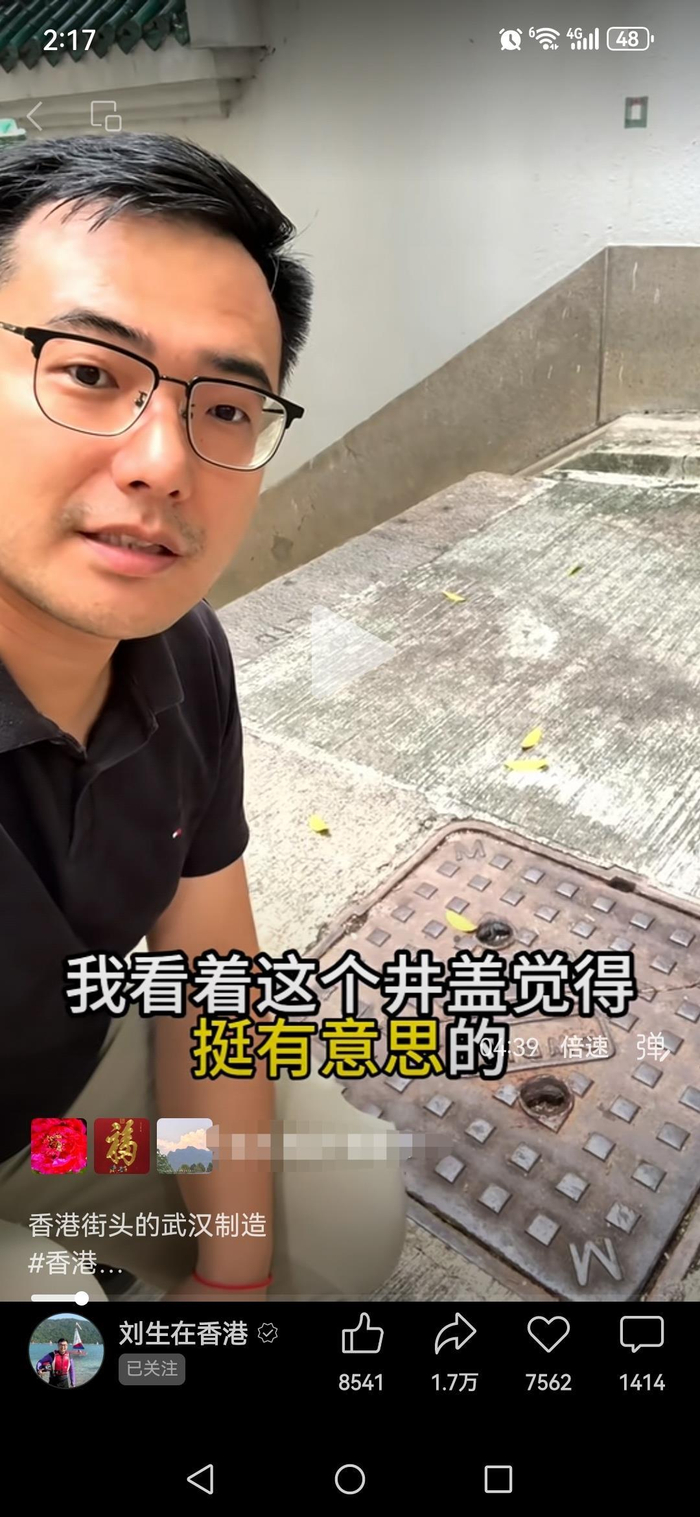
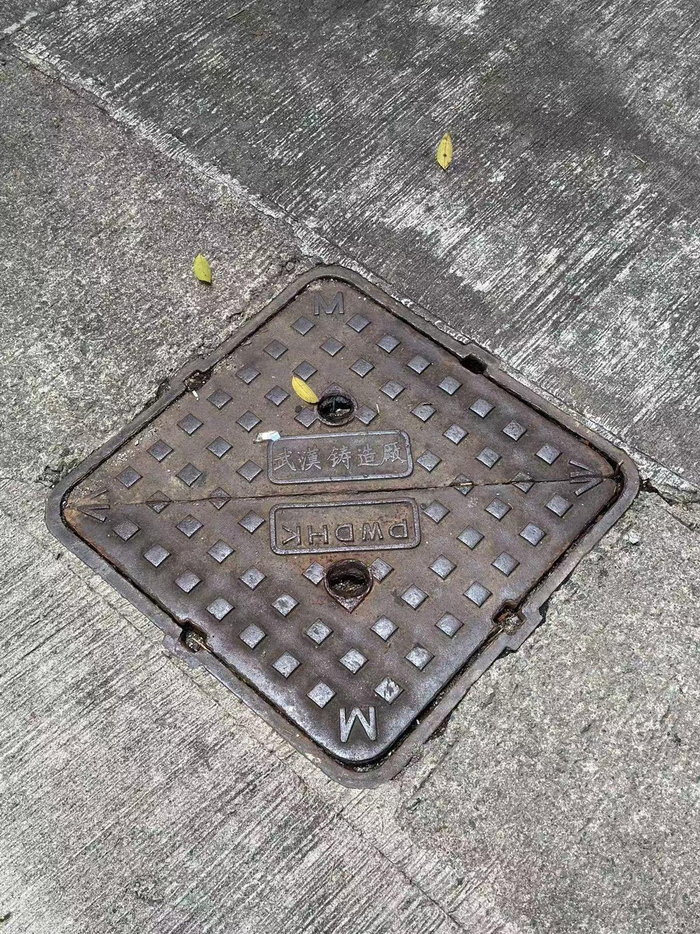
Recently, a video of “Made in Wuhan on the Streets of Hong Kong” became popular on the video account. The blogger “Liu Sheng in Hong Kong” posted a video about his discovery of manhole covers marked “Wuhan Foundry” in Sheung Wan, Hong Kong. In order to verify when a batch of manhole covers such as this were sold from Wuhan to Hong Kong, he also visited and verified in Wuhan, and arrived at the Qiaokou National Industry Museum, Wuhan Archives, Wuhan Library, etc., revealing a process of booming Wuhan industry in the 1960s for netizens.
A Hong Kong netizen left a message saying: “I have lived in Hong Kong for more than 60 years and haven't paid attention to this! Thank you!” A Hong Kong netizen also left a message saying: “After a decade ago, a child was studying in a nearby kindergarten, I noticed this. There are several, and the stairs street fell nearby, giving me a thumbs up to the author's spirit of exploring the truth.” “Wuhan is a city worthy of the pride of Hubei people.”
On September 25, a reporter from Jimu News contacted the blogger “Liu Sheng in Hong Kong” who posted the video. He told the reporter that he was born and raised in Wuhan. After graduating from university, he moved to Hong Kong to live and work because his wife was in Hong Kong. Usually, posting videos is purely a sharing life, but he didn't expect this video to become popular.
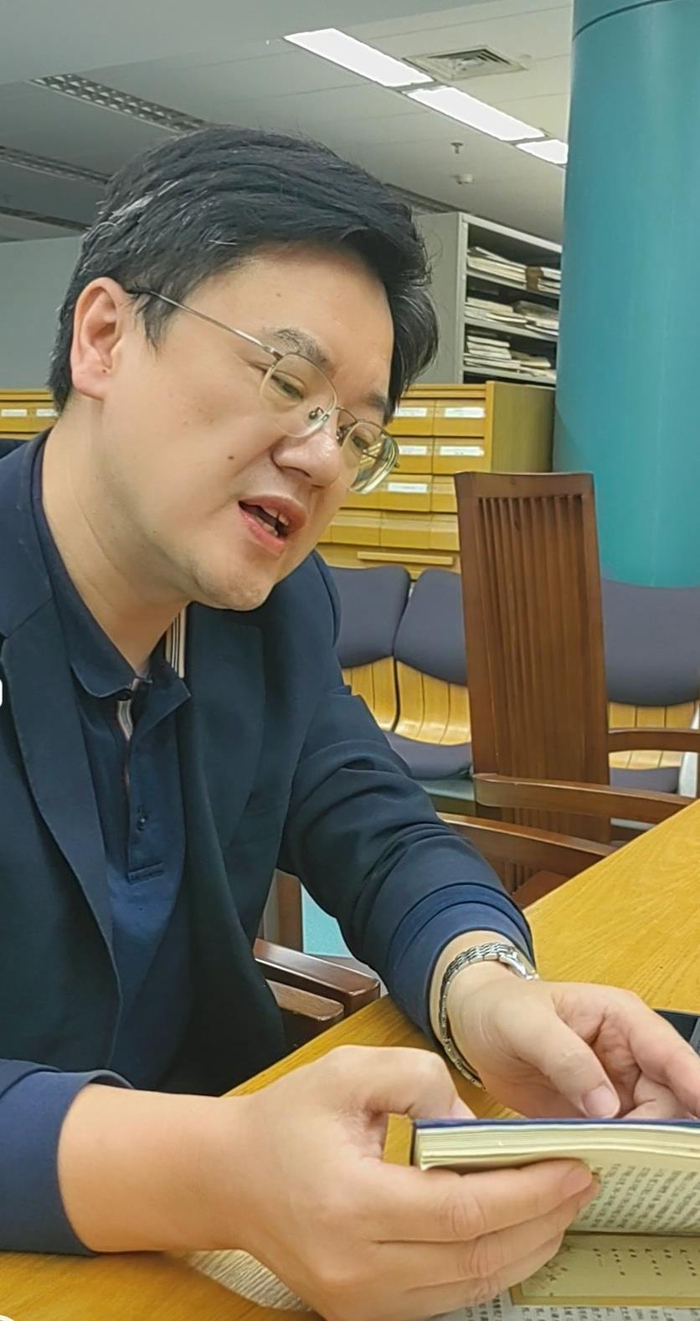
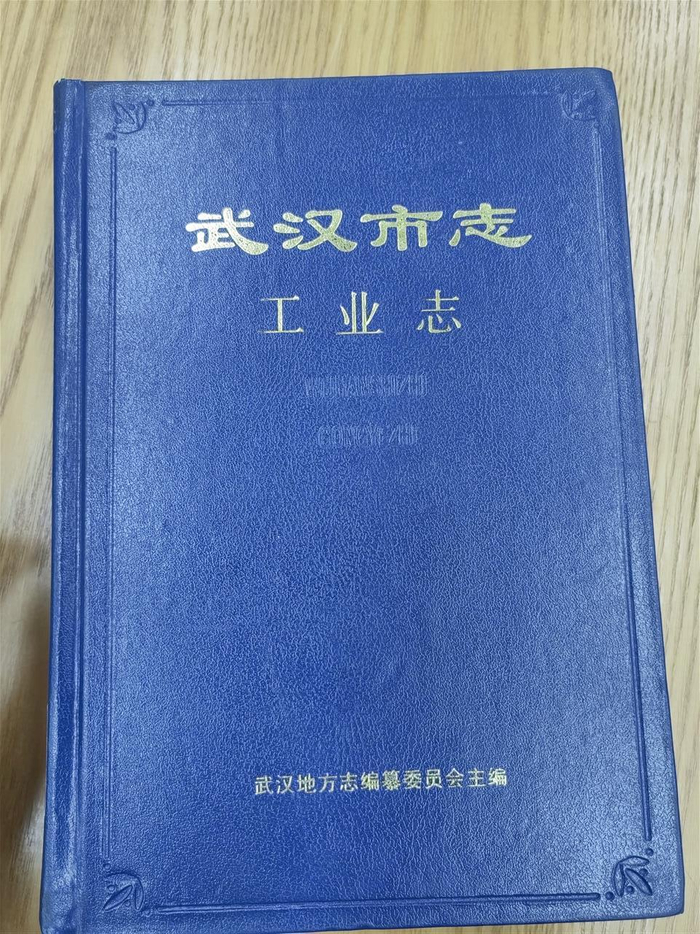
Subsequently, Jimu News reporters also came to the History and Documentation Department of Wuhan Library, which the blogger had visited. Wang Gang, deputy director of the department and local history researcher of Wuhan, told Jimu News reporters that someone did come to consult the relevant information on economic and trade history of Hong Kong and Wuhan during the summer vacation. He also saw the blogger's video and agreed with the blogger's judgment.
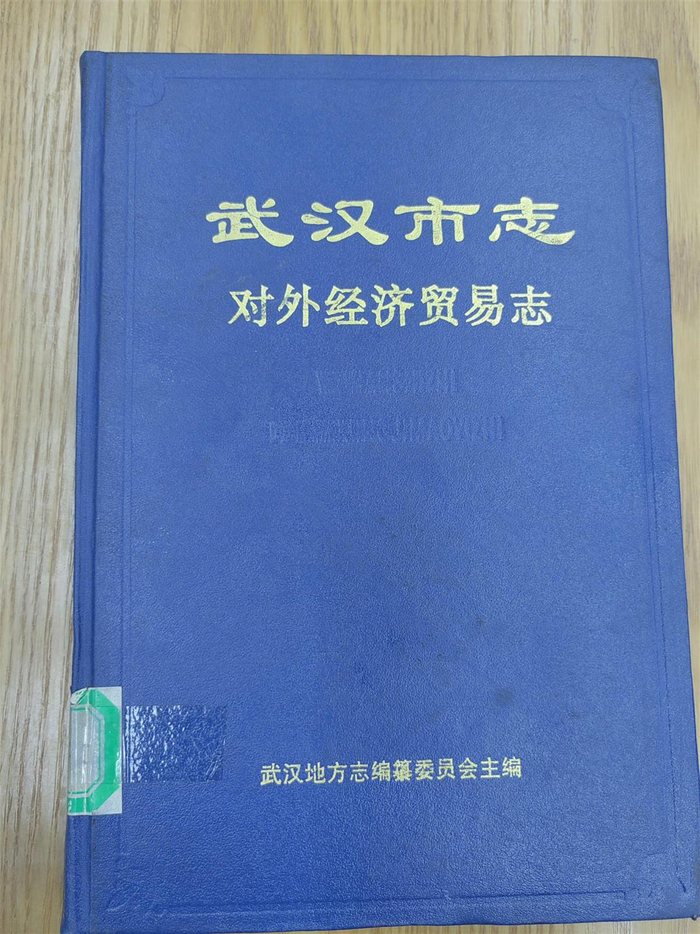
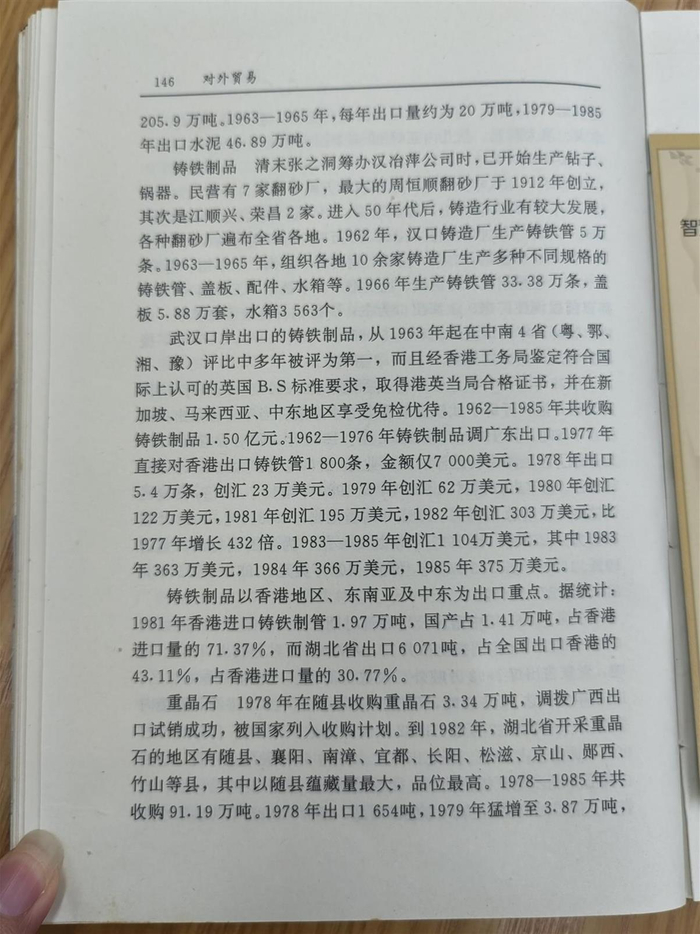
Wang Gang found the “Wuhan City Chronicle Foreign Economic and Trade Chronicle” for the reporter, which records: “Cast iron products exported at Wuhan port have been ranked first in the four central and southern provinces (Guangdong, Hubei, Hunan and Henan) for many years since 1963. They have been identified by the Hong Kong Bureau of Industry to meet the internationally recognized British BS standards, obtained the Hong Kong and British authorities' certificate of conformity, and enjoyed exemption from inspection in Singapore, Malaysia, the Middle East and other regions. From 1962 to 1985, a total of 150 million yuan of cast iron products were purchased.” This data points out that the cast iron products produced in Wuhan are of excellent quality, but the specific manufacturer is not specified.
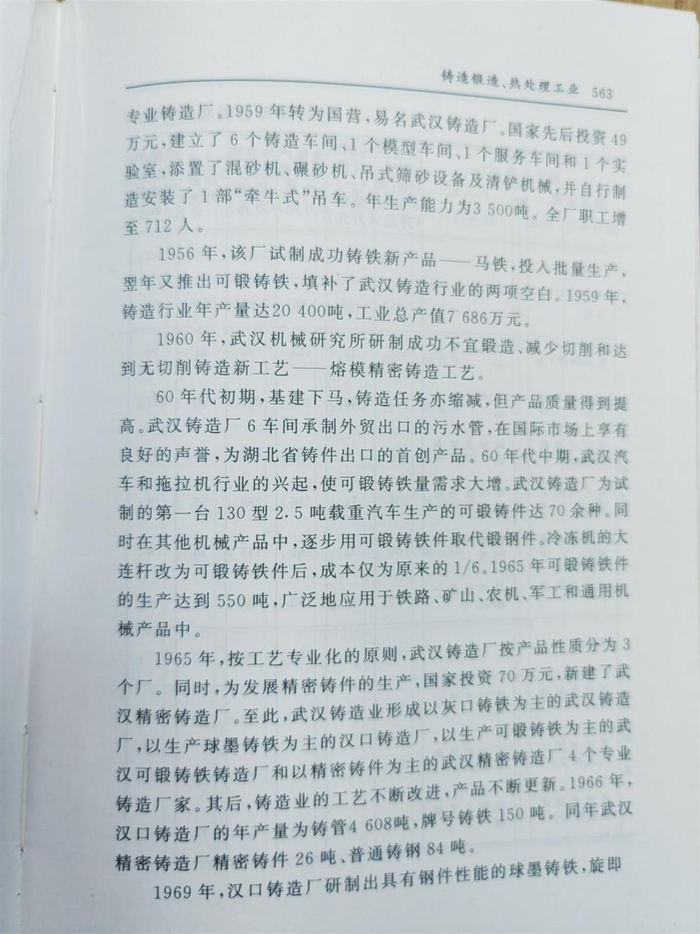
However, it is clearly recorded in another book “Wuhan City Chronicle·Industrial Chronicle” that the public-private joint Wuhan foundry established in 1956 was the largest professional foundry in Wuhan at that time. In 1959, it was converted from a public-private joint venture to a state-owned venture and was renamed Wuhan Foundry. The state has successively invested 490,000 yuan to establish 6 casting workshops, 1 model workshop, 1 service workshop and 1 laboratory, and has added sand mixing machines, sand milling machines, crane screening equipment and shoveling machinery, and has also manufactured and installed a “cowl-type” crane. The annual production capacity is 3500 tons. The number of employees in the factory increased to 712. In 1956, the factory successfully trial-made new cast iron product – Ma Tie, which was put into mass production. The following year, it launched fleeable cast iron, filling two gaps in the Wuhan casting industry. In the early 1960s, “Wuhan Foundry 6 workshop undertakes the sewage pipes exported by foreign trade, enjoys a good reputation in the international market, and is the first product for casting exports in Hubei Province.”
Wang Gang said,Combined with the “Wuhan City Chronicle·Foreign Economic and Trade Chronicle”, “Wuhan City Chronicle·Industrial Chronicle” and the oral information of Liang Zhenying, it can be judged that as the largest professional foundry in Wuhan at that time, the cast iron products of the Wuhan Foundry (including cast iron manhole covers, sewage pipes, etc.) were sold to Hong Kong and Singapore in the 1960s, winning recognition from domestic and foreign markets. After decades of wind and rain, these manhole covers have been used in Hong Kong and are well used. They have witnessed the construction and development of Wuhan's modern industry after the founding of New China, recorded the pursuit of product quality by a Wuhan industrial enterprise, and also reflected the economic and trade ties and cooperation between Wuhan and Hong Kong at that time. Although the manhole cover is small, it has rich connotations and profound meanings.
(Source: Jimu News)