
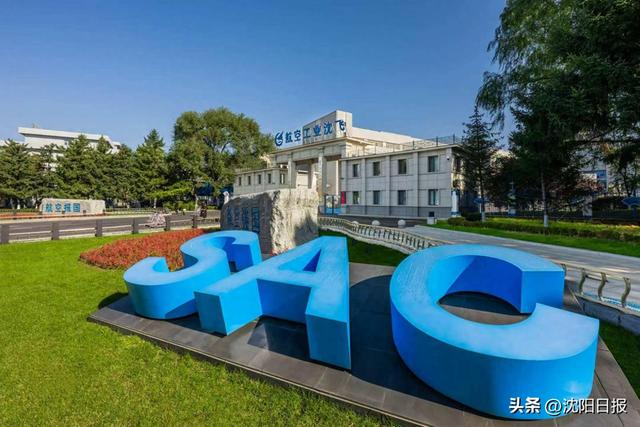
In the north of Shenyang City, there is a peculiar landscape: on one side is the Cemetery of the Martyrs of the War to Resist U.S. Aggression and Aid Korea, where the heroes of the Volunteer Army are buried, with solemn pines and cypresses; on the other side is the aviation industry, the cradle of China's fighter jets, sinking and roaring war eagles.
History forms a deep dialogue here. More than 70 years ago, the young Chinese Air Force took off from here in Soviet-made fighter jets and flew over the smoke-filled peninsula. Today, in the factory building separated by a wall, a new generation of stealth fighters is guarding the peaceful sky that our ancestors bought with their blood with a brand-new attitude.
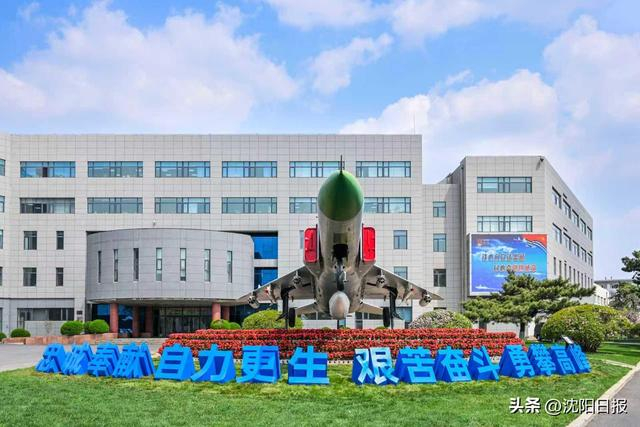
Walking into Shenfei from the gate, time is stacked here: the elegant Soviet-style “Big White Building” records the traces of the 1850s, the towering ancient locust trees bear witness to the hardships of entrepreneurs, and in the modern digital factory, young engineers are making final adjustments to the J-35A that is about to be delivered. Under the cold metal, 75 years of spiritual blood flowed – the blood of loyalty and dedication, the muscles and bones of self-reliance, the brand of hard work, and the belief in climbing to the top.
From “magic hammer” to “writing and ink precision”
A kind of spiritual fire passed down from generation to generation
In the display cabinet of Shenfei Aviation Expo Park, a wooden hammer lies quietly, the wooden handle has been polished smooth and shiny.
In 1954, the trial production of the J-5 aircraft encountered a major setback – the Soviet wing standard parts were deformed at the intersection, and the entire aircraft could not be combined. Soviet experts were at their wits' end. Chen Ayu, the frame fitter, stayed alone in the workshop for several nights in a row. Finally, he used the wooden hammer to carefully straighten the deformation bit by bit, risking the entire intersection to be scrapped. When Marshal Nie Rongzhen inspected, he held Chen Ayu's hand tightly and praised: “This is a 'magic hammer'!”
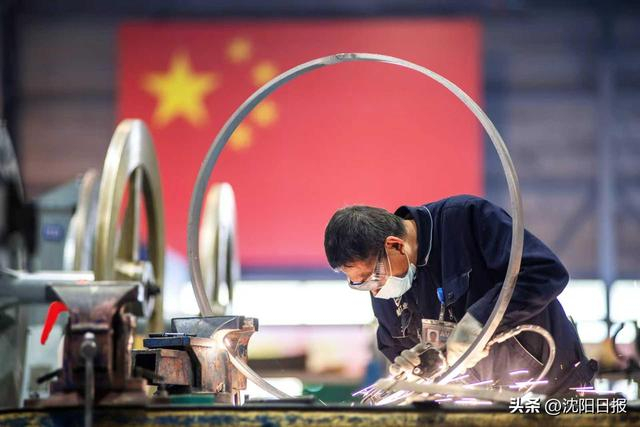
70 years later, at the Shenfei Standard Parts Center, Fang Wenmo, who is 1.88 meters tall, is leaning over the operating table. This big man, who was once considered “unsuitable to be a fitter”, transformed his balcony into a studio and found parts the size of matchboxes to practice filing. Under normal circumstances, the fitter changes more than 10 files a year, and he changed more than 200 files a year. At the age of 26, he won the fitter championship in the National Youth Vocational Skills Competition, and his “writing and ink precision” reached 0.00068 mm – equivalent to 1/125 of the diameter of a human hair.
From the “magic hammer” to the “precision of calligraphy and ink”, what has changed is the advancement of tools and techniques, but what remains unchanged is the ingenuity and persistence conveyed by the hands. In 1966, 34-year-old Wang Mingsheng rushed from Shenfei to Anshun, Guizhou to support the third-line construction. “The ground is never three miles flat, and the sky is never clear three days.” There is no running water in the staff dormitories, and the workers go directly to the rice fields to scoop water to drink. From 1953 to 1985, more than 20,000 Shenfei key personnel went to Xi'an, Chengdu, and Guizhou. Many years later, at a basketball game held by XAC, there was a touching scene: young people cheered for the XAC team, while old people cheered for the Shenfei team – those gray-haired spectators were all old Shenfei people who supported Northwest China back then.
November 25, 2012, another tearful moment. Two days after the J-15 successfully landed on the Liaoning ship, the on-site commander Luo Yang collapsed on the road to victory. Later, Luo Yang's mother made a request to Shenyang Aircraft Company: “My child is so busy at work, and I don't know what he is busy with. Can you show me his achievements and honors?” From those past experiences, this hero's mother saw a “strange yet familiar” son – the son who integrated his life into the aviation industry.
From prosperous cities to deep mountain canyons, from youth to gray hair, generations of aviation people have dedicated their years to the blue sky of the motherland. Yao Zhicheng, an old man who chooses one thing for the rest of his life, still walks two kilometers every day to “work” in Shenfei. He said: “As long as I don't fall down, I will come every day!”
From J-5 to J-35, it took 75 years to build a sword in the sky
On July 19, 1956, a Silver War Eagle roared into the sky from Shenyang Airport – China's first jet fighter, the J-5, made its first successful flight. Tang Qiansan, who was the director of the dispatching room of the assembly workshop at the time, recalled: “Everyone was so happy that they had contributed to the country. Their work was not in vain!”
In the years that followed, Shenfei people rose up from hardships again and again. In 1960, Soviet experts suddenly withdrew, leaving behind half-finished J-6A and a devastated production line. Wang Xianwen, an old worker, and his colleagues lived and ate in the workplace. “What they ate was corn flour pancakes and what they drank was cabbage soup without oil or water.” Under such conditions, they developed the J-8 aircraft. When the fighter plane experienced severe buffeting, designer Gu Songfen took the risk of taking off three times to conduct close observations during the flight and finally found the crux of the problem.
The baton of history will never fail the runners.
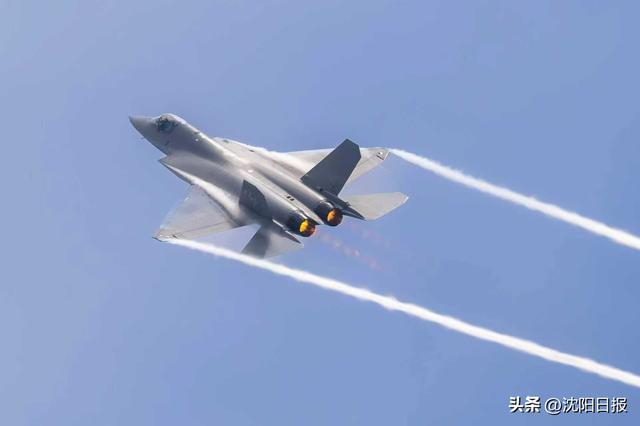
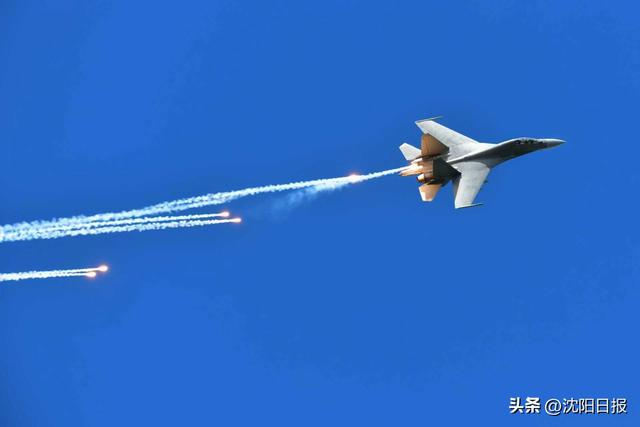
On November 23, 2012, the J-15 successfully took off and landed on the Liaoning ship, breaking the foreign assertion that “China needs five years to master carrier-based technology.” Luo Yang used “flying speed” to create a miracle that the development of new aircraft rolled off the assembly line 18 days ahead of schedule. In November 2024, at the Zhuhai Air Show, the J-35A ignited the audience the moment it cut through the sky – the twin engines were fully turned on, and a dazzling “Mach ring” was pulled out of the tail. The surging power and ultimate stealth design attracted the attention of the world. Adhering to the design concept of “one type, multiple aircraft, air and sea twins”, the J-35 series has made China the country that fields two stealth fighters at the same time with its excellent performance.
From repair and imitation to independent research and development, from being out of reach to competing on the same stage, Shenfei people have spent more than 70 years making the impossible possible.
From “Factory Building No. 70” to “Digital Intelligence Shenfei”
Strategic pivot for the future
In the winter of 1954, in the wilderness of the northern suburbs of Shenyang, the biting cold wind blew snowflakes. A group of workers in thin cotton-padded clothes shouted slogans and carried steel beams on their shoulders. This is the construction site of the No. 70 aircraft assembly plant – a giant factory building of 49,200 square meters. There was no modern machinery at that time. The builders shouted the slogan of “racing against time to build the motherland”. It only took 7 months for this steel structure factory to rise from the ground.
70 years later, another factory was built in Shenbei New District.
By the end of 2025, the main body of the core factory of Shenyang Fei's new factory with a total investment of 8.536 billion yuan will be completed. This new factory with a total planned area of 4.2692 square kilometers will relocate the core production and R&D capabilities in the city to the new site. Combining production line debugging and production capacity ramping planning, it is expected that the new SAC factory will officially enter the mass production stage in 2026, and the total production capacity will be doubled in the next 3 to 5 years.
Focusing on the construction of the new factory area, three supporting industrial parks for composite materials, titanium alloys, and aviation equipment comprehensive support are advancing simultaneously. After the SAC composite material project is put into operation, the local matching rate of composite parts for the main engine plant will increase from 50% to 80%; the titanium alloy project will focus on building an additive manufacturing production line to provide support for key components. Supporting industrial projects such as new materials, flight control, avionics, and airborne are gradually stationed, forming the prototype of an entire aviation industry chain that connects upstream and downstream.
There are not only intelligent production lines representing the world's advanced level and joint laboratories with cutting-edge configurations, but also a development blueprint of “new generation products, new generation technology, new generation management, new generation of talents, and new generation of standards”. From the handicraft legend of “literary precision” to the intelligent manufacturing of “cloud collaboration”, from the shoulders of people in “Factory No. 70” to the intelligent logistics of the new factory area, Shenfei is heading towards a new journey of “bravely scaling the heights”.
Deep in the factory area, Luo Yang's statue stands quietly under the shade of a tree, smiling, as if waiting for new good news. His eyes passed through the new digital factory building – where the J-35A's skin was being laser-engraved with serial numbers; on the final assembly line, young engineers were calibrating “rice grain”-level parts; on the planning sand table, the light belt of the “15th Five-Year Plan” smart park was winding like a dragon.
This enterprise, which is separated by a wall from the Cemetery of the Martyrs of the War to Resist US Aggression and Aid Korea, has used its 75 years of persistence to interpret a simple truth: true peace is never obtained through prayer, but is protected by the backbone of each generation. Shenfei people have used their loyalty and sweat to forge not only the war eagle, but also the Great Wall of Blue Sky for hundreds of millions of people to live peacefully.
Shenyang Daily, Shenyang Daily all-media reporter: Special reporter Liu Guodong Correspondent: Zhang Ning Liu Suyi
Editor: Wang Peiting
Editor in charge: Wang Yuan