
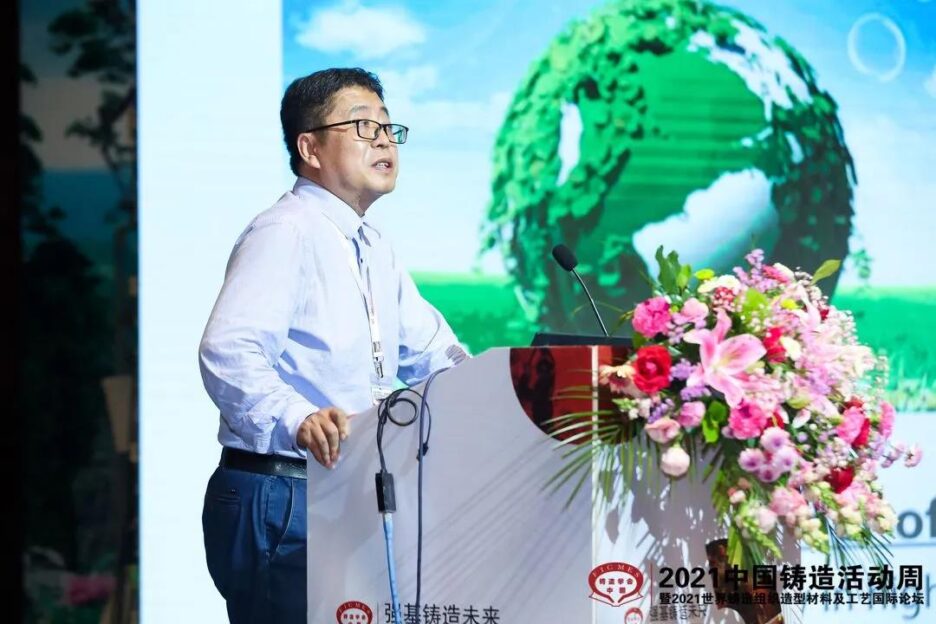
China Foundry Week 2021 was held on October 23 at the Grand Metropark Hotel in Shenyang. At the meeting, Liu Haifeng, department manager and professor-level senior engineer of CITIC Dicastal Co., Ltd., gave a presentation on “The Reform and Development of Aluminum Alloy Casting under Dual Carbon Targets”. The theme report of “Challenge”. Based on the background of the automotive aluminum alloy casting industry, the energy structure of electrolytic aluminum, the challenges faced by the automotive industry, and the production practice and research of CITIC Dicastal, Professor Liu believes that the future aluminum alloy casting production system will be restructured and the aluminum alloy industry chain will be reshaped.
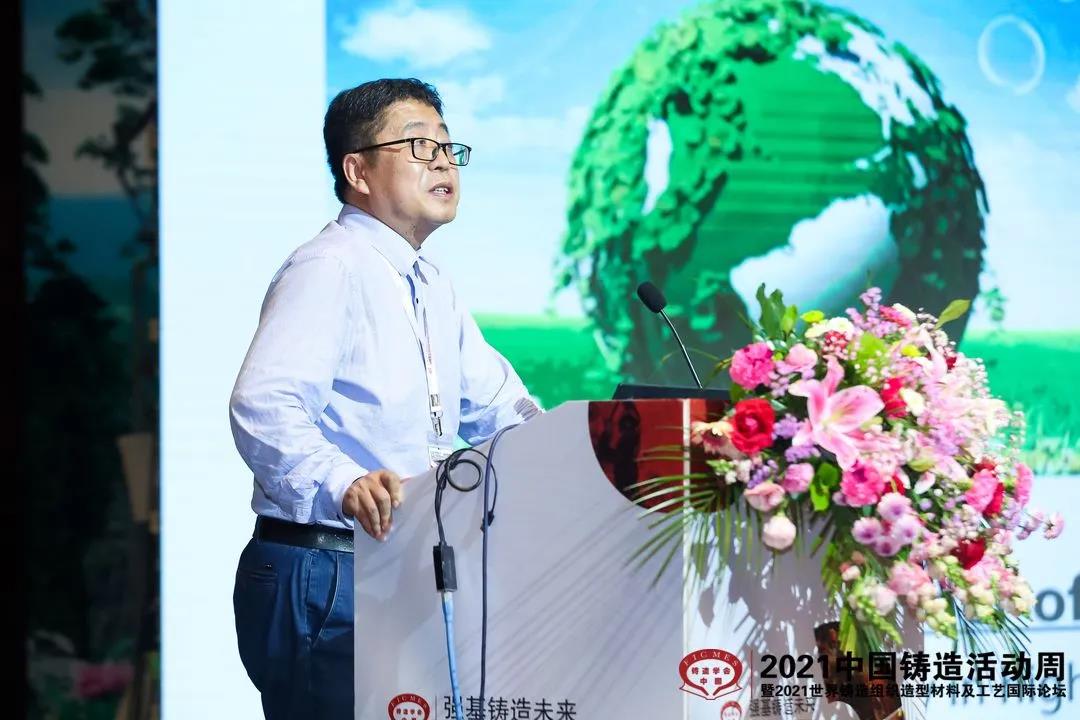
Liu Haifeng, department manager and professor-level senior engineer of CITIC Dicastal Co., Ltd.
Professor Liu pointed out that at present, all countries have made plans for carbon emission and carbon neutrality. China has proposed the goal of peaking carbon emissions by 2030 and carbon neutrality by 2060. Under the circumstance that the energy structure of electrolytic aluminum will not change much, automobiles Manufacturing and auto parts are also facing greater carbon emissions challenges. China’s automobile industry has undergone tremendous changes in recent years. It is currently in the transition stage of electric new energy vehicles, and related electric vehicle companies have also used lightweight materials. It is worth noting that although new energy vehicles have significantly reduced carbon emissions during the use phase, their production processes have significantly increased carbon emissions due to the large-scale use of aluminum and magnesium alloy materials. In contrast, although the carbon emissions of traditional fuel vehicles are higher than that of electric vehicles in the use stage, their carbon emissions in the manufacturing stage are lower than that of electric vehicles. The main reason is that the carbon emissions of steel materials are lower than that of alloy materials.
Professor Liu used detailed data, combined with CITIC Dicastal’s production practices and research and development such as energy structure, recycled materials, energy consumption reduction, innovative materials and processes, etc., through the evaluation of mild steel, high-strength steel, aluminum alloy, magnesium alloy and carbon fiber. Carry out analysis, decomposition and calculation of carbon emissions, and put forward a production plan to achieve low-carbon emission of aluminum alloy castings through technologies such as clean energy, low-carbon production and energy management, with automobile lightweight products as the main body. He believes that in the future, a new aluminum alloy casting production system will be reconstructed with recycled aluminum as the core. These changes will reshape the aluminum alloy industry chain and will cause major changes in alloy materials, product design, process and production equipment. .
Professor Liu pointed out that the essence of lightweight cars is to reduce carbon dioxide emissions, not to reduce fuel consumption. Reducing fuel consumption can also reduce carbon dioxide. The reduction of carbon dioxide throughout the life cycle will shift from the original production, use and recycling to recycling as the core. Based on the recycled alloy system, there will be a need for innovative alloys, processes and products in the future, especially the reduction of carbon emissions from non-ferrous alloys.