
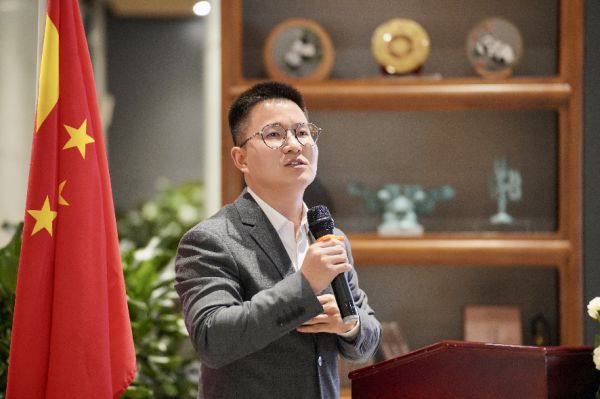
On November 29th and 30th, the “Sichuan Province-Campania Region Cultural Heritage Protection and Utilization Academic Seminar” was held at the Chengdu Museum. Guo Jianbo, a librarian from the Sichuan Provincial Institute of Cultural Relics and Archaeology, brought the “Microscopic Technology of Sanxingdui Bronze Casting” The keynote speech of “Exploration Analysis” shared the bronze casting wisdom of ancient Shu ancestors to online and offline audiences.
In 1986, many bronze sacred trees were unearthed in the sacrificial pit of Sanxingdui No. 2 and the casting process is full of mystery. “For Sanxingdui No. 1 bronze sacred tree, because it is too large and very precious, we only used X The ray has been analyzed and tested, and it is obvious from the test results that the casting methods such as socket, ring casting, and split casting are used.” Researcher Guo Jianbo said.
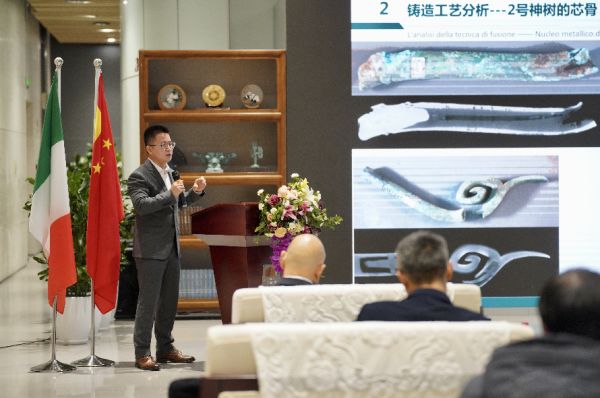
According to Guo Jianbo, this sub-casting process is to first cast large-scale castings and some special utensils that are more difficult to cast, and then connect the sections and fix them with tools, making the manufacture of large-scale copperware easier. The casting method of “simplifying the complex” is also applied to the No. 2 bronze sacred tree. Researcher Guo Jianbo said, “The CT micrograph of the No. 2 Bronze God Tree clearly shows that welding techniques such as casting are used to connect branches. The technique between branches and branches is also the same. Into No. 1 branches, No. 2 branches, and then cast and molded, and then assembled.” In the age when there were no welding tools, this tree used complex techniques such as welding, linking, riveting, and socketing. It is perfectly fixed to the branches with other decorations, which is amazing.
It is worth mentioning that the experts analyzed the components of the No. 2 and No. 3 bronze sacred trees and found the organic core bones remaining in the bronze ware. In addition, after analyzing the sun-shaped device and the snake-shaped device, the researchers found that the ancient Shu ancestors first formed grooves at both ends of the parts, and then cast in the grooves, and finally connected the objects into one body. Performing precise operations in such a small space shows that the casters of Sanxingdui are very skilled.
Source: Sichuan Observation