
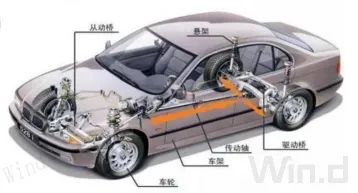
Car lightweighting is not a new concept. As early as the two oil crises in the 1970s and 1980s, many countries accelerated their pace of reducing car fuel consumption.
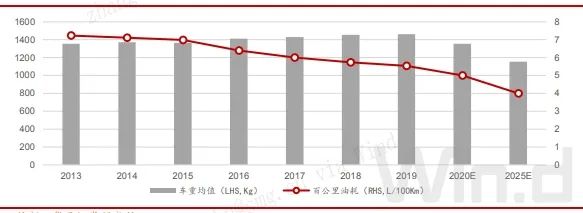
To achieve the goal of reducing fuel consumption, in addition to improving engine efficiency and improving vehicle air resistance, a very important way is to reduce the vehicle’s own weight to improve vehicle fuel economy.
For traditional fuel vehicles, a reduction in vehicle weight can effectively reduce vehicle fuel consumption; studies have shown that for every 100 kg reduction in the vehicle’s own weight, fuel consumption per 100 kilometers can be reduced by 0.3 to 0.6 L. For new energy vehicles, lightweight vehicles can effectively increase the battery cruising range. For every 10kg reduction in the weight of a pure electric vehicle, the cruising range can be increased by 2.5km.
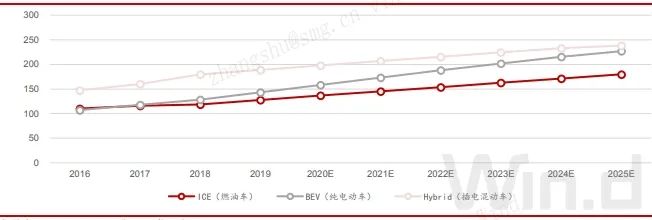
At present, my country’s new energy vehicles mainly use lithium batteries as power. To ensure endurance, they often need to carry hundreds of kilograms of lithium batteries, resulting in a heavier vehicle weight. This is also the fact that new energy vehicles are generally 15%-30% heavier than fuel vehicles. The reason for this is that excessive body weight has become an important factor restricting the improvement of the range of electric vehicles. In the context of the high weight of power batteries, lightweight cars have become an effective way to reduce the burden on batteries and increase cruising range.
At present, there are three main ways to achieve automobile lightweight: one is to use lightweight materials, the other is to use lightweight design, and the third is to use lightweight technology. In actual use, the weight reduction of automobiles is mainly achieved through the use of lightweight materials and specific lightweight technology to achieve weight reduction.
At present, the lightweight of automobiles mainly uses lightweight materials, such as aluminum, magnesium, ceramics, plastics, glass fiber or carbon fiber composite materials, to replace traditional steel materials. The most mainstream lightweight materials are aluminum alloy materials with high-strength steel, occupying More than 85% of the automotive lightweight market, of which aluminum alloy accounts for nearly 65%. With the increase in permeability of magnesium and carbon fiber, it is expected that the proportion of high-strength steel and aluminum alloy will drop to 75% by 2025, of which aluminum alloy will account for 60%.
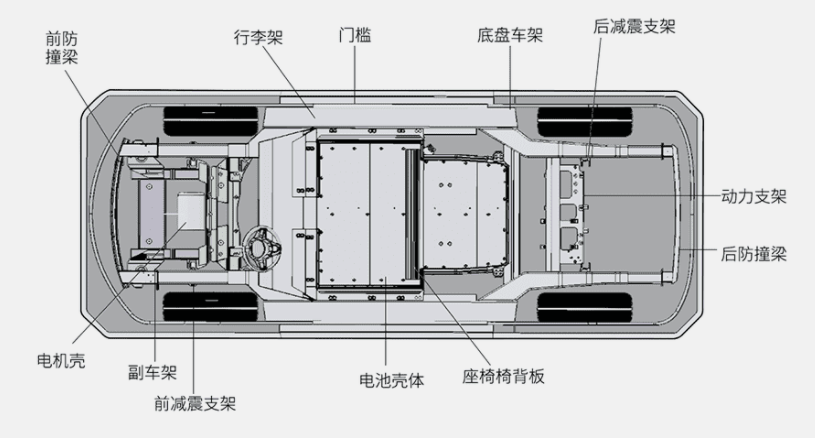
The density of aluminum is about 1/3 of that of steel, and it is the most widely used lightweight material. Aluminum alloy castings are mainly used in automobiles for engine cylinder blocks, cylinder heads, pistons, engine suspension brackets, air compressor connecting rods, transmission housings, clutch housings, wheels, handles and cover housing parts. New energy vehicles, especially pure electric vehicles, cancel the engine system, which creates a new demand for aluminum alloy die-casting parts, such as battery packs, electric drive systems and other housings, as well as battery trays and motor housings.
The lightweight of automobiles also brings new development opportunities to aluminum casting companies. The listed company Haomei New Materials (002988), which recently released its 2021 annual pre-increasing announcement, clearly stated that the use of aluminum alloys instead of steel in automobiles and lightweighting of automobiles is the most feasible and realistic way to reduce fuel consumption. The company expects that the company’s profit in 2021 will be 133 million-150 million yuan, an increase of 14.73%-29.39% year-on-year. The main reason is that the production and sales of major products such as lightweight materials and components have increased correspondingly, which will drive the company’s operating income and operating profit during the reporting period. . With the rapid development of the domestic new energy automobile industry, the company’s automotive lightweight business is still expected to maintain a relatively rapid growth rate.
In the first half of the year, Haomei New Materials (002988) achieved sales revenue of 138 million yuan from the lightweight automotive business, a year-on-year increase of nearly 2 times. However, comparing the company’s overall aluminum profile sales revenue of 2.19 billion yuan, it is not difficult to see that the proportion of the automotive lightweight business is still small, and the gross profit margin is not high. The 16.14% gross profit margin is comparable to the 36.97% gross profit margin of the main product system doors and windows. It’s a lot worse than that.
Let’s take a look at the situation of another listed company Wencan (603348), also located in Guangdong: Wencan (603348) is mainly engaged in the research and development, production and sales of automotive aluminum alloy precision die castings. The products are used in traditional fuel vehicles and The engine system, transmission system, chassis system, braking system, body structure field and other auto parts of new energy vehicles.
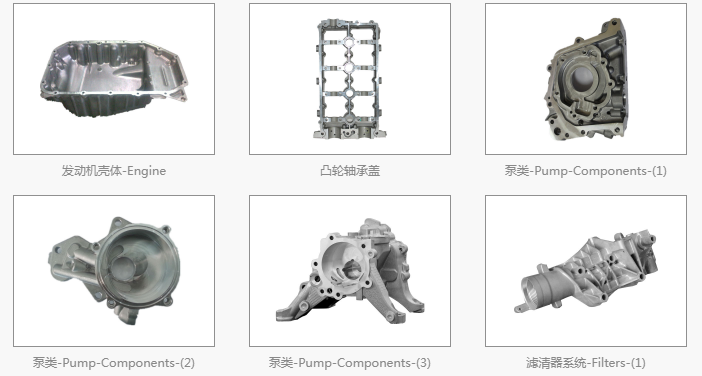
In the first half of this year, Wencan shares (603348)’s new energy vehicle products performed well, achieving operating income of 268 million yuan, accounting for 13.33% of main business income, a year-on-year increase of 165.98%. The operating income of body structure products was 242 million yuan, accounting for 12.06% of the main business income, an increase of 82.54% year-on-year. The overall gross profit margin reached 26.2%.
Obviously, the development of new energy vehicles in the field of automotive lightweighting is faster. In 2019, the domestic new energy vehicle chassis lightweight market was only 4.6 billion yuan. With the growth of new energy vehicle sales and the increase in lightweight penetration rate, it is expected to be in 2025 It is expected to increase to 32 billion yuan, of which the market size of aluminum battery boxes and sub-frames is 18 billion and 7.5 billion yuan, respectively, which provides development space for listed companies that plan ahead in the automotive lightweight field.