
introduction
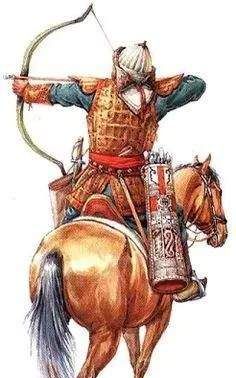
The Mongolian army has established and integrated a very good combat system in the perennial war. The most notable feature of the Mongolian cavalry is its high-speed mobility. Various tactics such as attacking the virtual, dividing into and outflanking, and playing a “blitzkrieg mode”, compared to blowing the Mongols’ riding and shooting, these Mongols’ tactics are the advantages that are really worth writing about.
The guarantee of the high-speed mobility of the Mongolian cavalry is their large number of horses and simple and feasible military logistics. As a nomadic people, the Mongolians have no shortage of horses.
The Mongolian cavalry who rose on the Mongolian plateau had the most types of horses, the “Mongolian horses” that were as famous as them. The shoulder height of Mongolian horses is not high, and it can even be said to be a little short in size. As a result, their impact is not as strong as other tall horses, and their speed is not as long.
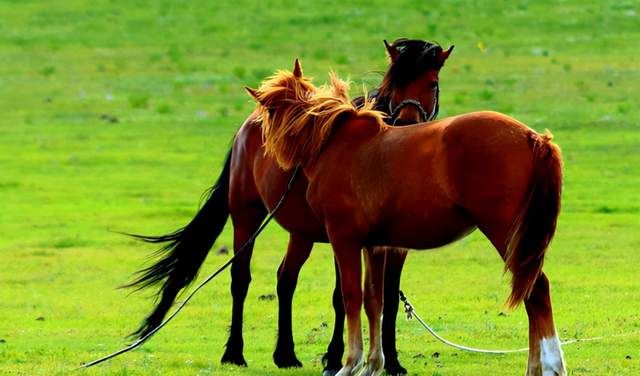
However, Mongolian horses also have advantages, such as being resistant to rough feeding (war horses still need to eat grains), free-range breeding, good endurance, and strong disease resistance, although their speed and endurance are inferior to Arabian horses and Bobu Horses, in terms of health, don’t have much of an advantage over Berbs who rarely get sick, but they’re not bad either.
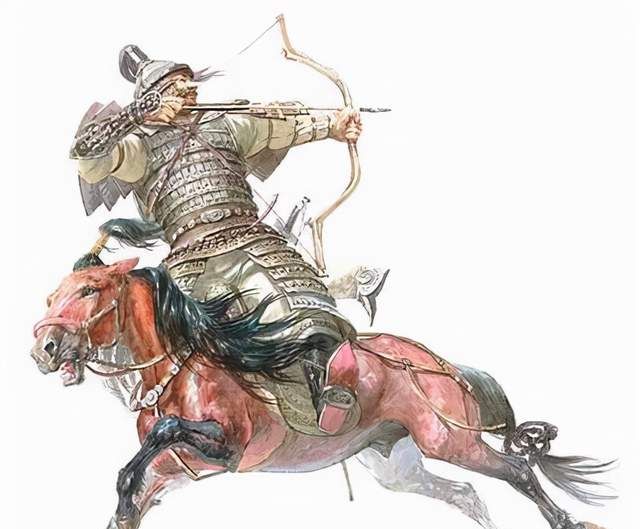
Coupled with the huge base of horses, carefully select how many horses can be used as war horses. There are many horses and they can be ridden frequently. The Mongols also have a very good “hanging horse method” (it takes about 30 days. , very troublesome, and an important secret of the Mongols), can increase horsepower, debug state, offset the quality gap with other enemies with better horses, and once it is combined with the same hard-working Mongols, Can play an excellent long-distance attack ability.
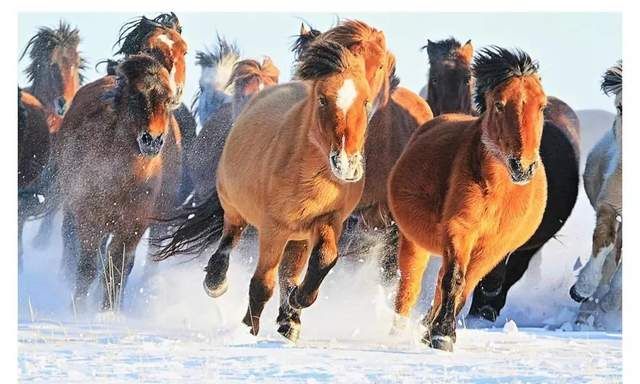
Compared with other grassland forces, the Mongolian horse administration has done better, not only the war horses for combat, but also the riding horses for military use and the pack horses for transporting weapons, equipment and materials. They change their rides every day and save them. horsepower. Even ordinary cavalry can do one person with two horses or even one person with three horses. As for other warriors with rich financial resources, they will bring multiple warhorses into the army:
“The land of Tartar (that is, Mongolia) is rich in water and grass, suitable for sheep and horses. The horses are taught to ride hard on the grassland for one or two years after they are born, but they are raised for three years, and then they ride again. Also. Thousands of people form a group, no neighing, no need to control the horse when dismounting, and no running away, and the nature is very good. During the day, there is no cud, but only at night, before grazing it. As the grass becomes green and withered, it will be grazing wildly. Until dawn, riding with a saddle was not the same as Dousu. Anyone who goes out to a teacher has several horses, and the sun wheel rides on them, so the horses are not troubled.”
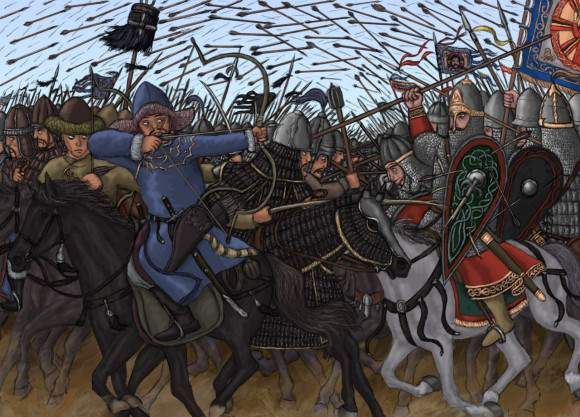
There is a real case that best reflects the Mongolian cavalry’s long-distance attack ability. In September 1219, when the Mongolian cavalry attacked the corrupted city of Hualazimo, the Mongolian army, which lacked the means of siege, failed to break through the strong defense fortifications. Then, under the leadership of its commander, the Mongolian army “fleeed” away, making a false impression that it had no choice but to leave, and retreated to a place five hundred miles away from the city of Cordashi to repair the team.
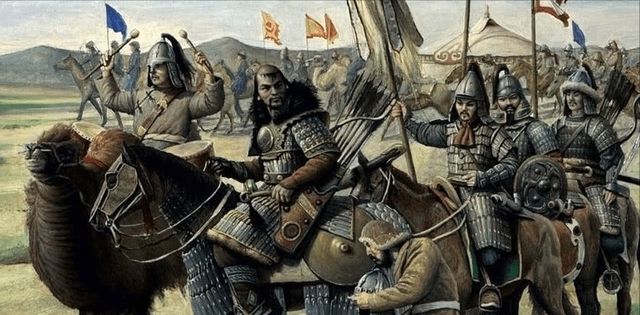
As the Mongolian army went away, the people of Hualazimo relaxed their vigilance, thinking that the Mongolians would not come again. Who knows that after resting in the distance for a few days, the Mongolian cavalry suddenly turned back to the division one night, walking at night. One night, in the early morning of the next day, he arrived at the city of Daduda, and launched an attack on the unprepared city and the overwhelmed defenders.
The high-speed mobility of the Mongolian army can be described as a must in the era of cold weapons. It can not only win the victory, but also escape quickly even if it is not very defeated, except in some special terrain, such as valleys and other places that are not conducive to cavalry action. “If he wins, the tail enemy will attack and kill him, and he will not be allowed to escape. If he loses, he will run around and cannot catch up.”
And with each victory, the Mongols also acquired a large number of excellent horses from Central Asia, West Asia, and even Europe. They went all the way and scraped all the way. As long as they encountered excellent horses, they would be imported no matter what kind of horses they were. It is called “horse horses”. After the excellent horses in this area, such as Arabian horses, sweaty horses, etc., were introduced into the army, their combat effectiveness increased to a new level. A large number of the elite cowardly troops of the Mongolian Empire came from Central and Western Asia. excellent horse breed.
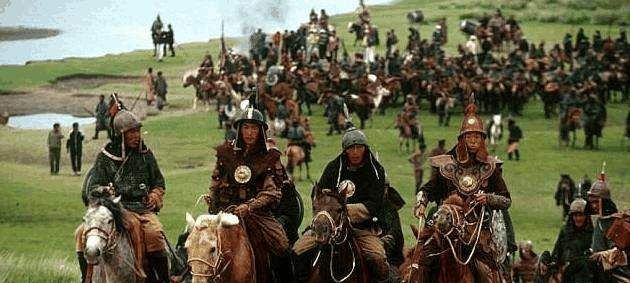
In terms of supplies, the Mongolians have also achieved simplicity and extremes. The Mongolian cavalry are hard-working and can fight continuously for many days without camping and normal diet, and endure unbearable hardships for ordinary people. According to records, when the Mongolian cavalry went out to fight, they would carry a large number of sheep and mares on the expedition, while marching and grazing while eating (you can eat and drink on the horse), and the horses and sheep are the source of water and food for the Mongolians. . According to some records, an adult Mongolian mare can produce 300 kilograms of milk during the nursing period, which is an important source of clean water for the Mongolians. In addition, the Mongols also hunted wild animals and supplemented their food with war and war:
“Going in and out only drank horse milk, or slaughtered sheep for food…Following sheep and horses to feed themselves, and if they eat sheep, they shoot rabbits, deer, and wild pumps for food. Therefore, hundreds of thousands of teachers are stationed, and no fireworks are raised.”
march