
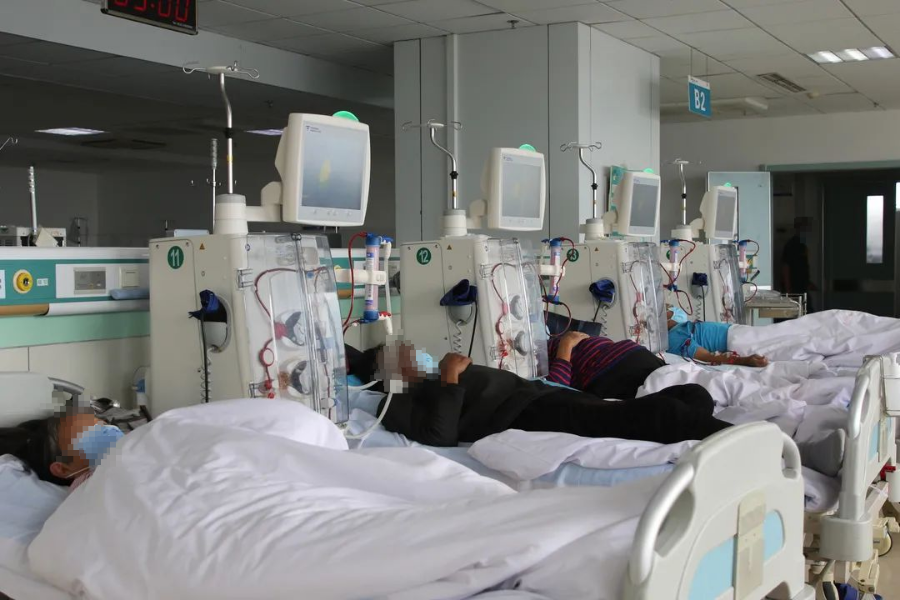
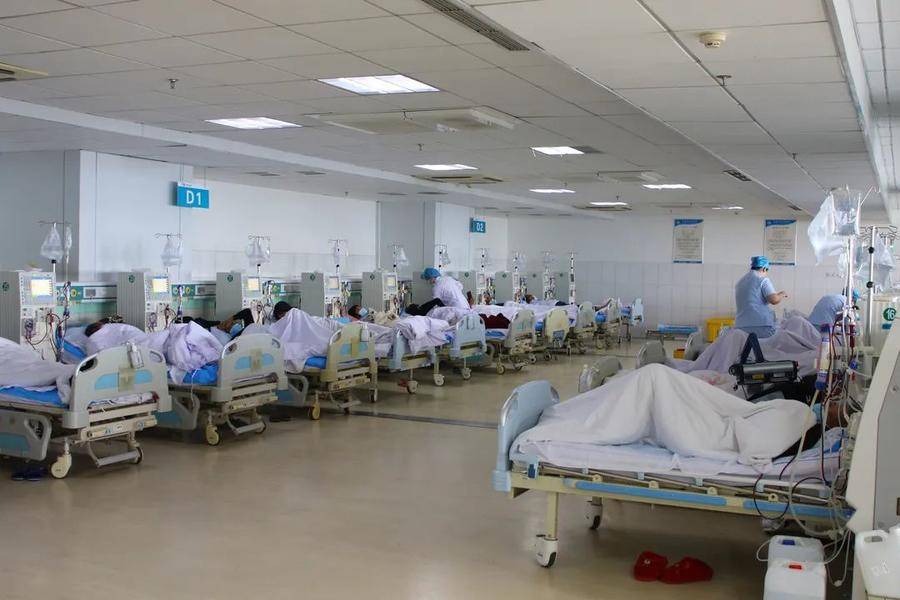
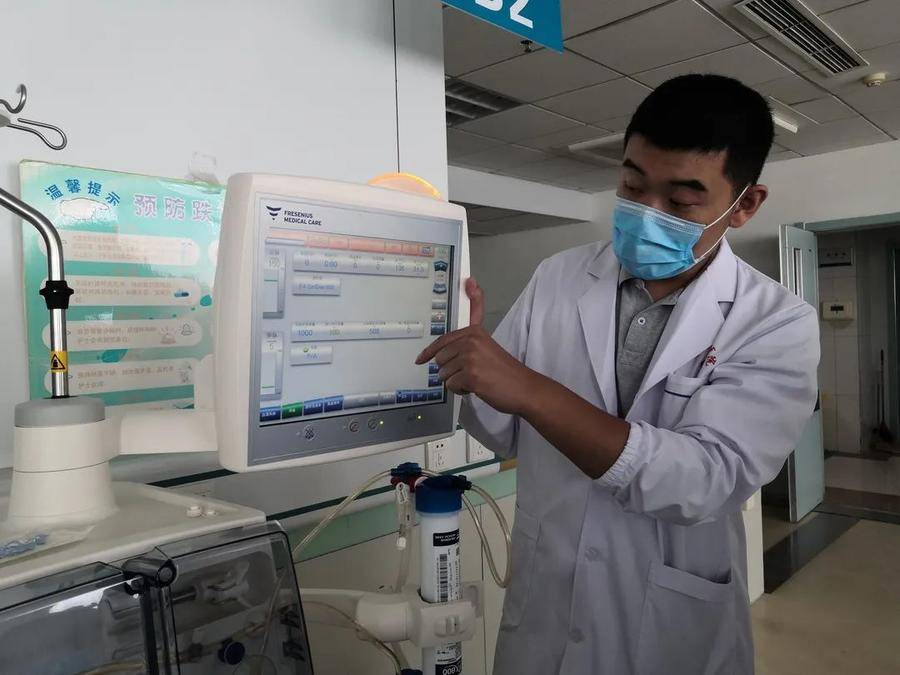
The hemodialysis room of Wulian County People’s Hospital was established in 1996. There are currently 16 medical staff in the department, including 2 with deputy senior titles, 9 with intermediate titles, and 5 with primary titles. Equipped with 36 Fresenius hemodialysis machines imported from Germany, a large double-stage reverse osmosis central water treatment system, which meets the standard of ultra-pure dialysis water, as well as central oxygen supply, central suction, central air conditioning, floor cleaning and disinfection system and other equipment , carry out various blood purification treatment modes such as hemodialysis, hemoperfusion, high-throughput hemodialysis, hemofiltration, hemodiafiltration, heparin-free dialysis, sodium citrate dialysis, and more than 20,000 dialysis visits per year.
Chronic renal insufficiency uremia is a common and frequently-occurring disease that seriously endangers people’s health. Hemodialysis is the main treatment method for patients with uremia. The quality of dialysis directly affects the quality of life and survival time of patients. Over the years, the medical staff in the hemodialysis room have been adhering to the hospital’s service concept of “patient first, service first” and the treatment concept of “do our best to care for”. Adhere to “patient-centered, quality-centered”, take multiple measures, and strive to create high-quality professional departments.
Improve the rules and regulations and standardize the work process
According to the requirements of the Ministry of Health’s “Standard Operating Procedures for Blood Purification (2020 Edition)”, combined with the actual situation of the department, the hospital’s hemodialysis room has taken a number of measures to continuously improve various rules and regulations, standardize the work process, and ensure that the work of the hemodialysis room is institutionalized, Normalize and normalize. At the same time, dialysis risk plans and emergency response plans were also formulated. During the new crown, emergency plans were formulated and drilled several times. Arranged department personnel to participate in national standardized management training for many times. The department has also established a complete medical and nursing quality monitoring system. The department’s quality control team has increased its self-examination, found problems and improved it in a timely manner, regularly found nursing hidden dangers and analyzed and feedback in a timely manner, so as to make various work procedures and standardization.
Strengthening Safety Management and Raising Risk Awareness
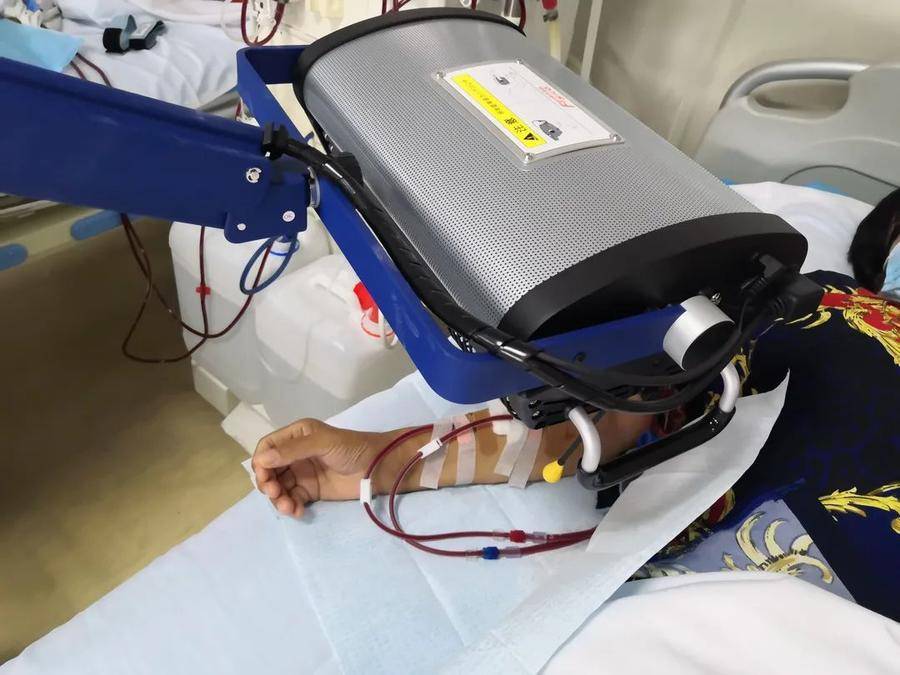
During dialysis, the patient’s blood is in the extracorporeal circulation, and the patient’s life is in the hands of the medical staff. The slightest leakage of the medical staff may cause the patient’s condition to change. Therefore, medical safety is the top priority of the hemodialysis room. During the whole dialysis process of the patient, the medical staff closely observes the changes of the patient’s condition, monitors the patient’s vital signs in real time, and finds out the adverse reactions of dialysis in time, such as abnormal machine alarm, dosage of anticoagulants and other drugs, bleeding at the puncture site, etc. , and deal with it in time to ensure the safety of the patient’s life. Hemodialysis treatment is a medical care process that is highly dependent on equipment. Therefore, doing a good job in the daily cleaning, disinfection and maintenance of water treatment machines and dialysis machines, and maintaining the normal and safe operation of the machines is the premise to ensure patient safety and high-quality dialysis. , The quality control team of the department regularly organizes members to monitor relevant indicators to ensure the normal operation of the machine.
Strengthen hospital infection management and strict disinfection and isolation
The hemodialysis room is a susceptible place for blood-borne diseases, and hemodialysis patients are a susceptible group of blood-borne diseases, so it is very important to do a good job in the management of nosocomial infection. The department took multiple measures to control the occurrence of hospital feeling. The first is to strictly implement aseptic operation, so that dialysis patients have one needle and one tube, one person, one bed, one use and one replacement, and dialysis consumables and medical waste are disposed of in a centralized manner according to regulations. Clean, disinfect on time every day, and do a good job in the daily cleaning, disinfection and maintenance of water machines and dialysis machines; and in strict accordance with the blood purification infection control operating procedures, regularly test and record the dialysis water and dialysate, and the vaccination rate of kidney friends against the new crown 99.7% and no abnormal reaction; at the same time, the training of medical staff on nosocomial infection knowledge has been continuously strengthened, and medical staff are regularly organized to study the “Hospital Infection Management System”, “Hemodialysis Room Disinfection and Isolation System”, and “Blood Purification Standard Operation Standard (2020 Edition)”, Strengthen the awareness of disinfection and isolation.
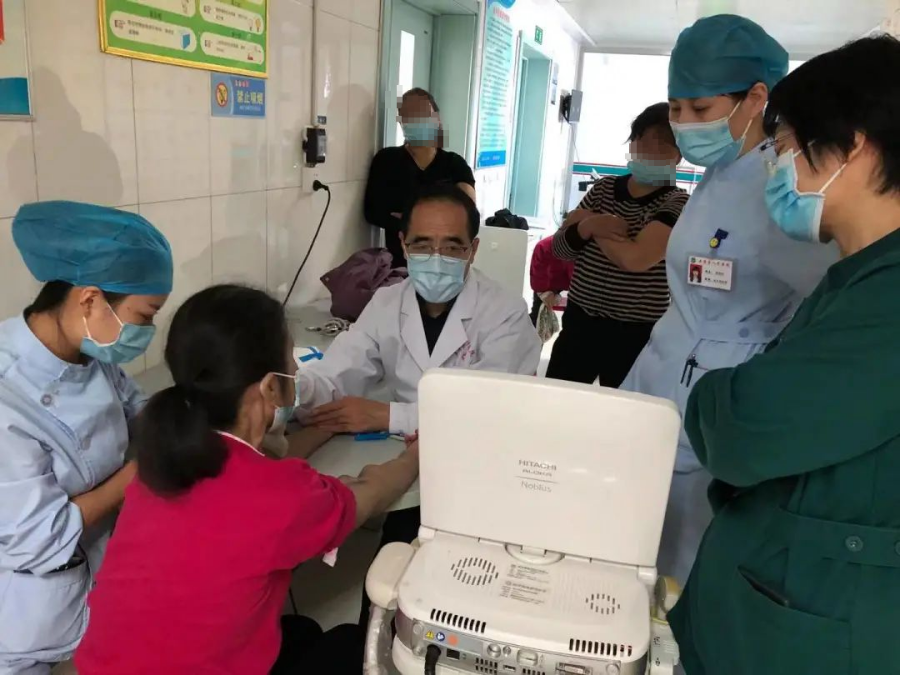
Strengthen exchange and study, strive to improve professional and technical level
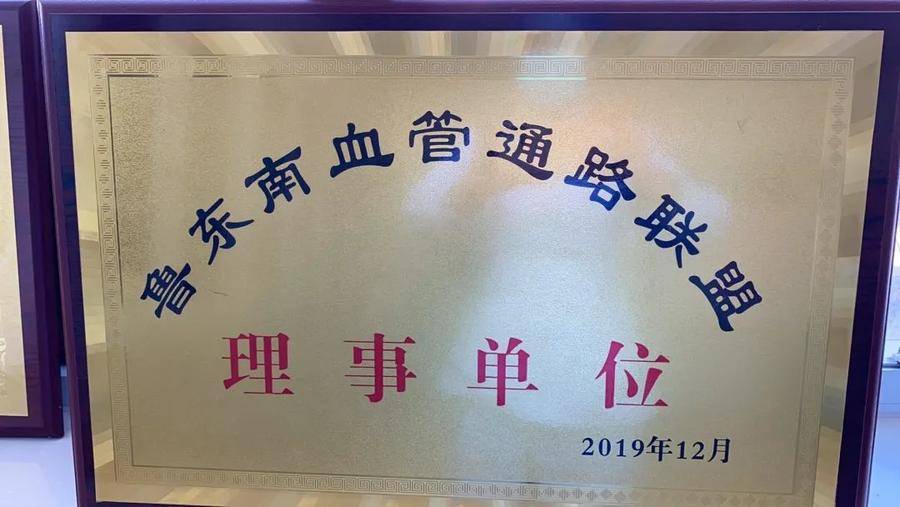
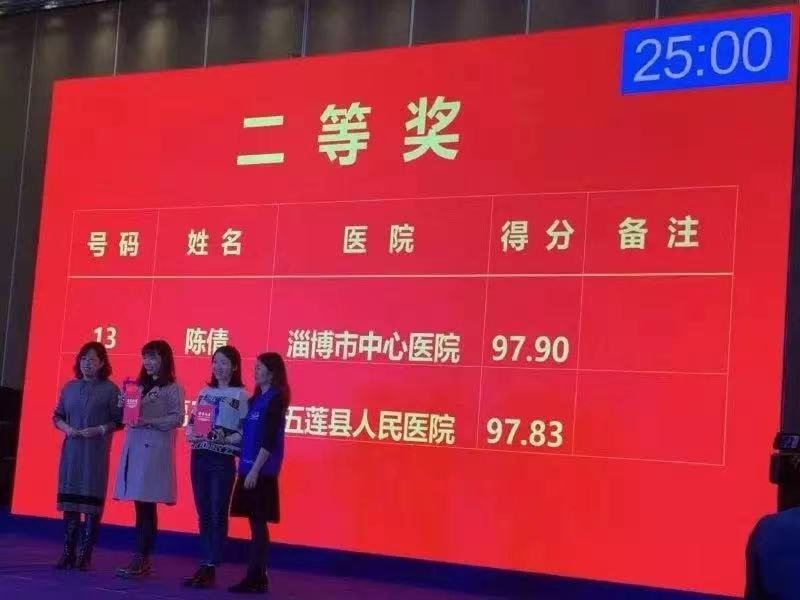
Hemodialysis is highly professional, and requires high professional quality and technology of medical staff. Must have extensive knowledge of nephrology and clinical medical and nursing knowledge, good communication skills, judgment skills and keen observation and comprehensive professional skills. On the basis of undergraduate graduation, doctors in the dialysis room of the hospital continue to strengthen their professional studies. He has been sent to the top three hospitals in and outside the province for further study, and has been assisted by famous experts from the Department of Nephrology of Qingdao University School of Medicine and the hemodialysis room of Rizhao People’s Hospital to the hospital for consultation and surgical guidance, etc., and has cooperated with many domestic and provincial top three hospitals. The hospital’s expert team maintains friendly contacts and is always at the forefront of professional development. A number of nurses have obtained the qualifications of hemodialysis specialist nurses in Shandong Province. Among them, they won the second prize in the Shandong Province Blood Purification Standard Operation Skills Competition in 2019, and won the “Jianfan Cup” Shandong Province Blood Purification One Station Knowledge Competition in 2020. other prizes. The department is the quality monitoring and management unit of hemodialysis in the province, a member unit of Shandong Southeastern Nephrology Alliance, a member unit of Shandong Southeastern Vascular Access Alliance, and one of the most comprehensive departments in the hospital.
Improve the quality of dialysis and create specialty features
The quality management of hemodialysis is related to the quality of treatment, quality of life and survival time of patients. The “Standard Practice for Blood Purification (2020 Edition)” is the general outline of standardized and standardized management, and is also the basis for ensuring medical quality and safety. Therefore, the general staff are regularly organized to study, and the department quality management team is established to regularly check and improve, so as to achieve continuous quality improvement. Benchmarking the quality indicators of hemodialysis in the whole country and Shandong Province, the dialysis room of the hospital is in the correction of anemia, blood pressure control, blood calcium and phosphorus management, and secondary hyperparathyroidism PTH indicators, patient survival time, mortality, and other quality indicators have reached and exceeded the best level in the country.
Improve the ability to treat critically ill patients
The patients faced by hemodialysis are all critically ill patients. The department is closely relying on the comprehensive treatment capabilities of the whole hospital, actively carrying out various blood purification therapies, strengthening solidarity and cooperation with various disciplines in the hospital, and striving to improve the treatment of critical and difficult kidney diseases. The overall treatment ability of multiple organ insufficiency, systemic inflammatory syndrome, severe pancreatitis, systemic immune disease, uremia and various complications of vascular access.
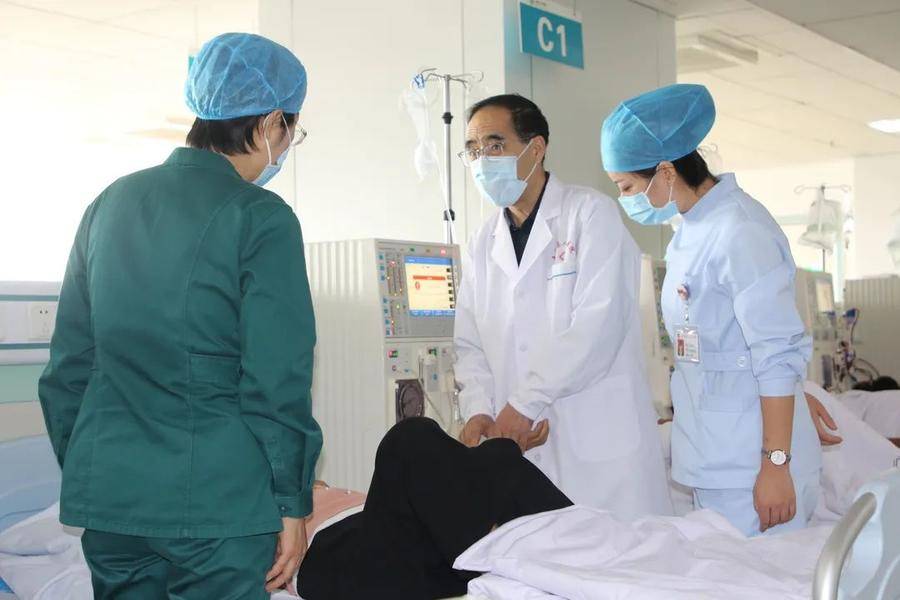
Strengthen doctor-patient communication and improve service capabilities
Due to the disease itself and the influence of dialysis treatment, hemodialysis patients have different degrees of electrolyte imbalance and water and sodium retention. For different patients, the department has adopted targeted health education. For example, patients with uremia are prone to the accumulation of sodium ions and phosphorus ions, and there is a danger of high potassium and high phosphorus. For such patients, medical staff have specially formulated reasonable diets to reduce the intake of potassium ions and phosphorus ions and reduce the Risk of high potassium, high phosphorus. At the same time, a bulletin board is also set up to post a list of high-potassium and high-phosphorus foods to give patients a more vivid and intuitive reference. Strengthen communication with patients, ask them how they feel, understand their needs, seek their opinions, and meet their actual needs. The medical staff explained the knowledge of hemodialysis treatment, the importance of diet, the control of water and sodium intake and protein intake to patients in an easy-to-understand way, taught patients about self-care of arteriovenous fistula, and how to identify related complication. Strengthen the patient’s self-care ability, improve the quality of life, and accelerate the return of uremia patients to the society.
(Wulian County People’s Hospital of Shandong Province)