
Editor's note:
Each generation has its own “Long March”.
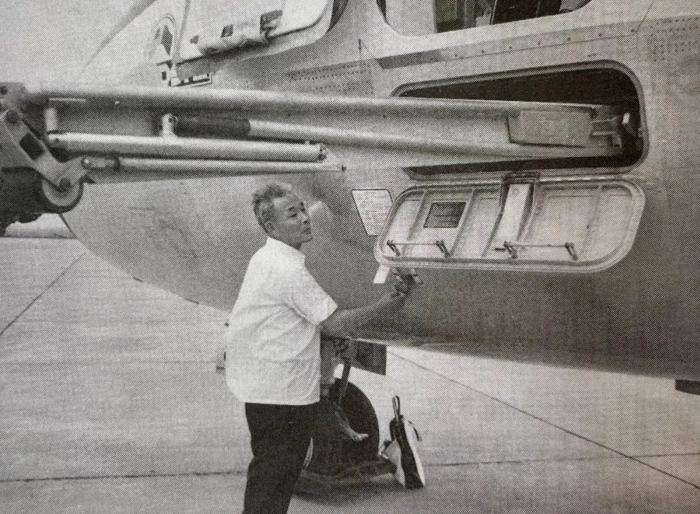
When domestically produced large aircraft such as the C919 and Y-20 are gradually becoming known to the Chinese people, a man who in the early days of the founding of the People's Republic of China laid a solid foundation and made great contributions to the development of dual-cooled generators, red flag missiles, “Yun-10” aircraft and other national masterpieces. A native of Xiangtan, he gradually entered the horizons of the people in his hometown… He was Xiao Ka (1919.11.15-2015.2.8), a “capital person” who added an era footnote to the “Huxiang Spirit” and “Red Xiangtan” .
Recently, reporters from Red Net Moment News conducted multiple interviews to deeply explore the little-known stories of Xiao Ka during those turbulent years, and interpreted the Huxiang man's lifelong spirit and heroism in fighting for the country and the people from multiple angles.
Red Net Moment News reporter Wang Xingxia and Liu Fangming reported from Chu Huang and Xiangtan
Recently, as flight CZ3539 fully loaded with passengers took off from Guangzhou Baiyun International Airport, China Southern Airlines' first C919 aircraft officially entered a new stage of commercial operation, marking the official beginning of the era of joint operation of C919 by the three major state-owned airlines.
If you are familiar with the development process of my country's large aircraft, an irreplaceable name should come to mind-Xiao Ka.
Who is Xiao Ka?
This old revolutionary who has experienced the baptism of battle not only participated in the Anti-Japanese War and the War of Liberation, but in the nearly 30 years after the founding of New China, he was responsible for the development of dual water-cooled generators, Red Flag missiles and the “Yun-10” aircraft. He has made great achievements in organizing and leading cutting-edge projects.
Join the revolution in a time of hardship and hardship
Xiao Ka was born in Xiangxiang City, Hunan Province at the end of 1919. He received a good education from an early age and attended the Xiangxiang Dongshan Higher Primary School where Mao Zedong had attended. The educational style of “having big ambitions and doing big things” had a profound impact on Xiao Ka.
In 1932, Xiao Ka was admitted to Changjun Middle School in Changsha, the provincial capital. Three years later, under the influence of a strong sentiment of saving the country through science and technology and industry, Xiao Ka chose to attend Hunan Provincial Advanced Industrial School. Here, he had his first practical perception of industry, which benefited him throughout his life when he was engaged in the industrial construction of New China.
After the outbreak of the all-out Anti-Japanese War, Xiao Ka resolutely decided to go to Yan'an and join the revolution. He sold books and learning equipment at low prices, borrowed 20 yuan from relatives in Changsha, and arrived in Yan'an with several classmates.
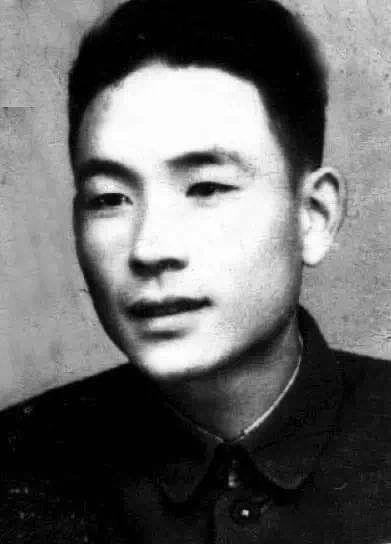 Young Xiaoka.
In Yan'an, Xiao Ka and other eight people were fortunate enough to be introduced by Mao Zedong to study at the Northern Shaanxi Public School. Immediately, under the arrangement of the organization, he participated in the turbulent underground struggle. In February 1941, he went to the New Fourth Army's Northern Jiangsu Headquarters to do missionary work, and began the bloody years of the war of resistance.
In May 1949, Xiao Ka participated in the battle to liberate Shanghai as the political commissar of the 260th Regiment of the 87th Division of the 29th Army of the Chinese People's Liberation Army. After 15 days and nights of fierce fighting, the entire regiment paid a heavy price and captured the strategic town of Wolpo, which the enemy called the “Western Gate”.
In the first half of his life in military uniform, Xiao Ka faced complex situations and arduous struggles, and was always faced with the test of life and death, blood and fire. This not only tempered Xiao Ka's revolutionary will, but also tempered his ability to deal with complex and changeable situations. Courage and ability.
To serve the country through industry, we most want to go to workshops and construction sites.
After the founding of New China, Xiao Ka always had his own thoughts in his heart: “What I want to see most is the workshop with roaring motors, or the construction site with the rumbling sound of piling…”
He believed that after the revolution was victorious and New China was established, the country would enter a climax of economic construction. As an engineering major, he went to engage in large-scale industry, building factories pile by pile, and building machines hammer by hammer. This was the most consistent with his ideals.
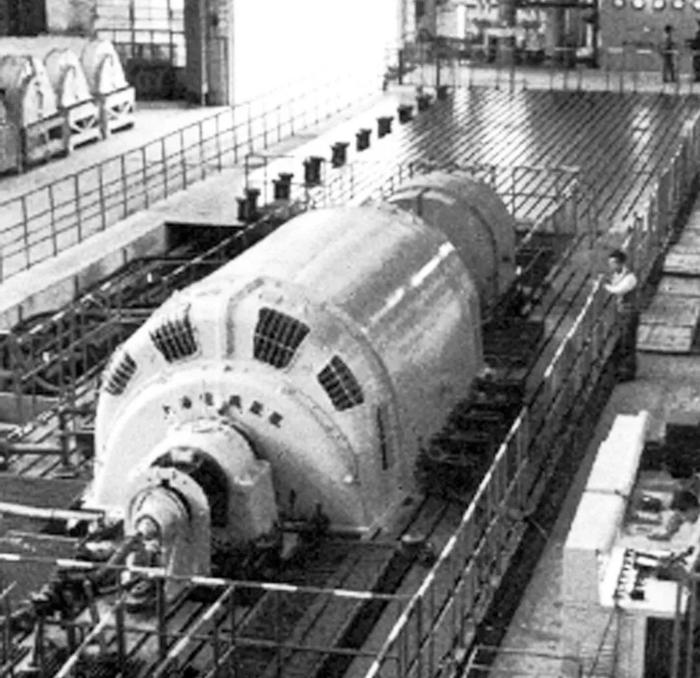
The dual water internal cooling generator developed under the leadership of Xiao Ka.
Xiao Ka's wish soon came true. He was transferred to the East China Industry Department of the Communist Party of China in Shanghai as the office director. After that, he asked to go down to the grassroots level, and was eventually appointed as the second secretary of the Party Committee of Shanghai Electric Machinery Factory, and later served as the director of the factory.
At that time, the newly-started new China's industry had great demand for generators, and Shanghai Electric Machinery Factory was tasked with developing domestically produced large-scale steam turbine generators.
In order to meet the needs of the country, Xiao Ka led the entire factory to work day and night. After they successfully trial-produced China's first air-cooled turbine generator (6,000 kilowatts) in September 1954, they won the 12,000-kilowatt big thing in August 1956 and completed the task one year ahead of schedule.
But before they had time to savor the joy of victory, the rapid development of the country's industry pushed them to a more majestic and steeper peak in motor technology – a double water internally cooled steam turbine generator. At the time, this was the world's first new technological breakthrough.
After more than 100 days of hard work by Xiao Ka and his colleagues, on October 27, 1958, the country's and the world's first 12,000 kilowatt double water internally cooled steam turbine generator was successfully developed! Its birth boldly fulfilled the aspirations of the Chinese people at that time: “What foreigners have, we must have. What foreigners do not have, we must also have!”
Develop missiles to create a sword to defend the country
In the 1960s, based on the analysis of the international situation, the Party Central Committee required the acceleration of national defense construction and the rapid development of missiles, submarines, aircraft, warships and even atomic bombs. This is the “national destiny” and naturally becomes an urgent task where every second counts.
On August 1, 1961, the Second Shanghai Mechanical and Electrical Industry Bureau was formally established, with Xiao Ka as the director, mainly engaged in the development of surface-to-air missiles. From then on, Xiao Ka formed an indissoluble bond with the missile industry of New China.
The development of missiles can be said to be a completely new thing for China's military industry at that time. Where to start and how to start are not sloppy for Xiao Ka. According to the development idea of “imitation first and then creation” of the Party Central Committee,Shanghai Second Mechanical and Electrical Industry BureauThe trial production procedure was determined.
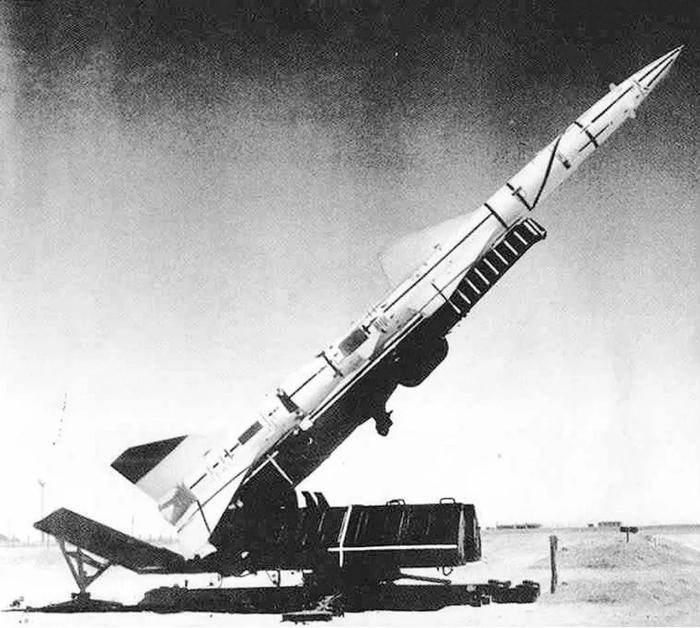
“Hongqi-1” missile.
On December 20, 1964, the first batch of trial-produced missiles in Shanghai completed their final assembly and passed various routine tests to meet the qualification standards. The Central Military Commission named it the “Hongqi-1 missile system”“.
Since then, live ammunition launches have been officially held in the Badain Jaran Desert in the northwest border. The first batch of “Red Flag No. 1”“Two of the three rounds of combat bombs hit the simulated target within the prescribed time and space, meeting all the requirements of the test outline.
On September 8, 1967, the Hongqi-1 surface-to-air missile developed by the Chinese itself showed its power for the first time in actual combat. A missile battalion of the People's Liberation Army Air Force used it to shoot down an American-made U-2 high-altitude reconnaissance aircraft of the Taiwan Kuomintang Army.
Xiaoka once said that before, several U.S.-made U-2 aircraft were shot down with missiles provided by the Soviet Union, but this time it was a missile developed by China, which fully proved its actual combat capabilities.
The successful development of the Hongqi-1 missile system is of pioneering significance to China's defense technology and industry. Since then, missiles such as Hongqi-2, Hongqi-3, Hongqi-61 and Hongying-5 have all been successfully developed in Shanghai or with Shanghai's participation, becoming a sharp sword in safeguarding national security.
Build a big airplane and fly into the blue sky with your dreams
In October 1976, Xiao Ka was appointed director of the Shanghai Aircraft Manufacturing Factory, director of the Municipal 708 Office, and director of the Municipal Aviation Industry Office, becoming a leader in the development of large aircraft in China.
At this time, Xiao Ka was determined to eliminate all interference and grasp the key point of “will a big plane fall when it gets into the sky?” He first conducted research and discussion on the entire project, and then spent two years reorganizing the original 140,000 drawings. Zhang Zhang made the review and summarized more than 20 major issues and more than 100 various issues, all of which were guaranteed to be implemented and resolved within a time limit.
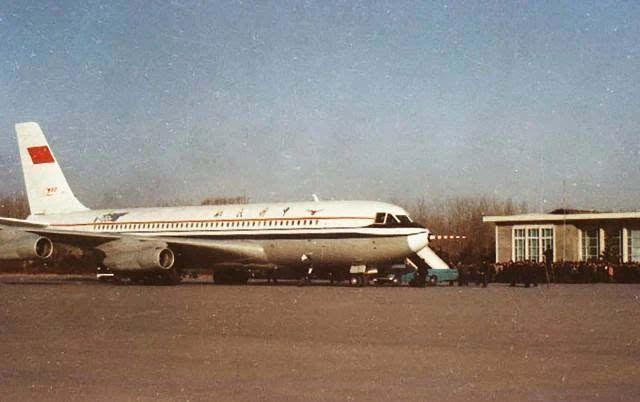
The scene of the first flight of “Yunshi”.
The “Yun-10” aircraft conducted 163 tests one after another. On September 26, 1980, after several taxiing tests, the “Yun-10” finally ushered in its official test flight.
As the project leader, Xiao Ka boarded the plane as the escort for the first flight even though he had been transferred to the position of Secretary-General of the Shanghai Municipal Party Committee at that time. The plane flew into the blue sky amidst thunderous cheers, circled for 28 minutes at an altitude of 1,350 meters and a speed of 310 kilometers per hour, and then landed smoothly again.
Then, the “Yun-10” carried out multiple test flights, flying to Beijing, Harbin, Hainan Island, Urumqi, Lhasa and other places. The flight time reached 164 hours, 121 take-offs and landings, and the flight distance was more than 10,000 kilometers, all of which were successful. The “Yun-10” aircraft was grounded for some reason after 1985.
After nearly 40 years, China's large aircraft frequently appear in people's sights and have become a hot topic among Chinese people. People will never forget Xiao Ka’s busy figure in the history of China’s large aircraft development…
Whether it is a battlefield filled with bullets or a front line of industrial construction in New China, Xiao Ka always takes a fighting stance and fights for the motherland and people with enthusiasm.