
Source: CICC Futures Micro Information
Family! Today I will talk about some hard-core but super practical knowledge – futures delivery units! Don't be scared away by professional terms, it's actually super simple~
What is a delivery unit?
That is, after we buy a futures contract, we really need to pick up the goods (only legal customers can) at a time! Let’s take the cast aluminum alloy listed on the Shanghai Futures Exchange on June 10 as an example.
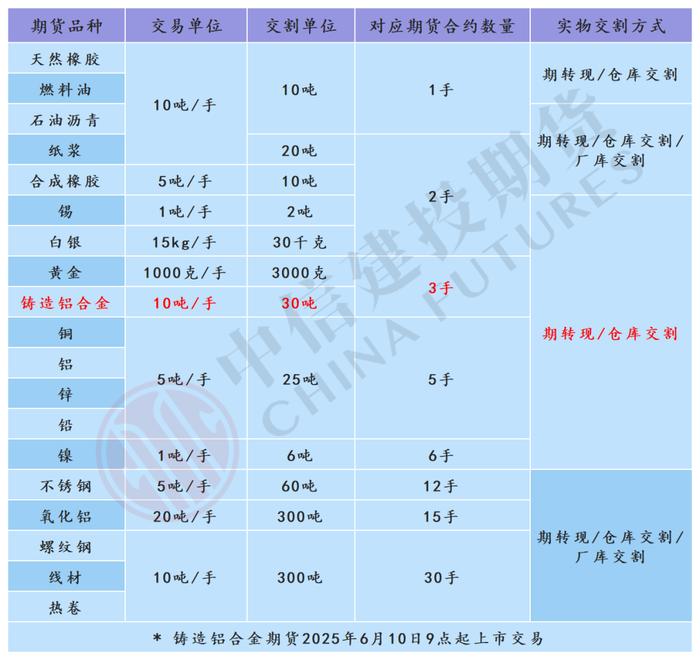
Cast aluminum alloy futures: Trading unit is 10 tons/true, delivery unit is 30 tons, so if you want to pick up the goods, start at least 30 tons (minimum order quantity)! Converting into a futures contract is at least 3 lots.
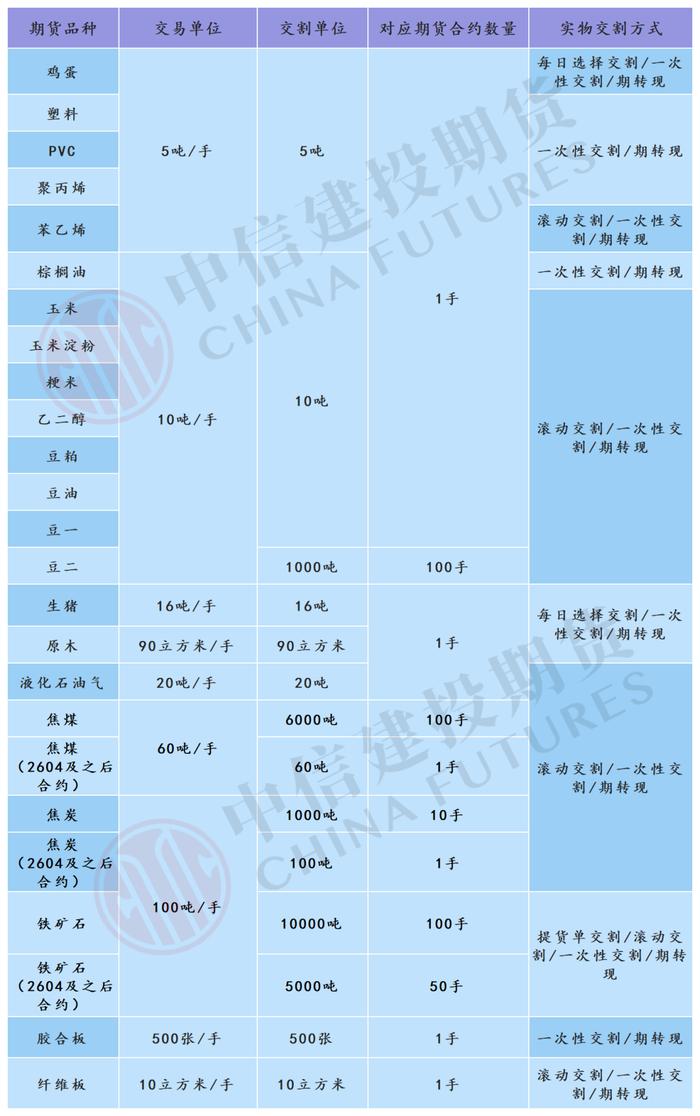
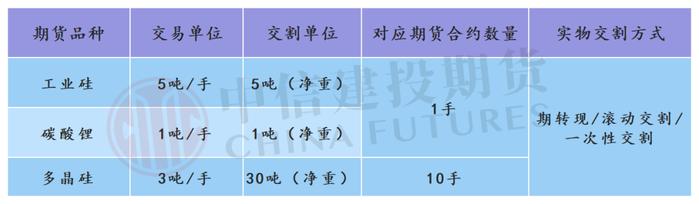
The editor has sorted out how to set the minimum order quantity for delivery of each exchange product. Remember to click the picture to save.
1
Table of integer multiples of the previous period delivery quantity
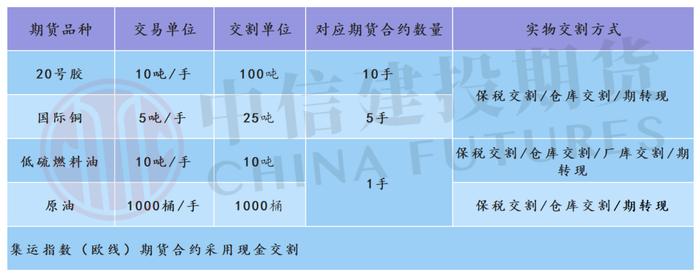
2
Table of integer multiples of energy center delivery quantity
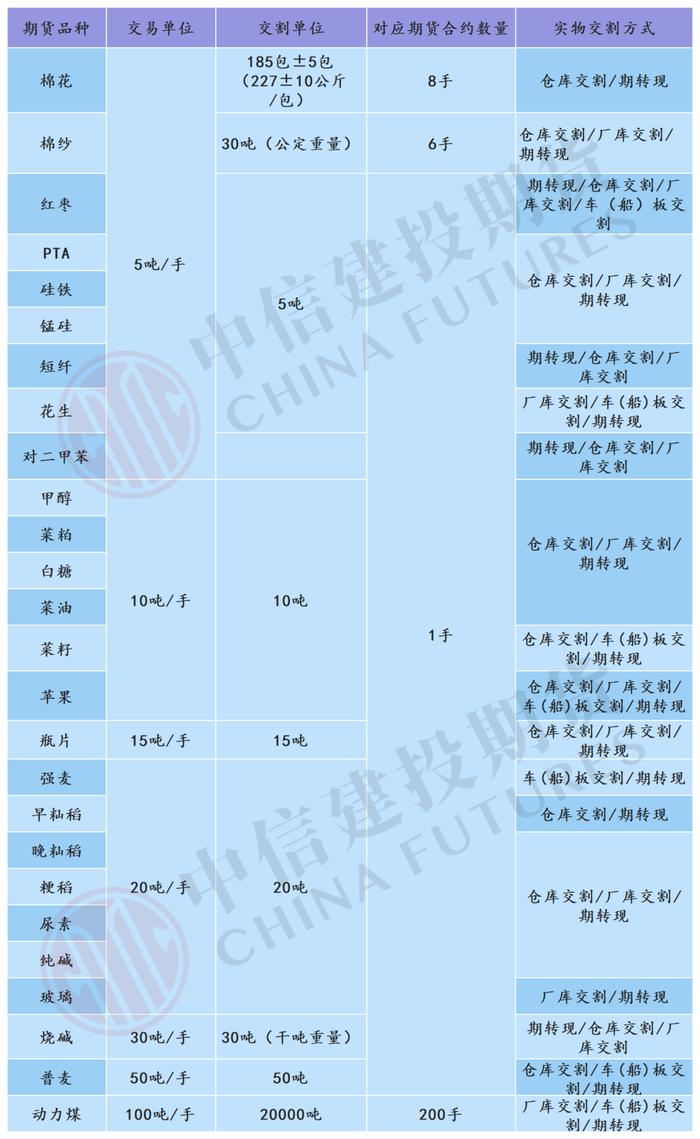
3
Zhengzhou Commodity Exchange Delivery Quantity Table
4
Table of integer multiples of delivery quantity of Dalian Commodity Exchange
5
The number of delivery numbers of Guangqian Futures Exchange
Dividing line
After understanding the delivery unit, we still need to understand these matters when participating in the delivery.
1
Mandatory pairing risk
In addition to the qualification and number of positions required to participate in the delivery, after entering the delivery month, we need to pay attention to when holding the products of Dalian Commodity Exchange, Zhengzhou Commodity Exchange, Guangfa Futures Exchange and China Financial Exchange – mandatory pairing, which is very important! ! !
Zhengzhou Commodity Exchange stipulates that when the seller of apples, peanuts, red dates, caustic soda, and xylene submits a delivery application, the buyer's response is deemed to be confirmed, but no buyer's response and the seller has not revoked it. The exchange first determines the position of the buyer participating in the pairing in accordance with the principle of “the first legal person holding position is preferred” and then matches it. This means that once the sellers of apples, peanuts, red dates, caustic soda, and paraxylene varieties make delivery intentions, our traders holding long orders are at risk of being forced to pair. So please pay attention to long traders who have their positions entered the delivery month:If you do not have the intention to deliver, please close the position as soon as possible to avoid forced pairing.If it is forced to pair, you must perform the contract. If it does not perform, it constitutes a delivery breach, the breacher shall pay a 20% penalty of the breach of part of the contract value (calculated at the delivery settlement price) to the party that complies with the contract. The buyer and seller terminate the delivery.
What varieties are there in Dalian Commodity Exchange, Guanglong Futures Exchange and China Financial Services?
The sellers of Dalian Commodity Exchange Soybean No. 1, Yellow Soybean No. 2, corn, corn starch, soybean meal, soybean oil, ethylene glycol, coking coal, coke, iron ore, japonica rice, liquefied petroleum gas, styrene, eggs, pigs, logs, Guangfu Industrial Silicon, lithium carbonate, polysilicon and CICC Treasury Futures proposed delivery. Even if the buyer did not respond, the buyer holding these varieties would be matched by the exchange for compulsory pairing. Therefore, buyers who hold these varieties also need to pay attention to this risk.
2
Invoice transfer
Futures delivery is a way to settle futures contracts. The futures margin system and the forced closing system guarantee the performance of the futures contract trading process. Breach of contract penalty will also be set up during the delivery process to effectively reduce credit risks. In addition to these, you may also be more concerned about the circulation of invoices. The invoice transfer of Shanghai Futures Exchange/Energy Center (except gold and cast aluminum alloys) is the futures company issued by the seller to the seller, the seller's futures company issued an invoice to the exchange, the exchange issued an invoice to the buyer's futures company, and the buyer's futures company issued an invoice to the buyer. The invoice circulation of gold in Shanghai Futures Exchange is when the seller issues invoice to the exchange and the exchange issues invoice to the buyer. Zhengzhou Commodity Exchange, Dalian Commodity Exchange, Guanglian Futures Exchange and Shanghai Futures Exchange cast aluminum alloys are issued by the seller to the buyer, and are handled by the futures companies of both parties and supervised by the exchange.
After seeing this, you have a certain understanding of delivery. If you are interested in participating in physical delivery of futures and want to know the detailed delivery process of each product, you can call your account opening business outlet or call the national customer service hotline at 400-8877-780 for consultation.
This article is updated on June 6, 2025, and the content of this article comes from the official websites of each exchange. The content of this article is only an introduction and sharing of knowledge related to futures trading, and does not constitute any recommendations or trading suggestions for traders. Traders are asked to fully understand the trading risks and evaluate their own risk tolerance before participating carefully. There are risks in the futures market, so be cautious when entering the market.
(Reprinted from: CICC Futures Micro Information)