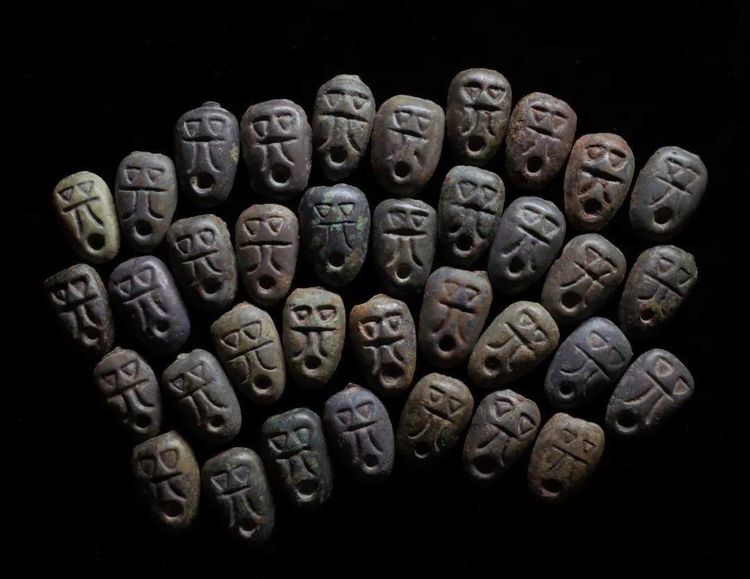
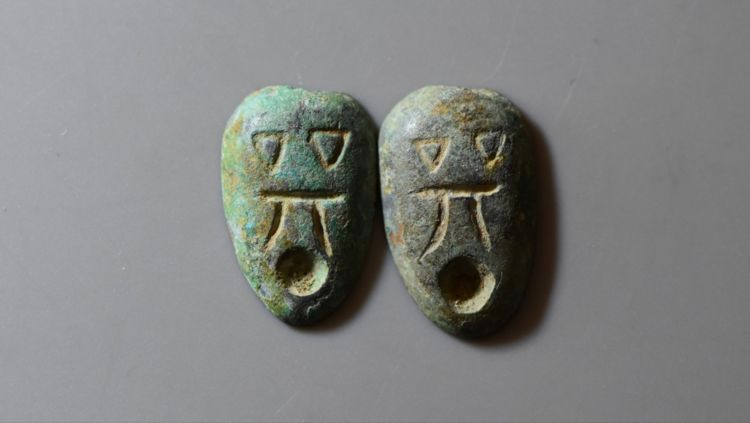
Today I’m going to talk about a very interesting coin called ant nose money. We now also commonly call it grimacing money, because its face is a bit like a grimacing image. The name grimacing money only began in the Qing Dynasty. Yes, this kind of grimacing money and ant nose money are coins minted by the Chu State. Chu State minted this ant nose money in the middle and late Warring States period. At that time, although Chu State was also the Five Dominations of Spring and Autumn, later the Seven Heroes of the Warring States period was considered a strength. Stronger country.
However, its economic and cultural development is still somewhat different from other countries. For example, many of the coins we have seen in Qi are knife coins. At that time, the ant nose coins minted by the Chu State were still imitating the shell coins of the Yin and Shang era. It is seashells as currency in circulation. It can be seen that it was indeed economic and cultural development at the time, and it was relatively backward compared to other countries. As we said before, seashells gradually developed from decorative things to barter and became currency.
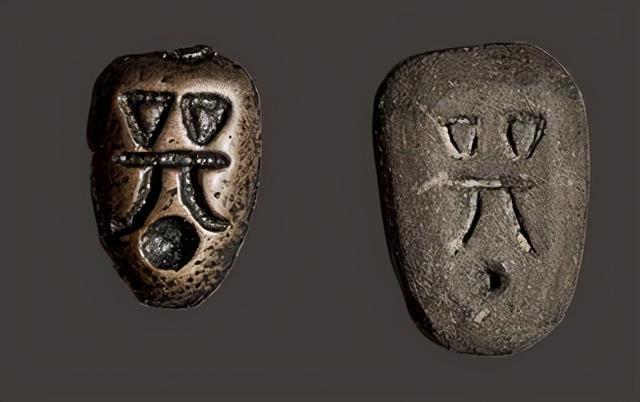
The ant nose coin is a coin that is modeled on a sea shell. There is also a small hole on it for easy carrying afterwards. A large number of coin transactions are used in a string. At that time, a string is called Yipeng. If it is a small amount The transaction is to dismantle it into a single transaction. Antbi Money is not directly developed from Haibei. There are actually some processes from Haibei’s development process to Antbi Money. The number of Haibei we mentioned before is gradually not enough for exchange. Use, so bone shells, stone shells, copper shells, gold shells, silver shells and so on gradually appeared.
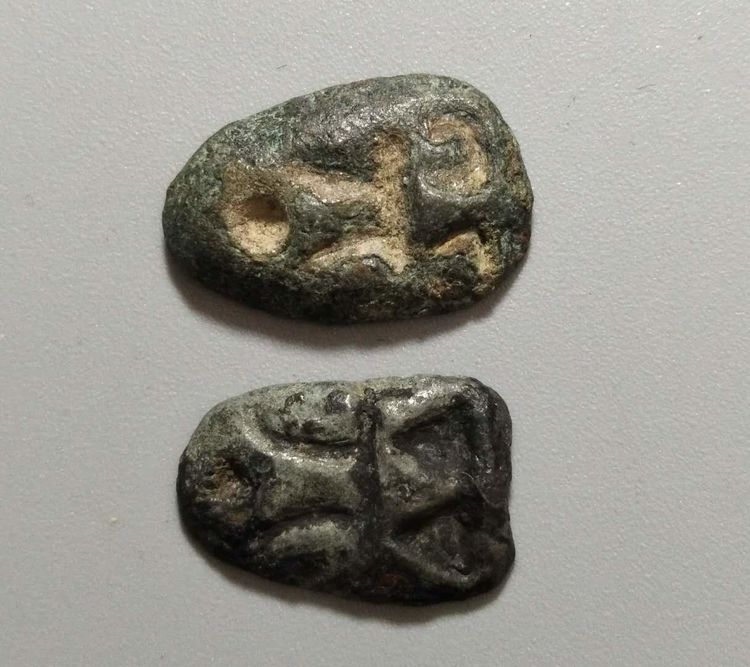
The copper shell that appeared was actually the predecessor of the ant nose coin. The copper shell at that time was actually very similar in form and size to the sea shell. The ant nose coin was a bit more advanced than the copper coin. It became smaller and more convenient to carry. And there are many characters engraved on it, the most of which is a very complicated character, we call it Xun now. More than 90% of the characters on the ant nose money are this character, because we can’t do it because of the historical data. Determine which Chinese characters the above characters are, so we try to be able to collect as many sets as possible when collecting, which is more fun. In addition, this kind of ant nose money can be said to be a relatively heterogeneous variety in the entire ancient coin world. Now its popularity in the entire market is not very high, just as a variety in the collection of coins.