
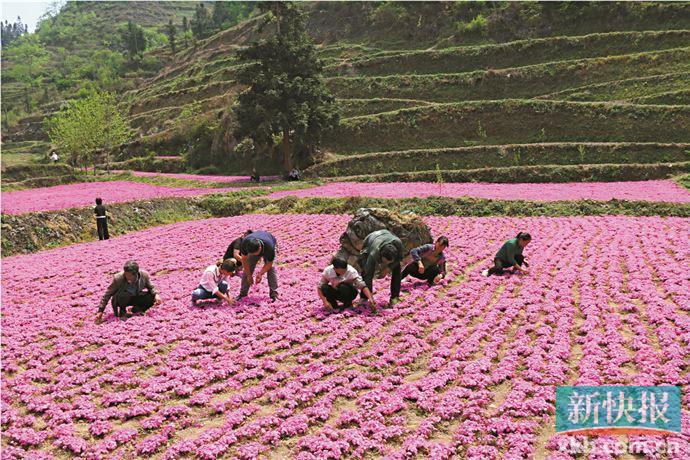
■Lizi Village has contiguous flower fields and terraces as a companion, and is creating a “sample of rural revitalization”.
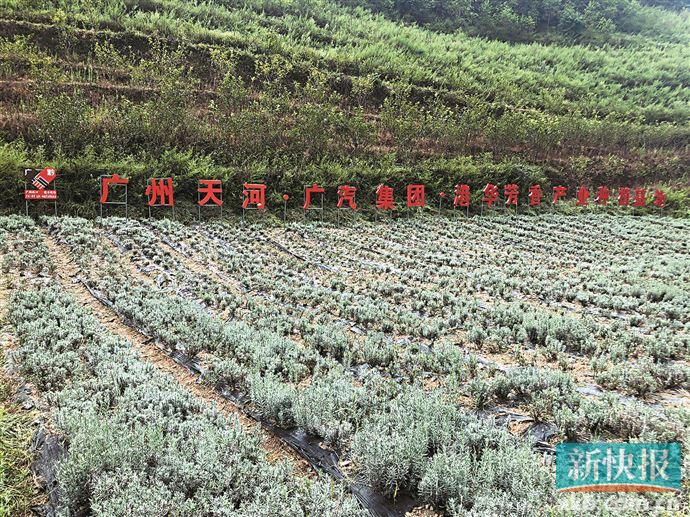
■The planting base of the aroma industry has consolidated the industrial foundation of becoming wealthy Benkang.
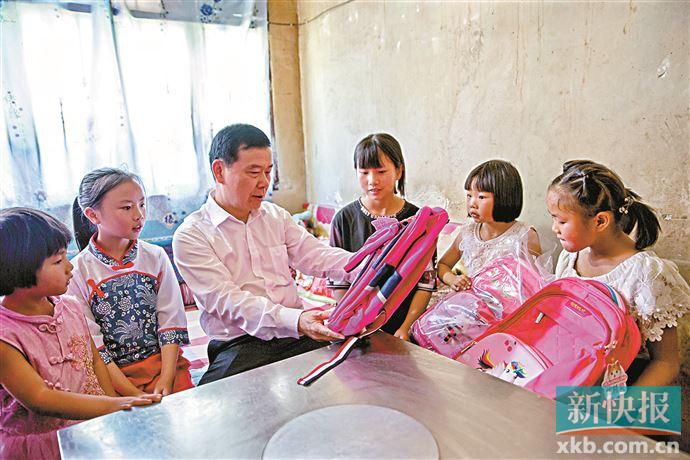
■Zeng Qinghong, Secretary of the Party Committee and Chairman of GAC Group, gave school supplies to children in difficulties in Lizi Village.
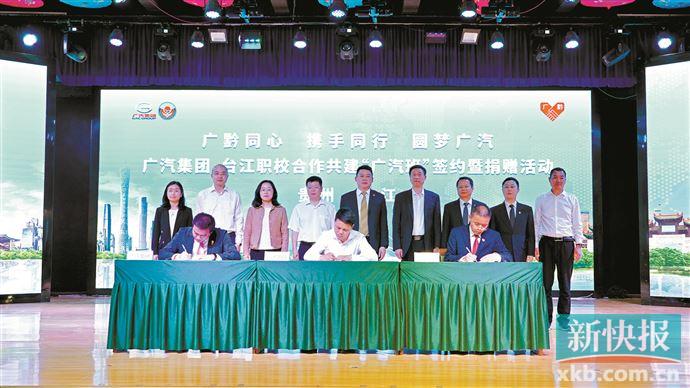
■Taijiang GAC Class Signing Ceremony.
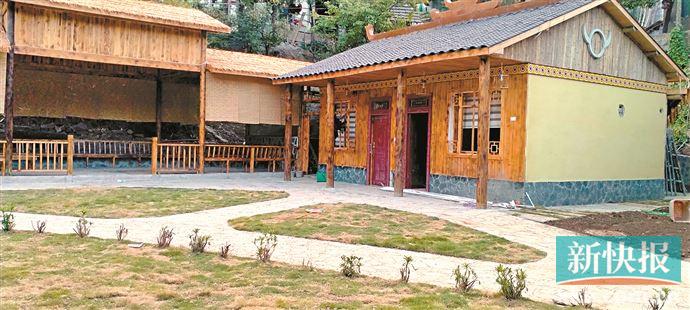 ■Lizi Village Wild Vegetable Restaurant with ethnic characteristics.
@广汽集团
Bijie City, Guizhou Province
Lizi Village, Nayong County
“It smells so good”! Just after the beginning of the autumn of 2021, in Lizi Village, Dongguan Township, Nayong County, Bijie City, Guizhou Province, a series of “Romantic Purple” lavender blooms. The majority of tourists have not yet entered the village. Since the beginning of this year, Lizi Village has bloomed the plateau moss phlox in spring; from April to June, rosemary and lavender flourish; from July to September, the golden snow chrysanthemum blooms in the garden…flowers, flowers The sea has transformed the little-known village into a “fragrant village”.
Interestingly, the “fragrance” of Lizi Village lasts for a long time. A village in the village named “Guangzhou Tianhe·Guangzhou Automobile Group·Hong Kong and China Fragrance Industry Planting Base” uses “flowers” and “fragrance” to make scented teas, sachets, essential oils and other products that are exported to the Greater Bay Area, forming a distinctive feature “Aromatic Industry”. Lizi Village was driven by this industry to get rid of poverty and rejuvenate.
In the context of cooperation between the east and the west, this is the key to helping Lizi Village in Tianhe District of Guangzhou City and Guangzhou Automobile Group to win the battle against poverty.
Since the adjustment of the pairing relationship between the East and the West in poverty alleviation cooperation on July 20, 2016, GAC Group has donated about 4.8 million yuan through the Guangdong Poverty Alleviation Foundation to help the paired Nayong city of Bijie City through industrial poverty alleviation, financial assistance, and labor cooperation. Lizi Village, Baini Village, Heishake Village, Qingjiao Village, and Xiachang Village in Dongguan Township of Xianshe County realized the whole village out of poverty, linking up with rural revitalization.
Working hard to cooperate and help, the former poor villages become livable villages
Lizi Village is located in the east of Shedongguan Township, Nayong County, Bijie City, Guizhou Province, a key county for rural revitalization. The mountain is closed and backward, and Lizi Village was once a deeply impoverished village.
However, although the land in Lizi Village is scattered, the transportation conditions are very convenient, and the ethnic minority culture is colorful. These “advantages” are cherished and valued to help cadres, especially Guangzhou Guangzhou Automobile Group.
To boost rural revitalization, it is necessary to achieve “high-quality” and “efficient” agriculture, “livable” and “suitable for business” in rural areas, and “rich” and “abundant” farmers. Since 2019, GAC Group has established a demonstration project for rural revitalization of “GAC·Miaoshao Miaozhai” in Lizi Village, and has registered and established Guizhou Miaozhai Industry Development Co., Ltd. (hereinafter referred to as “Mushao Miaozhai Company”), and invested funds for renovation Resettlement sites for resettlement, changes to kitchens and toilets, construction of poverty alleviation workshops, etc. have made the village look completely new and the villagers have jobs to rely on.
Improving the quality of agriculture is the highlight of helping Lizi Village. GAC Group is a state-owned enterprise deeply engaged in the automobile industry, and actively explores the combination of the automobile industry chain and fragrance projects. In September 2020, GAC Group and Ganghua Company went to the field together to get the pulse. Together, they built a 240-mu “Guangzhou Tianhe·Guangzhou Automobile Group·Guangzhou Fragrance Industry Planting Base” in Lizi Village.
Through research, GAC Group found that the soil and climate in Lizi Village are suitable for planting herbs and flowers such as plateau moss phlox, lavender, rosemary, and plateau snow chrysanthemum. The prospects are promising. Lavender can be used to extract essential oils and plateau snow chrysanthemum can be used to make scented tea. The revitalization of the countryside does not go wrong.
Lizi Village is “the last migration place of the Miao people”. As the base is put into production and planting, flower fields have been reclaimed for landscaping, and every household of the villagers also planted flowers. In Miao Township dotted with flowers, everyone consciously pays attention to the cleanliness of the village appearance, village appearance, and environmental sanitation, making it more and more livable.
Whenever tourists come to visit the village, they can be attracted by the new rural scene: walking on the flat concrete road, occasionally see the decorations rich in Miao nationality; on both sides of the neat village road, there are two or three-story houses with yards. It’s like a paradise.
Attracting enterprises to help the industry, creating a sample of rural revitalization
The important thing is that the aromatic industry base has dedicated personnel to guide the planting and purchase of fragrant flowers and herbs, so the common people do not have to worry about planting technology and market problems.
“Flowers!” A Miao language echoed in the valley. Chen Fujun, a farmer in Lizi Village, Shedongguan Township, Nayong County, Bijie City, Guizhou Province, collected golden snow chrysanthemums in the fields and sorted them gently. His wife Xu Yan and The companions pick in the flower field.
Since the establishment of the Aromatic Industrial Base, it has provided jobs for villagers like Chen Fujun, helping them find jobs nearby and get a stable life. “Our husband and wife are working at the base and have been busy since April until now. Working here, there are wages, dividends, land transfer fees, and we can also do some breeding at home. We are very satisfied.”
It is understood that the lavender, moss cherry, rosemary and other flowers promoted by the GAC Group are processed by Musu Miaozhai Company in a unified way such as drying, drying, and packaging to produce sachets, essential oils and daily chemical products. Finally, GAC Group purchases at market prices, which not only solves the problem of flower terminal sales in Lizi Village, but also enriches the types of after-sales car boutiques of GAC 4S dealers.
In this way, flowers became sachets and herbal teas, driving the industry to produce long-term hematopoiesis. The breeze came slowly, and the fragrance of flowers burst. The contiguous flower fields of Lizi Village are accompanied by terraced fields. The villagers such as Chen Fujun diligently pick and make flowers, creating a new rural landscape.
At the end of 2020, the industry helped Lizi Village to get rid of poverty smoothly. GAC Group also continued to send special personnel to the site to guide and supervise the development of the industry, and to graft the management experience of GAC Group to Musu Miaozhai Company.
Li Songwei, a talent support cadre dispatched by GAC Group to the east and west, has just taken over the baton of the previous cadre, and will be based in Lizi Village for the next three years to be responsible for the continuation of the “GAC·Miaoshao Village” rural revitalization project. He introduced that Lizi Village is building a “sample of rural revitalization”, based on the aromatic industry, with “red culture, poverty alleviation culture, and ethnic culture” as the soul, to consolidate and expand the effective connection between poverty alleviation and rural revitalization.
Enterprises drive village-to-village linkages, group development and share opportunities
Poverty alleviation is not the end, but the starting point for the revitalization of Lizi Village. The development of the villages of Heishabou, Baini, Qingjiao, Xiachang, etc., coordinated and supported by GAC Group, has also been centered on Lizi Village, joined the industrial development layout, and organized group development.
According to reports, GAC Group plans to invest another 5.7 million yuan this year to develop the infrastructure and living environment transformation of five villages including the “GAC·Miaoshao Miao Village”, the fragrance industry, and the Lizi Village that it assists. At present, Lizi Village is expanding the scale of aromatic industry development, forming a situation of “government building, company singing, people participating, rural revitalization”, and helping villages share income-generating opportunities.
So far, GAC Group has been deeply involved in poverty alleviation cooperation between the east and the west, helping 5 deeply impoverished villages including Lizi Village in pairs, helping 1,030 poor people out of poverty in total.
GAC Group also insisted on education for poverty alleviation, and jointly established a “GAC Class” with Bijie Vocational and Technical College in Guizhou Province, enrolling a total of 80 students, of which 33 were students from poverty-stricken households originally established. In Qiandongnan Prefecture, GAC Group cooperated with Taijiang County Secondary Vocational School to organize classes to train professional and technical personnel in the automotive industry.
The crop output of the assistance points has also attracted the attention of GAC Group’s consumer poverty alleviation actions. In 2020 alone, the group organized 22 investment companies to actively subscribe for Bijie agricultural products, with a subscription amount exceeding 16 million yuan.
The relevant person in charge of the GAC Group stated that 2021 will be the 100th anniversary of the Communist Party of China. GAC Group will continue to take active steps in rural revitalization, consolidate and expand the poverty alleviation achievements and effectively connect with the rural revitalization, and work together to achieve better results.
Written by: New Express News reporter Li Silu / Picture: Provided by the respondent / Editor: Zeng Guizhen / American Editor: Zhang Hansong / Proofreader: Cai Jia