
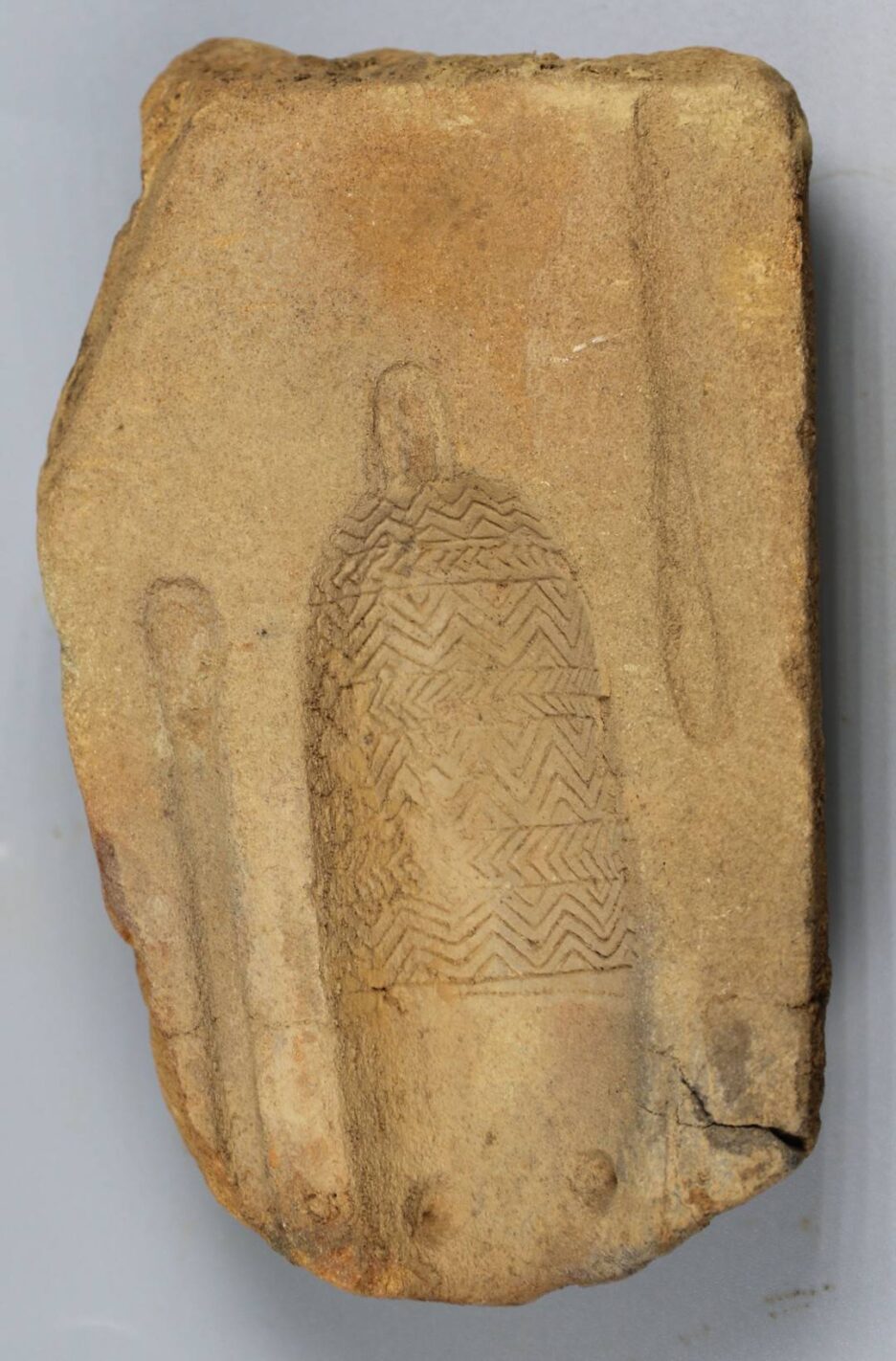
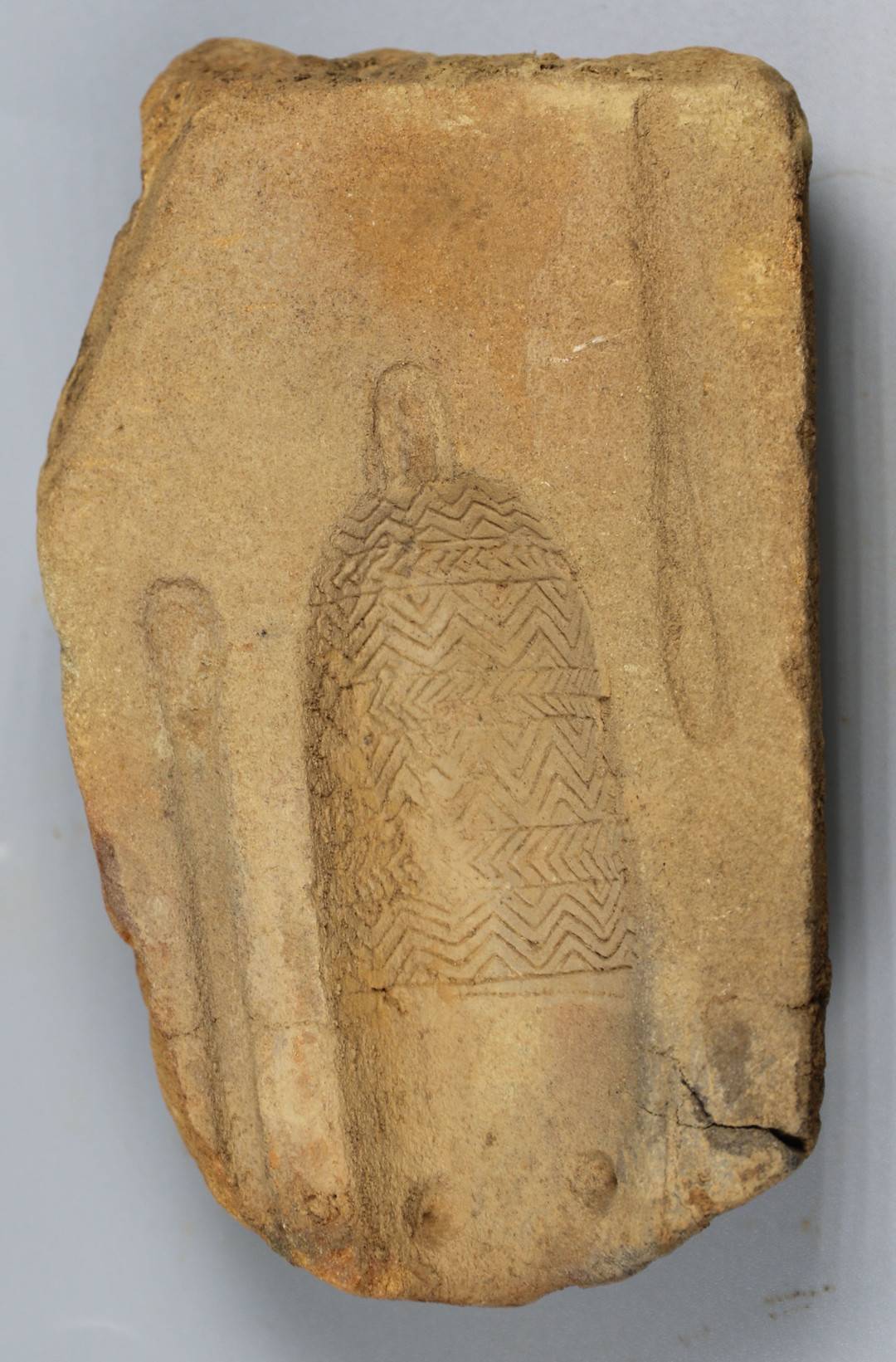
Stone fan (copper bell and clapper tongue) unearthed from M174
Cover reporter Dai Zhuxin
According to Chengdu Institute of Cultural Relics and Archaeology
On June 18, “Exploring the Ancient Civilization of Dingzhang and Casting the Consciousness of the Chinese Nation’s Community – The First Yanyuan Bronze Culture and the Exchange and Integration Academic Seminar of Various Ethnic Groups” was held in Yanyuan County. Experts at the meeting conducted a discussion on the archaeology of the Laolongtou site in Yanyuan County.
At the seminar, one of the focuses of the discussion was, where were the unique bronzes unearthed from the Laolongtou site cast? This has always been a mystery, and this excavation has given us clues.
Tian Jianbo, head of the archaeological excavation site at the Yanyuan Laolongtou Site of the Chengdu Institute of Cultural Relics and Archaeology, introduced that 10 sets of stone models were unearthed in the tomb M174 of the Spring and Autumn Period, as well as pottery ladle and pottery blower pipes that may have been used for copper smelting. The types include bells, knives, tombs, chisels, etc., all of which are typical bronzes unearthed at the Laolongtou site, indicating that some of the bronzes at the Laolongtou site were cast locally, and the owner of the tomb of M174 may be a bronze caster.
The stone fan of M174 is common with one fan and multiple pieces, showing a relatively mature casting technology.
Tian Jianbo said that a number of tombs of foundries similar to M174 have been found in the Laolongtou cemetery, which were very rare in southwestern Sichuan before. Similar tombs of founders have been found in the Eurasian grasslands, northwest China, southwest China and Southeast Asia. Such tombs The discovery of Yanyuan Basin fully reflects the bridge role of the Yanyuan Basin in the cultural exchange between the North and the South in eastern Eurasia.
In addition to the tombs of the casters, several tombs of cinnabar artisans were also unearthed in the cemetery. Such tombs are generally buried with stone pestles and mortars for grinding cinnabar, as well as other tools for grinding cinnabar, and their owners may be craftsmen who grind cinnabar. Some tombs in the cemetery are covered with cinnabar at the bottom, which reflects the custom of cinnabar burial at that time, reflecting the popularity of the crowd.