
Source: hawk26 Lecture Hall
In the mid-19th century, American engineer Thomas Jefferson Rodman invented a new method of casting cast iron artillery barrels, which could create stronger, more reliable artillery with greater caliber and destructive power.
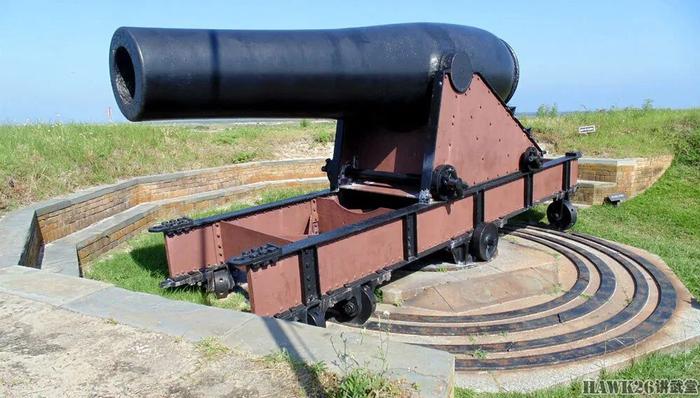
Massachusetts Coastal Battery, a heavy coastal defense gun cast using Rodman technology.
Rodman confirmed experimentally that if a hollow casting is cooled not from the outside but from the inside, its strength will be much higher than that of an ordinary casting because the metal crystallizes more uniformly and there are no internal stresses. For this purpose he designed a special casting mold and applied for a patent in 1847. The inside of the mold is cooled by running water while the outside is simultaneously heated, preventing the outer layer of the product from cooling rapidly.
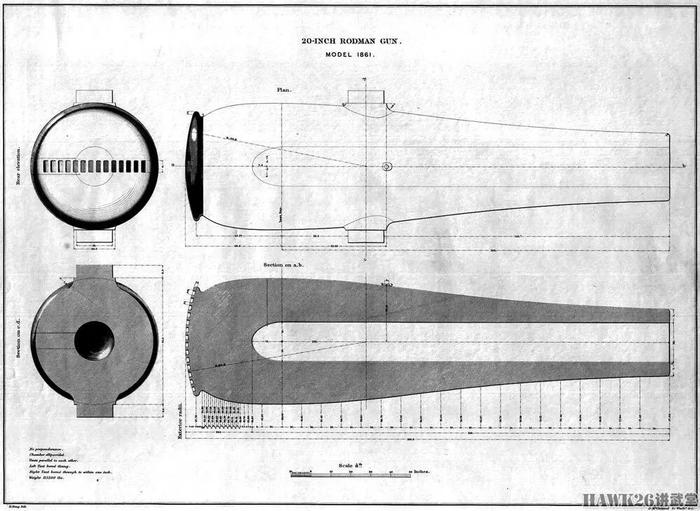
Original drawing of the 20-inch (508mm) Rodman gun.
In live-fire tests, the large-caliber artillery manufactured by Rodman successfully fired more than 1,500 rounds, while a barrel of the same caliber and wall thickness cast using traditional technology would explode after dozens of firings.
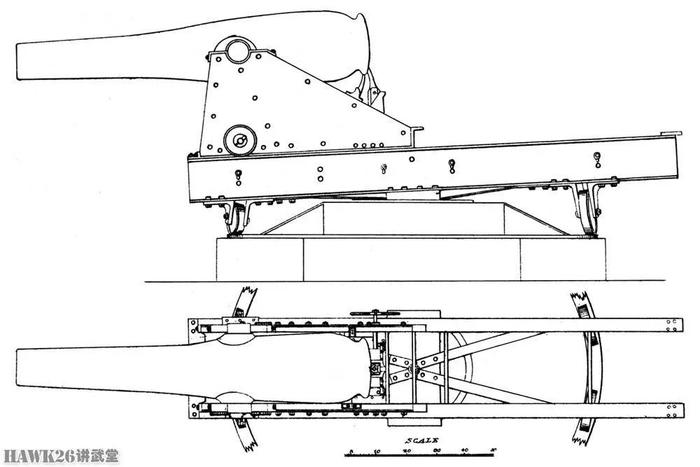
The Rodman guns on coastal forts were mounted on gun carriages with rotating tracks.
Such high reliability has attracted great attention from the US military. After 1861, the United States continued to produce 8-, 10-, 15-, and 20-inch Rodman cannons. The largest number of cast guns was the 10-inch gun, with a number of 1,300. There were also 323 15-inch guns and 213 8-inch guns.
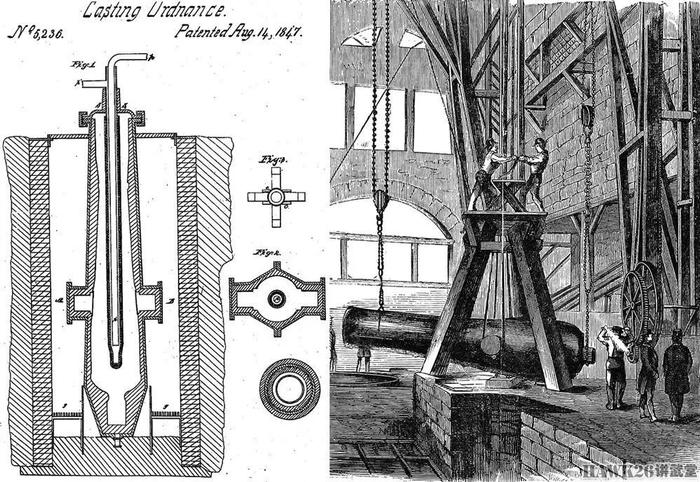
The picture on the left is Rodman’s patented diagram of external heating and internal cooling. During the casting process, more than 200 tons of water are pumped into the inner core, and the cooling time is as long as 65 hours. The picture on the right shows a crane removing the 20-inch gun barrel from the mold.
Since the 20-inch gun weighed 80 tons and the shells exceeded 400 kilograms, only a few were produced. For Rodman, he was at the forefront of gun casting at the time, and many referred to the heavy artillery produced using his technology as “Rodman guns.”
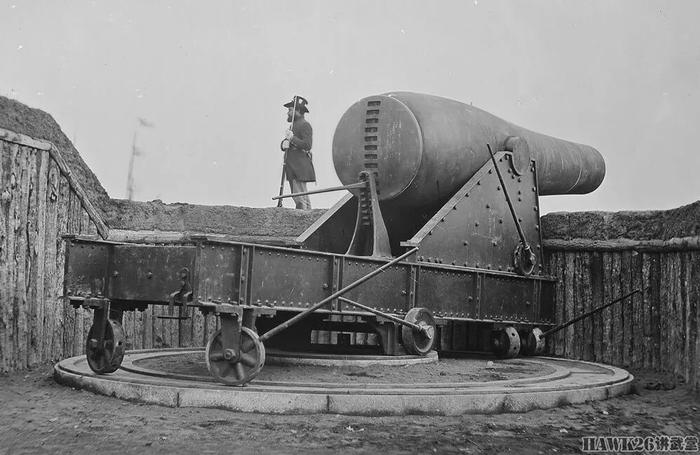
Morrisburg's 15-inch Rodman gun.
Rodman guns posed a fatal threat to wooden warships and could even cause substantial damage to early armored ships, so many coastal forts in the United States were equipped with Rodman guns.
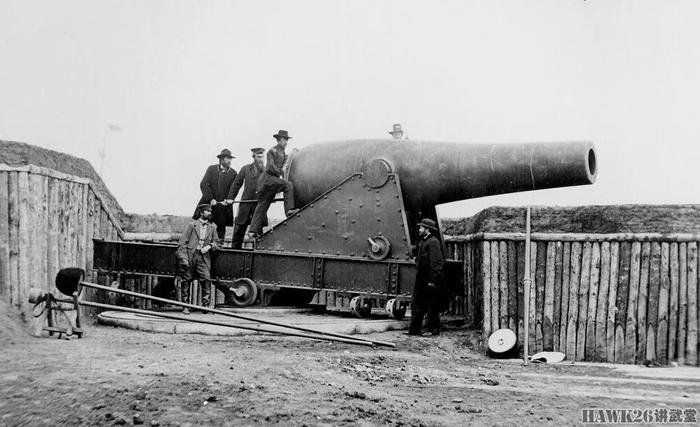
Fort Morris was one of Washington's coastal defense batteries during the Civil War.
During the American Civil War, because the Confederate fleet was far away from Union coastal batteries, the Rodman guns never had the opportunity to fire on warships.
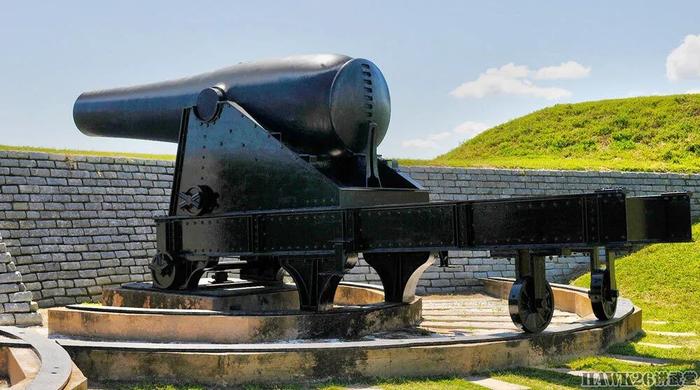
Fort Sumter also has a well-preserved 15-inch Rodman gun.
At the same time, this heavy artillery was also used as a siege weapon. It is claimed that two 10-inch Rodman guns were used during the Second Battle of Fort Sumter, but some historians dispute this.
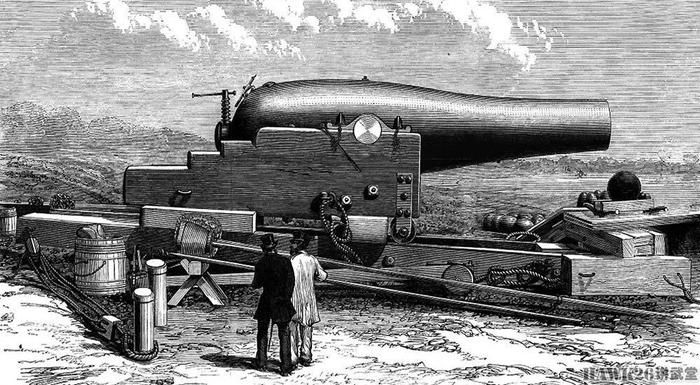
The 15-inch Rodman siege gun mounted on a wooden mount uses a rare screw device to adjust the pitch angle.
Some believe Fort Sumter came under fire from the Dahlgren heavy gun, which also had a bottle-shaped appearance and looked similar to the Rodman gun.
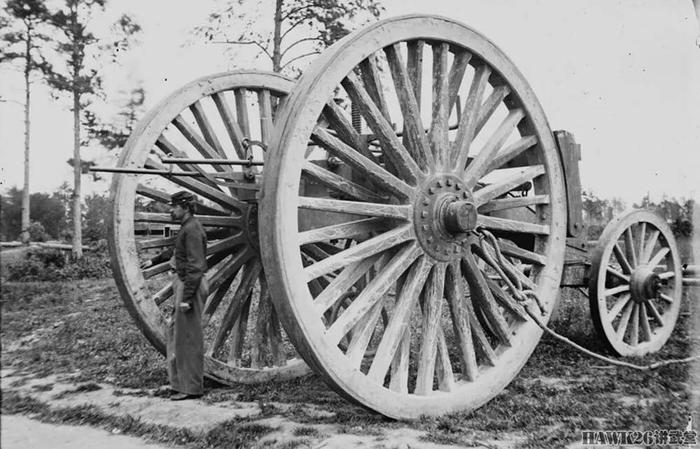
Huge trailer used to transport Rodman siege guns.
After the American Civil War, coastal forts still used Rodman guns as their main weapons for a long time until they were finally retired in 1905. Many Rodman cannons survive to this day.
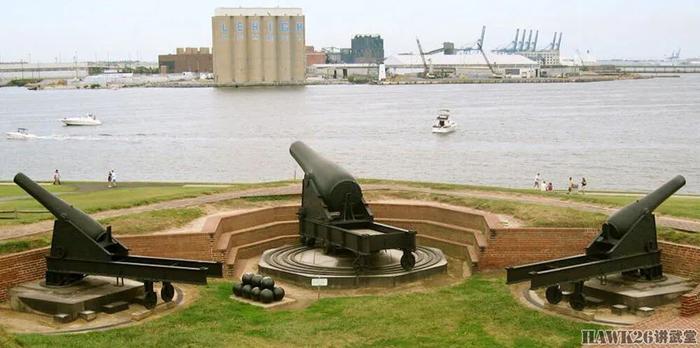
Fort McHenry is a well-preserved coastal defense battery equipped with two 8-inch and one 15-inch Rodman guns.
It is worth mentioning that in the 1870s, dozens of Rodman guns were modified and a rifled steel liner was pressed into the barrel, turning it from a smoothbore gun to a rifled gun.
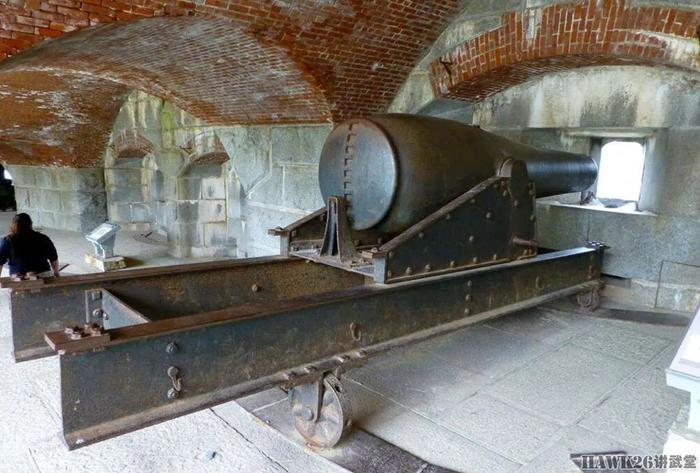
Rodman gun in Fort Knox Battery.
The caliber changed from 10 inches to 8 inches, and the range was greatly increased. These improved Rodman guns remained in service with coastal batteries until the turn of the last century. According to some sources, these improved Rodman guns were also installed on warships.
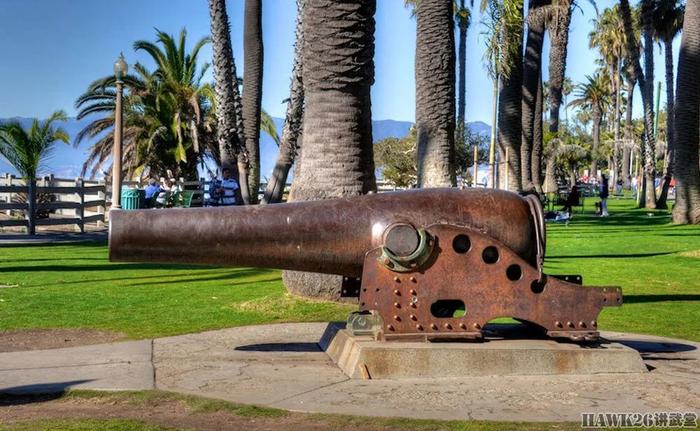
The Rodman Cannon near Santa Monica Beach, a famous attraction in Los Angeles.

The “Perm Tsar Cannon” was a copy of the 20-inch Rodman gun, cast in 1868 using the simplified Rodman technique (without external heating of the mold). Although the technology was successful, Tsarist Russia did not continue to cast artillery of this caliber because there were few applications for heavy artillery of this caliber.