
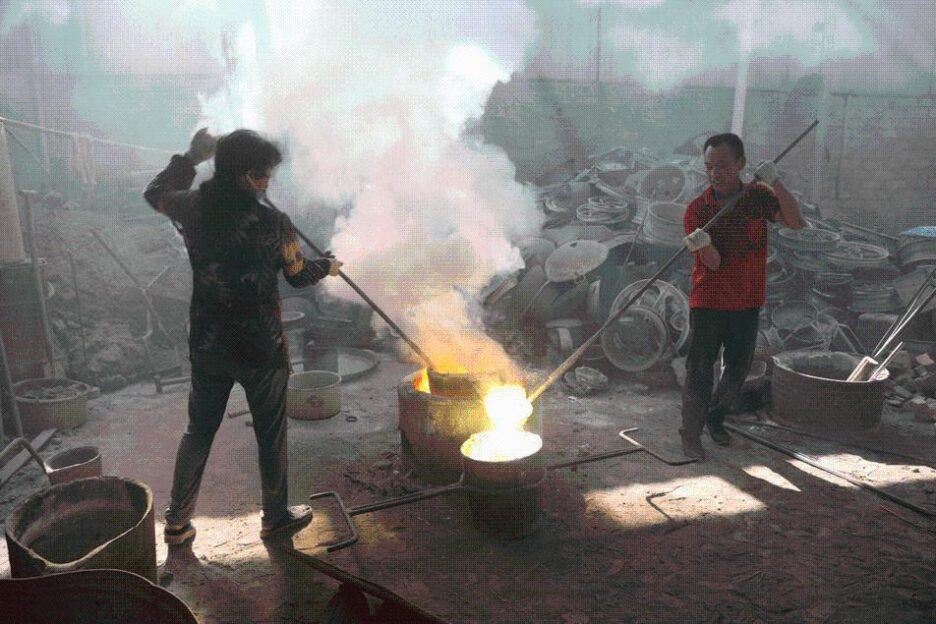
The clanging, grinding, and polishing sounds echoed in the workshop of more than 300 square meters. 55-year-old Su Xifen poured the high-temperature iron slurry into the mold. After cooling and setting, the mold was disassembled, the mud sand was smashed, and an exquisite incense burner appeared. Finally, it was polished and painted with an oil brush.
As a well-known foundry craftsman in Susha Village, Maning Town, Huaiji County, Zhaoqing City, Su Xifen has adhered to the traditional casting craftsmanship for 38 years and “cast” his own life. “This industry can really support my family, and I feel at ease when I look at the flaming iron slurry,” he said.
With his enthusiasm and perseverance, Su Xifen not only made his family a considerable income, but also promoted the employment of many local families to get rich. On August 26, 2020, he was honorably elected as the vice chairman of the Huaiji County Folk Artists Association.
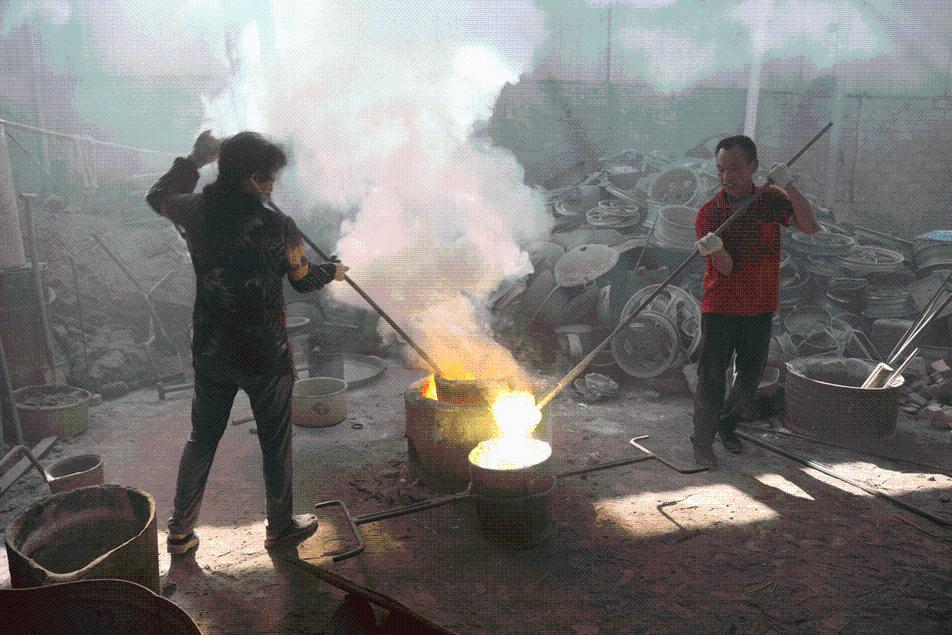
In Su Xifen’s workshop, stoves, sand embryos, molds, as well as molded lions, dragons and phoenixes, golden pigs, incense burners and other casting utensils are placed on the ground in a messy manner. Su Xifen used special sand powder to make sand embryos. After drying them or spraying them with a torch, the sand embryos were set on the outer surface of the sand embryos and a jacket mold with a yellow clay inner wall iron shell (matching the shape of the sand embryos) was secured. “Work is like playing with mud, sculpting animals, and squeezing dolls when I was a child. It is fun and interesting.” Su Xifen said that when he was in his 10s, he followed his grandfather and father to learn the casting craft. He didn’t expect this craft to become his own. Means of earning a living.
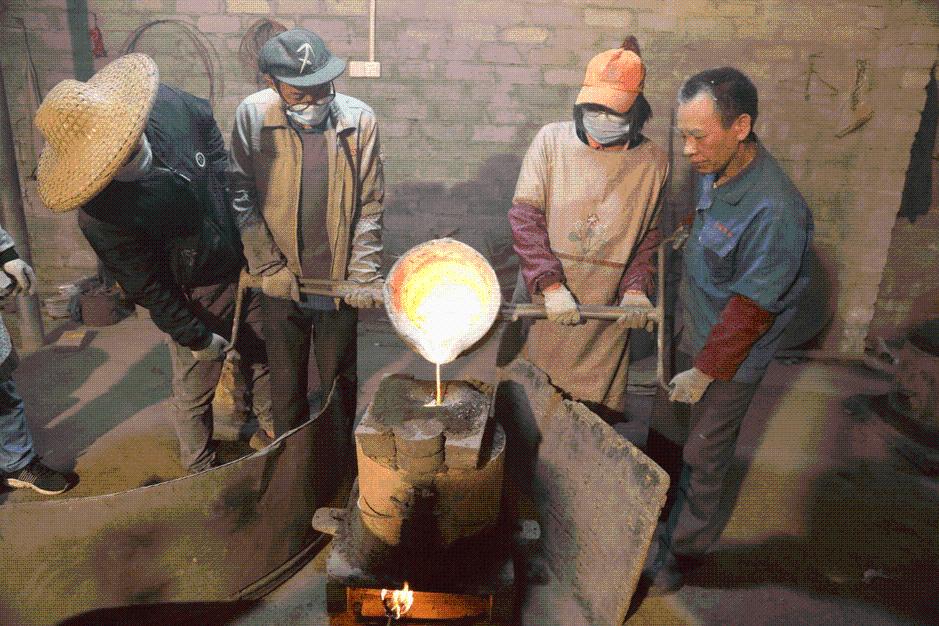
At that time, casting was a popular craft. When the farming was busy, the craftsmen of the foundry shop were too busy.
“Casting is not only a physical job, but also a technical job.” Su Xifen said that casting production tools or daily necessities requires sand blanking, solid molds, burning furnaces, melting copper and iron, iron casting, and cooling. There are multiple processes such as forming, disassembling molds, grinding and polishing, which require not only strength, but also rich experience of blacksmiths, mastering the skills of engraving characters and drawing pictures. “If there is a deviation in a process, all previous efforts will be lost or even overturned.”
The iron slurry or copper slurry used for casting is as high as 1,000 degrees Celsius. The charcoal furnace burns red and red, and the high temperature is sultry. Su Xifen casts in this environment. Because of the long time carrying bars to carry mold sand embryos and casting utensils weighing hundreds or even thousands of catties, his skin was roasted red, and his hands were rougher and stronger than ordinary people.
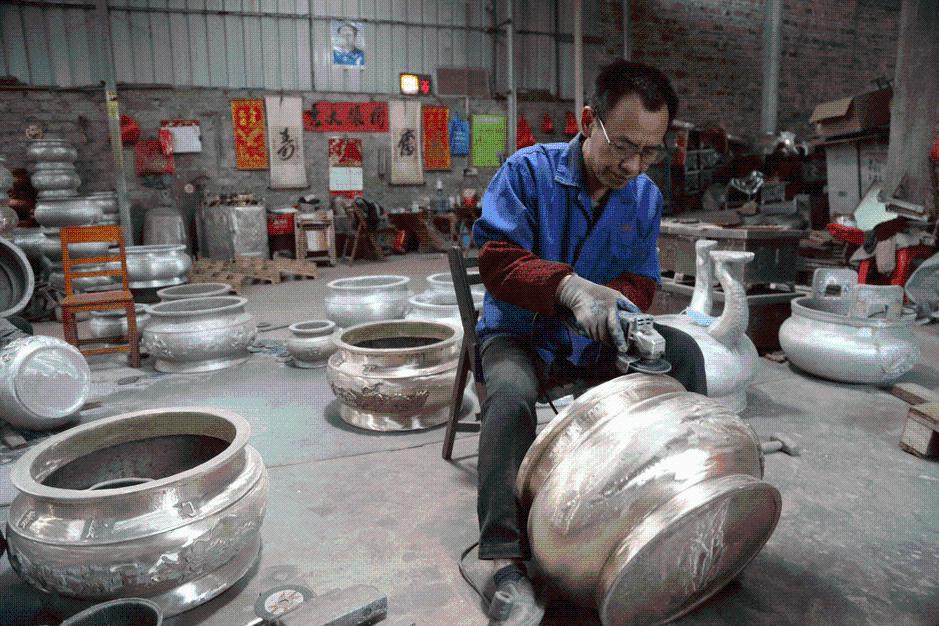
In order to conform to the consumption trend, Su Xifen has researched and adjusted casting varieties in time in recent years. From the original only casting hoe, shovel, sickle, zhao, plough, rake, knife, casserole and other production and living tools, to casting customers and market demand Kirin, Taurus , Abacus, gourd, incense burner and other new varieties. “The casting technology also needs reform and innovation, and it needs to find new demands and new projects in the casting market in order to develop and grow.” He said.
Su Xifen’s casting craftsmanship is exquisite, the product quality is high, the price is reasonable, and the service is attentive. Therefore, his casting products are not only sold in the villages of this county, but also exported to Guangning, Deqing, Fengkai, Guangxi, Hunan and other places. , The market is still expanding.
“In recent years, I have processed five to six hundred casting products each year. From the fifth day of the new year to the late of the new year, I have to work overtime often.” Su Xifen said. He also called his son who worked outside the village to work together in casting, hoping that his casting skills would be passed on from generation to generation, so that the life of iron casting culture would continue.
Text/Guangzhou Daily·Xinhuacheng Reporter: Yu Ganyong Correspondent: Li Wenxing
Photo/Guangzhou Daily·Xinhuacheng reporter: Yu Ganyong
Guangzhou Daily·New Flower City Editor: Wang Qiqi