
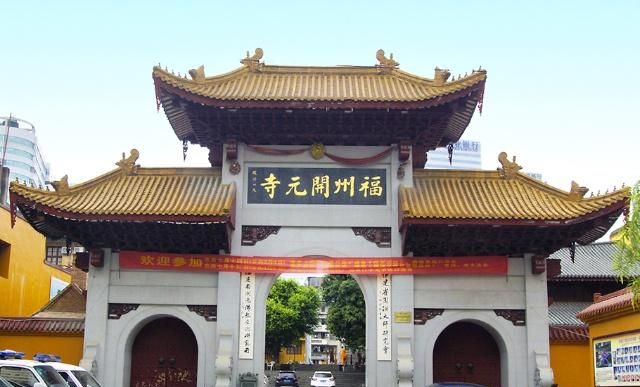
Fuzhou Kaiyuan Temple, built in the third year of Liang Taiqing in the Southern Dynasties (549), is the largest and oldest surviving temple in Fuzhou’s history, and a symbol of the transfer of the center of Chinese Buddhism from Shaanxi to Fujian. The temple is well-known both at home and abroad for its long history and numerous historical sites. However, due to several fires and wars over thousands of years, the existing area is less than one-tenth of the largest.
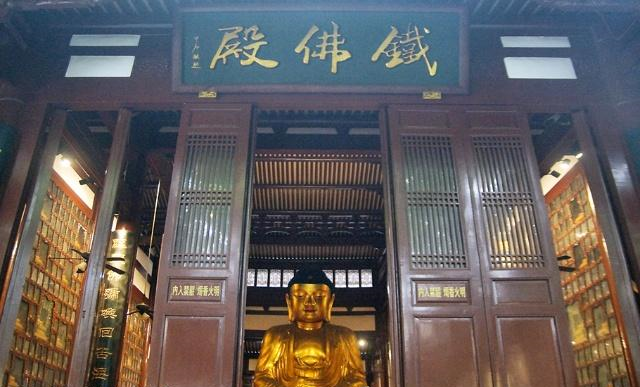
Among the many historical sites in Kaiyuan Temple, the giant thousand-year-old cast iron Amitabha enshrined in the Iron Buddha Temple is the most famous, so it is also known as the “Iron Buddha Temple”. There is no record of the casting time of the Iron Buddha. According to a Song Dynasty silver pagoda excavated under the lotus seat, it is inferred that the Iron Buddha was cast at least before the sixth year of Yuanfeng in the Northern Song Dynasty (1083).
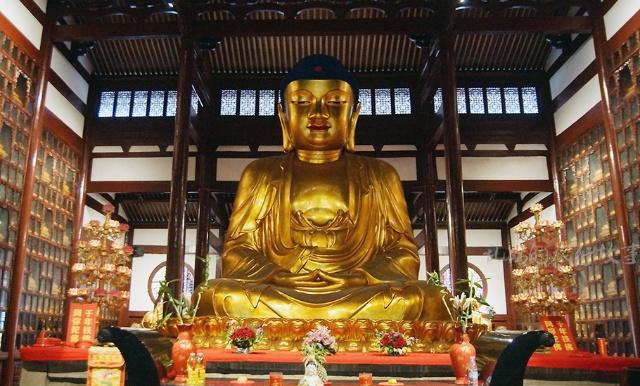
Tiefotong is 5.8 meters high, with a head height of 2 meters. It is covered with gold leaf. The statue sits solemnly on the lotus platform, which has a strong Tang Dynasty style. Among them, the weight of the head alone is 40 tons, and the total weight is at least 52 tons. It is one of the best preserved and largest ancient castings in the country, and it is also the largest ancient cast iron Buddha statue discovered so far.
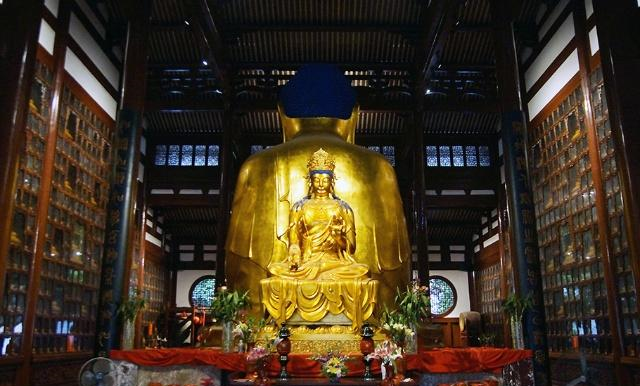
The smelting and sculptural art of this Buddha statue is of first-class level in ancient my country, and it has been rated as a precious national treasure-level cultural relic. However, what is puzzling is that there is no documentary record for such a huge iron Buddha, and its casting method is still a mystery. Some experts speculate that the Buddha statue was cast by the lost wax investment method.
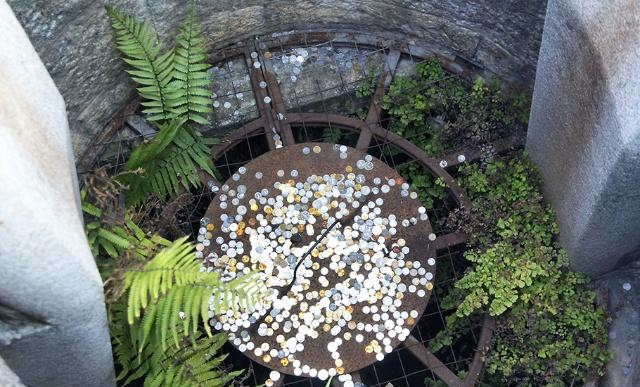
The Sugong Well in the temple was dug in the Song Dynasty. Feng Menglong of the Ming Dynasty recorded in “Jing Shi Tong Yan”: The expert fought with the dragon. The dragon lost to the dragon and hid in the well of Kaiyuan Temple. The monk built the Buddha and placed it in Jingshang Town. In 1941, the Japanese army invaded China wanted to steal the Iron Buddha, but a soldier fell unconscious when setting up a stand. The Japanese army kowtowed to apologize and dispelled the idea.
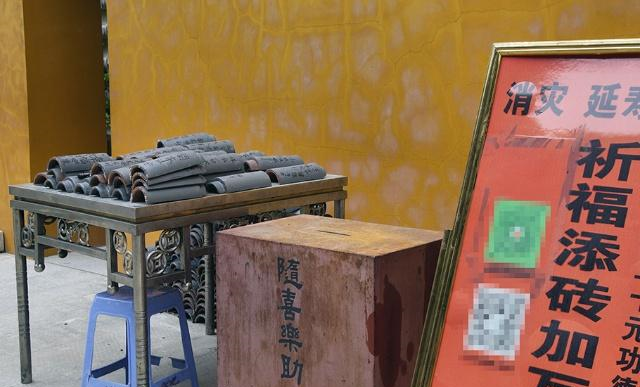
It is worth mentioning that although Kaiyuan Temple has suffered several fires and bombings by enemy planes in history, almost all the buildings in the temple have been destroyed, but the Iron Buddha has remained intact for thousands of years. Especially in April 1976, Fuzhou suffered the biggest hail disaster in history. The buildings in the city were seriously damaged, and the tiles on the roof of the Iron Buddha Temple were completely undamaged, which is amazing.
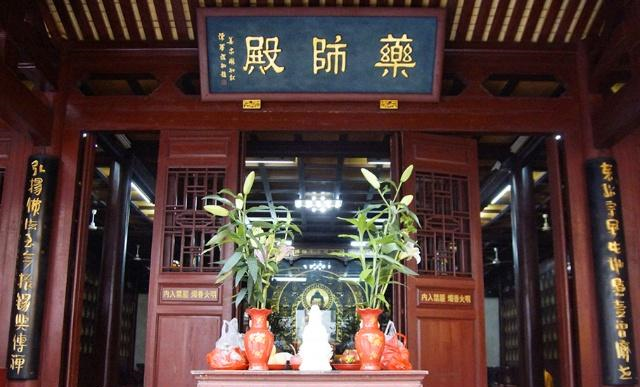
Kaiyuan Temple is also a well-known pharmacist temple in the country. The pharmacist hall in the temple was built in the Ming Dynasty. The temple enshrines the pharmacist Buddha, the leader of the oriental glazed world, to eliminate disasters and prolong life. In addition, Kaiyuan Temple also has a mysterious medicine lotus culture. It is said that an overseas Chinese worshipped a pharmacist After the Buddha’s wish was fulfilled, he generously donated 1 million yuan to rebuild the temple.
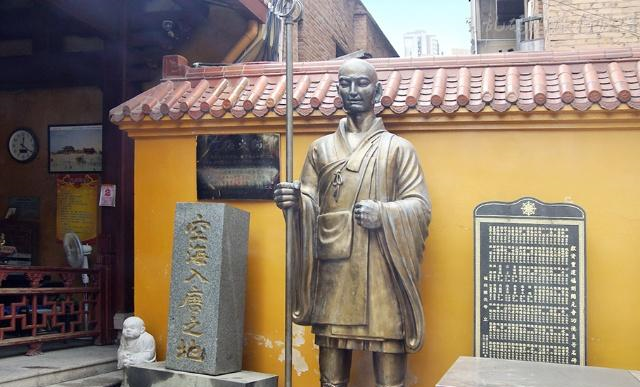
There have been many eminent monks in Kaiyuan Temple. The ancestor of Japanese Shingon Master Kong Hai, the ancestor of Japanese Tiantai Master Yuanzhen, and the Indian Tantric monk Prajna Danluo all came here to study in China in the Tang Dynasty. There is also a 3.5-meter-high bronze statue of Master Kukai, funded by believers of Shingon Buddhism.